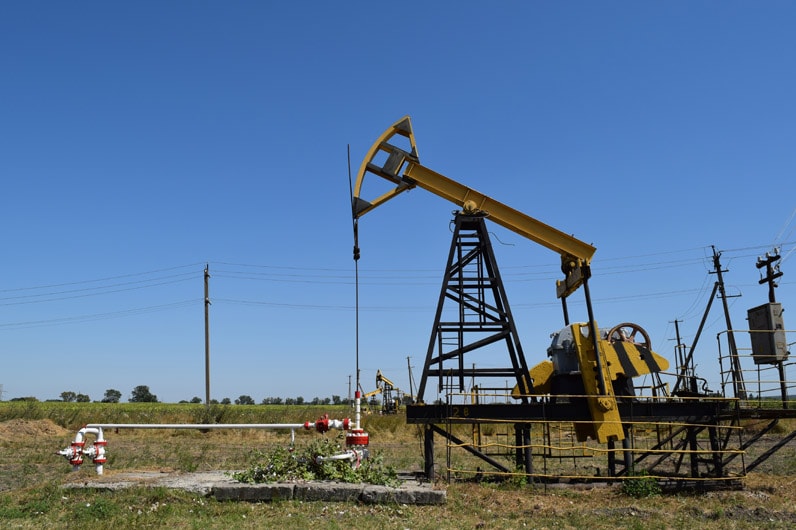
An oil well produced 700 barrels per day when it was new.
A few years later, production has fallen to 250 barrels per day.
The obvious explanation seems to be reservoir depletion.
But then engineers check the pressure data.
Reservoir pressure is still relatively strong.
So where did the production go?
This is a common production engineering problem because declining production does not automatically mean the reservoir has run out of energy.
The restriction can be much closer to the well.
Formation damage can reduce flow into the wellbore. Scale can restrict perforations or tubing. Wax can accumulate. Artificial lift performance can deteriorate. Water production can consume lifting capacity. Gas can interfere with pumps. Surface backpressure can increase. The completion itself can become less effective.
Finding the real cause matters because some production losses can be recovered relatively cheaply.
Others cannot.
The difficult part is knowing the difference before spending money.
Production Rate Alone Does Not Tell You What Is Wrong
Suppose a well declines from 700 barrels of oil per day to 350.
You cannot diagnose the problem from that number alone.
You need to know what happened to everything else.
Did total liquid production decline?
Did water cut increase?
Did gas production increase?
Did flowing bottomhole pressure change?
Did tubing pressure increase?
Did flowline pressure increase?
Did artificial lift settings change?
Did the well decline gradually or suddenly?
Those questions turn a production number into a production diagnosis.
Reservoir Pressure and Well Productivity Are Different Things
Reservoir pressure describes the energy available in the reservoir.
Productivity describes how effectively fluids can move from the reservoir into the well.
A reservoir can maintain good pressure while an individual well becomes difficult to produce.
Imagine a large water tank connected to a hose.
The tank can be completely full.
If the hose becomes restricted, very little water comes out.
The problem is not the amount of water in the tank.
The problem is the path between the tank and the outlet.
Oil wells can experience the same basic situation.
What Is Formation Damage?
Formation damage is a reduction in the ability of reservoir rock near the well to transmit fluids.
The rock farther away may still have good permeability.
But every barrel entering the well has to pass through the region immediately surrounding the wellbore.
If that region becomes impaired, production can decline significantly.
Formation damage can occur during drilling, completion, production, injection, or later well interventions.
Drilling Can Damage the Formation
A well has to be drilled before it can produce.
During drilling, the wellbore is exposed to drilling fluid.
Some fluid can invade the formation.
Solids can enter pore spaces.
Chemical interactions can occur.
Fine particles can move.
The result can be a damaged region around the wellbore with lower effective permeability than the original reservoir rock.
Modern drilling and completion programs are designed to limit this damage, but completely avoiding it is not always possible.
Completion Fluids Matter Too
After drilling, additional fluids may contact the formation during completion and workover operations.
Those fluids need to be compatible with the reservoir.
An incompatible fluid can cause clay swelling, precipitation, emulsions, or other problems that reduce permeability.
This is why fluid chemistry matters underground.
A liquid that looks harmless at the surface can behave very differently when mixed with formation water at reservoir temperature and pressure.
What Is Skin?
Production engineers often describe near wellbore restriction using skin.
Positive skin represents additional pressure loss around the well compared with an ideal condition.
The higher the positive skin, the more pressure is being consumed getting fluid through the damaged or restricted region.
A stimulated well can sometimes have negative skin because the treatment created a flow path that performs better than the original radial flow condition.
Skin gives engineers a way to quantify how the area around the well is affecting productivity.
How Can Engineers Detect Skin?
Pressure transient testing is one method.
The well can be produced under controlled conditions and then shut in.
Downhole pressure is recorded as it recovers.
The shape of the pressure response can provide information about reservoir permeability and near wellbore effects.
This helps separate two very different situations.
A poor reservoir.
A good reservoir with a damaged well.
Those two problems may produce similar daily rates but require completely different solutions.
Perforations Can Become Restricted
In many completed wells, reservoir fluids enter through perforations created through the casing and cement.
Those perforations are small compared with the size of the reservoir.
They therefore represent important flow paths.
Scale can accumulate in or around them.
Solids can restrict them.
Formation damage can develop nearby.
Some perforations may contribute very little while others carry most of the production.
If effective perforation area decreases, the well can lose productivity even while reservoir pressure remains healthy.
What Is Scale?
Scale is a mineral deposit formed when dissolved materials precipitate from water.
Common oilfield scales can include carbonate and sulfate minerals.
The exact type depends on water chemistry and operating conditions.
Scale can form when pressure changes.
Temperature changes can contribute.
Mixing incompatible waters can cause precipitation.
Once formed, scale can accumulate in perforations, tubing, pumps, valves, and surface equipment.
A small amount in the wrong location can have a large effect.
Why Can Water Injection Cause Scale Problems?
Waterflooding can bring waters with different chemical compositions into contact.
Imagine injection water containing a high concentration of one dissolved ion.
Formation water contains another.
Each water may be stable by itself.
Mix them underground and an insoluble mineral can precipitate.
Scale can then form near the producing well or inside production equipment.
This is why water compatibility testing and scale management are important parts of many waterflood operations.
How Do Operators Know Scale Is the Problem?
They usually look for several pieces of evidence.
Production decline.
Increasing pressure differential.
Known scale tendency from water analysis.
History of similar problems in nearby wells.
Scale deposits found in surface equipment.
Changes in injection water breakthrough.
Downhole diagnostic information.
A well intervention may eventually confirm the diagnosis.
But good engineering tries to build evidence before committing to an expensive treatment.
Can Scale Be Removed?
Often, depending on the scale.
Some mineral deposits can be dissolved chemically.
Others are much more resistant.
Mechanical removal may be required in some situations.
Treatment can involve chemicals placed into the well, coiled tubing operations, mechanical cleanout, or other intervention methods.
The correct treatment depends on what the deposit actually is.
Pumping the wrong chemical can waste money and potentially create additional problems.
Wax Can Restrict an Oil Well Too
Paraffin or wax can deposit when crude oil cools sufficiently for heavier hydrocarbon components to precipitate.
Wax may accumulate in production tubing and surface flowlines.
The restriction increases pressure loss.
Production falls.
In severe cases, the well can become difficult to operate.
Waxy wells may require periodic mechanical cleaning, thermal treatment, chemical treatment, or other control strategies.
The best method depends on where the wax forms and how quickly it returns.
Why Does Wax Often Form Near the Top of the Well?
Reservoir fluids begin relatively warm.
As they travel upward, temperature decreases.
At some point, the crude may cool into a range where wax deposition becomes favorable.
That means the most severe deposition may occur in a particular section of tubing rather than uniformly throughout the well.
Understanding the temperature profile can therefore help explain where restrictions develop.
A Tubing Restriction Can Look Like Reservoir Decline
Suppose the reservoir is capable of supplying plenty of fluid.
But scale or wax reduces the internal diameter of the production tubing.
Pressure loss through the tubing increases.
Bottomhole flowing pressure rises.
The pressure difference between the reservoir and the well becomes smaller.
Reservoir inflow falls.
The production decline appears at the surface even though the original problem is inside the tubing.
This is why nodal analysis is so useful.
What Is Nodal Analysis?
Nodal analysis examines how the reservoir, completion, tubing, and surface system interact.
The reservoir provides inflow.
The production system creates outflow resistance.
The well naturally operates where those two behaviors meet.
Change the tubing diameter and the operating point changes.
Increase surface pressure and it changes.
Damage the formation and it changes.
Install artificial lift and it changes.
Nodal analysis helps engineers determine which part of the production system is limiting the well.
Surface Backpressure Can Steal Production
Sometimes the well itself has not changed at all.
The facility has.
Suppose the well originally produced into a flowline at relatively low pressure.
Years later, more wells are connected to the same gathering system.
Flow increases.
Pipeline pressure rises.
The producing well now sees more backpressure.
Its flowing bottomhole pressure increases.
Production declines.
The reservoir did not deteriorate overnight.
The surface system became more restrictive.
A Partially Closed Choke Can Do the Same Thing
Chokes intentionally create pressure drop.
They are useful for controlling well production.
But a choke can also become an unwanted restriction.
The opening may be smaller than expected.
Deposits may accumulate.
Erosion can damage internal components.
Debris can become lodged.
If significant pressure is being lost across the choke, the well may be capable of more production than the facility is receiving.
Pressure measurements upstream and downstream provide an important clue.
Artificial Lift Performance Changes With Time
A well that cannot naturally flow at the desired rate may depend on artificial lift.
That system can become the production constraint.
For a rod pumped well, pump fillage may deteriorate.
Gas interference may increase.
Valves can wear.
Rods can stretch or fail.
Tubing can leak.
Pump efficiency can decline.
For an electric submersible pump, operating conditions can move away from the pump’s preferred range.
For gas lift, injection conditions can become less effective.
A decline in oil rate therefore does not automatically mean reservoir decline.
The lifting system may simply be performing worse.
What Is Pump Efficiency?
Imagine a downhole pump with a theoretical displacement of 500 barrels per day.
If it actually delivers 400 barrels, volumetric efficiency is relatively high.
If it delivers only 150 barrels, something is limiting performance.
The pump may not be completely filling.
Gas may occupy part of the pump.
Valves may leak.
Fluid may be slipping internally.
The pump can continue moving while producing much less liquid than its theoretical capacity.
This is why watching a pumpjack move tells you very little about actual downhole performance.
Gas Interference Can Reduce Pumping Efficiency
Rod pumps are designed primarily to move liquid.
If substantial free gas enters the pump, it occupies volume that could otherwise contain liquid.
Gas compresses and expands during the pumping cycle.
The pump may move less liquid even though the surface unit continues operating normally.
In severe cases, gas locking can occur.
The solution may involve changing pump placement, operating conditions, gas separation, or other aspects of the completion.
Again, the reservoir may still contain plenty of oil.
The problem is getting liquid into the pump efficiently.
Increasing Water Cut Can Hide Oil Productivity
Suppose a well initially produces 500 barrels of liquid per day.
450 barrels are oil.
50 barrels are water.
Years later it produces 1,000 barrels of liquid per day.
200 barrels are oil.
800 barrels are water.
Total liquid production doubled.
Oil production fell by more than half.
The well may now be using most of its lifting and facility capacity to move water.
This creates a very different optimization problem from simple reservoir depletion.
Artificial Lift Has a Liquid Capacity
Every lifting system has practical limits.
An ESP can move only so much total fluid at the selected operating conditions.
A rod pump has finite displacement.
Tubing has hydraulic limits.
Surface separators have capacity.
Water disposal has capacity.
If water production rises dramatically, oil can effectively be crowded out of the production system.
Reducing unwanted water can sometimes increase oil production even without changing reservoir pressure.
What Is Water Shutoff?
If engineers can identify a specific interval producing mostly water, they may consider isolating it.
This is broadly called water shutoff.
Possible methods can involve mechanical isolation, cement, specialized chemical systems, completion changes, or other techniques.
The challenge is selectivity.
You want to stop unwanted water without stopping nearby oil.
That can be difficult when oil and water enter through closely connected reservoir intervals.
Sand Production Can Reduce Well Performance
Some reservoirs produce formation sand along with the fluids.
Small quantities may be manageable.
Large quantities can create serious problems.
Sand can accumulate inside the well.
It can cover perforations.
It can damage pumps.
It can erode chokes and valves.
It can fill separators.
A well may therefore decline because solids are interfering with the flow path rather than because reservoir pressure has disappeared.
Why Does Sand Production Start?
Producing a well changes stresses around the wellbore.
High drawdown can contribute to failure of weak formations.
Water breakthrough can change rock strength.
Completion condition matters.
Production rate matters.
Reservoir properties matter.
Some fields are naturally much more prone to sand production than others.
Sand management therefore begins with understanding the formation rather than simply cleaning up whatever reaches the surface.
Excessive Drawdown Can Hurt Production
More drawdown usually increases production.
Up to a point.
Producing too aggressively can create problems.
Water can cone toward the well.
Gas can cone downward or upward depending on reservoir geometry.
Sand production can increase.
Pressure around the well can fall below conditions where unwanted phase behavior occurs.
The objective is not always to create the lowest possible bottomhole pressure.
The objective is to maximize economic recovery over time.
What Is Gas Coning?
Suppose an oil reservoir has a gas cap above the producing interval.
Strong pressure drawdown around the well can pull gas downward toward the completion.
Once gas reaches the well, gas production can increase rapidly.
The gas may consume tubing and facility capacity.
Artificial lift can be affected.
Oil production may decline.
The well is still connected to oil.
It is simply receiving an increasingly unfavorable fluid mixture.
Why Would an Operator Reduce the Rate of a Good Well?
Because maximum daily production can sometimes damage long term performance.
Reducing drawdown may control water coning.
It may reduce sand production.
It may delay gas breakthrough.
It may improve artificial lift operation.
It may also help manage shared facility capacity.
Producing the largest possible number today is not necessarily the most profitable strategy over the life of the reservoir.
A Tubing Leak Can Reduce Production
Production tubing can develop leaks through corrosion, erosion, mechanical wear, or other damage.
Fluid then moves somewhere it was not intended to go.
A tubing leak can change casing pressure.
Surface production can fall.
Artificial lift performance can become abnormal.
The exact symptoms depend on the completion.
Pressure testing and other diagnostics may be needed to confirm the problem.
A tubing leak is another example of a mechanical problem that can imitate reservoir decline.
A Well Can Communicate With the Wrong Zone
Well integrity problems can sometimes allow fluids to move between formations or behind casing.
Cement condition matters.
Casing condition matters.
Completion isolation matters.
If water from another interval gains access to the producing zone, water production may rise dramatically.
If pressure communication develops where it should not exist, production behavior can change.
These situations require careful diagnosis because the problem is no longer simply flow through the intended perforations.
Why Production History Is So Valuable
Consider two wells.
The first declines smoothly:
700 barrels per day
650
600
550
500
The second behaves differently:
700
695
690
680
410
The second well experienced a much more abrupt change.
That immediately raises different questions.
What happened when production dropped?
Was there a workover?
Did water breakthrough occur?
Did surface pressure increase?
Did the pump performance change?
Was a new restriction introduced?
The shape of the decline helps determine where to investigate.
Rate Versus Pressure Tells an Even Better Story
Suppose oil production falls while reservoir pressure remains nearly unchanged.
That suggests increasing resistance somewhere in the production system.
Now suppose both reservoir pressure and production decline together over many years.
Reservoir depletion becomes a stronger explanation.
Now suppose production falls immediately after gathering system pressure increases.
Surface backpressure deserves attention.
Rate alone tells you what happened.
Rate combined with pressure begins telling you why.
Compare the Well With Its Neighbors
Nearby wells can provide useful context.
If every well in the same reservoir is declining at a similar rate, the cause may be fieldwide.
If one well suddenly underperforms while neighboring wells remain strong, the problem may be specific to that well.
Completion damage.
Scale.
Artificial lift.
Mechanical failure.
Water breakthrough.
The comparison does not prove the cause, but it helps narrow the possibilities.
Reservoir engineers frequently learn as much from differences between wells as from the behavior of one well alone.
Production Logging Can Identify Where Fluids Enter
A production logging tool can collect measurements at different depths while the well is producing.
Depending on the tool and completion, engineers may determine which intervals contribute oil, water, or gas.
This can reveal that one set of perforations is producing most of the oil while another produces mostly water.
It can also show that an interval expected to contribute production is doing almost nothing.
That information can completely change the intervention plan.
Why Not Acidize Every Declining Well?
Because acid only helps when it addresses the actual restriction.
Acid can dissolve certain minerals and remove certain types of formation damage.
It can be highly effective in the right application.
But acid does not repair a tubing leak.
It does not fix an inefficient pump.
It does not reduce gathering system pressure.
It does not solve every scale type.
It does not magically restore a depleted reservoir.
An inexpensive diagnosis can prevent an expensive treatment from being applied to the wrong problem.
What Is Acidizing?
Acidizing involves placing an acid based treatment into the well to improve flow.
In carbonate formations, acid can dissolve portions of the rock and create improved flow paths.
In sandstone formations, specialized acid systems may be used to address certain types of near wellbore damage.
Treatment design matters because different formations and damage mechanisms require different chemistry.
Acidizing is a technical intervention, not simply pouring acid into a well.
When Would Hydraulic Fracturing Help?
Hydraulic fracturing can improve communication between the well and reservoir by creating highly conductive flow paths.
It is particularly important in low permeability formations where the reservoir itself restricts flow.
Refracturing may sometimes be considered for existing wells if the original stimulation has become ineffective or if additional reservoir contact can be economically created.
But fracturing a well whose main problem is excessive surface backpressure would miss the actual constraint.
This is why system analysis comes before intervention.
Workovers Need an Economic Case
Suppose engineers identify a downhole problem.
The repair will cost $400,000.
They estimate it could restore 100 barrels of oil per day.
Should the company approve it?
The answer depends on much more than the initial production increase.
How quickly will the restored production decline?
What is the probability of technical success?
How much water will be produced?
What are operating costs?
How long is the remaining well life?
What oil price is assumed?
Could the same $400,000 generate a better return somewhere else?
Production engineering is partly technical diagnosis and partly capital allocation.
Sometimes Doing Nothing Is Correct
A well can have a technically fixable problem that is not worth fixing.
Perhaps the remaining reserves are small.
Perhaps the intervention risk is high.
Perhaps water disposal is already constrained.
Perhaps the field is approaching abandonment.
Perhaps other wells offer much better returns for the available capital.
Engineers may understand exactly why production declined and still recommend no intervention.
That is not failure.
The objective is profitable production, not maximum production at any cost.
A Good Troubleshooting Sequence Starts With the Cheapest Questions
Before planning a major intervention, confirm the basics.
Is the production measurement correct?
Did the well actually decline?
What changed?
What are the tubing and casing pressures?
What is flowline pressure?
Has the choke changed?
Did water cut increase?
Did gas production change?
Is artificial lift operating correctly?
Are neighboring wells behaving similarly?
Is there evidence of scale or wax?
What does the pressure history show?
Only after those questions are answered should the investigation move toward more expensive diagnostics and intervention.
The Reservoir Is Only One Part of the Production System
Oil has to travel through several stages before becoming a measured barrel at the surface.
It moves through reservoir rock.
Through the near wellbore region.
Through perforations.
Into the well.
Through the artificial lift system if one is present.
Up the production tubing.
Across the wellhead and choke.
Through the flowline.
Into the production facility.
A restriction anywhere along that path can reduce the final rate.
That is why blaming the reservoir first is often a mistake.
Frequently Asked Questions
Why is my oil well declining even though reservoir pressure is good?
Possible causes include formation damage, scale, wax, restricted perforations, artificial lift problems, increasing water or gas production, tubing problems, sand, or increased surface backpressure.
What is formation damage in an oil well?
Formation damage is a reduction in permeability near the wellbore that makes it more difficult for reservoir fluids to enter the well.
What does skin mean in petroleum engineering?
Skin represents additional pressure loss around a well compared with an ideal flow condition. Positive skin commonly indicates restricted near wellbore flow.
Can scale reduce oil production?
Yes. Scale can restrict perforations, tubing, pumps, valves, and other parts of the production system.
Can high pipeline pressure reduce well production?
Yes. Higher gathering or flowline pressure increases the backpressure against which the well must produce and can reduce reservoir inflow.
Can increasing water production reduce oil production?
Yes. Water can consume artificial lift, tubing, separator, pipeline, and disposal capacity. It can also indicate changing reservoir flow behavior.
Why does a pumpjack keep moving when oil production has fallen?
The surface pumping unit can continue operating while the downhole pump has poor fillage, gas interference, worn valves, a tubing problem, or another efficiency loss.
How can engineers tell whether the reservoir or the well is the problem?
They combine production history, reservoir and flowing pressure data, artificial lift information, well tests, pressure transient analysis, production logging, and other diagnostics to identify where the additional restriction occurs.
Can acidizing restore a declining oil well?
It can when acid addresses the actual damage mechanism. Acidizing is not effective for every type of production decline.
Does declining production mean an oil well is running out of oil?
Not necessarily. Reservoir depletion is one cause, but mechanical restrictions, formation damage, artificial lift problems, changing fluid production, and surface constraints can all reduce production while substantial oil remains in the reservoir.
Why would an oil company not repair a well that could produce more?
The expected additional production may not justify the intervention cost and risk. Companies compare the value of recovered reserves with repair costs, operating expenses, remaining well life, and alternative investments.
What should be checked first when an oil well unexpectedly loses production?
Confirm the production measurement, review recent operating changes, compare pressures and fluid rates with historical values, check artificial lift and surface equipment, and determine whether the decline was sudden or gradual before assuming a reservoir problem.