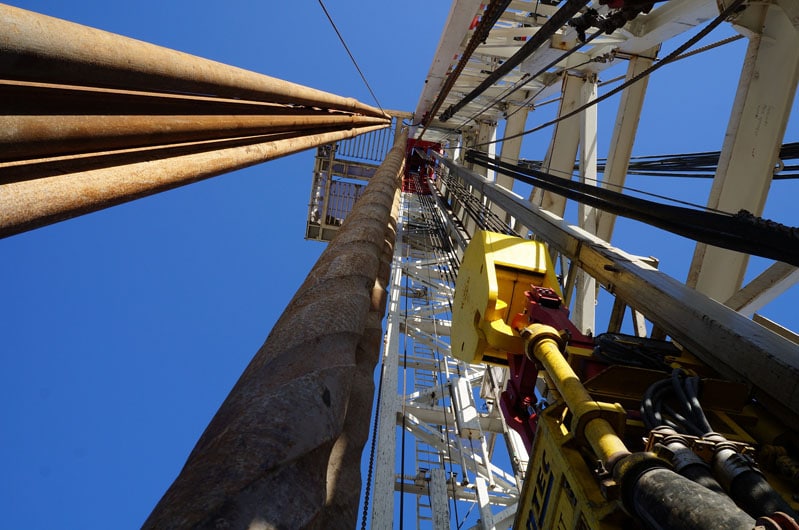
A modern horizontal well does not simply travel straight down into the ground.
It may begin vertically, gradually turn, and continue horizontally through a target formation.
Keeping that well on its planned trajectory requires specialized equipment, accurate measurements, and experienced personnel.
One of those specialists is the directional driller.
Directional drilling is often described as one of the more technically demanding careers available around a drilling rig.
It combines drilling knowledge, downhole equipment, survey calculations, communication, and practical decision making.
Experienced directional drillers may earn substantial compensation, particularly on demanding assignments.
But becoming one is not as simple as completing a short training course.
Most employers expect strong drilling knowledge and demonstrated technical competence.
Here is how directional drillers enter the industry, what they actually do, and which skills help them advance.
What Is Directional Drilling?
Directional drilling involves constructing a well along a planned path rather than allowing it to remain only vertical.
A directional well may be designed to reach a subsurface target that is not directly beneath the rig.
Horizontal drilling is one important application.
By placing part of the well within a producing formation, operators may access a greater length of the reservoir from a particular surface location.
Directional drilling is also used in certain offshore developments, sidetracks, and other well construction projects.
The directional drilling team works with the approved well plan and downhole equipment to help maintain the intended trajectory.
The work requires careful monitoring because a wellbore cannot simply be moved back into position as easily as a vehicle travelling along a road.
What Does a Directional Driller Actually Do?
A directional driller monitors and helps control the direction of the well.
The role can involve reviewing survey measurements, evaluating drilling behavior, communicating with the drilling crew, and using specialized tools to achieve the planned trajectory.
A directional driller needs to understand inclination and azimuth.
Inclination describes the angle of the well relative to vertical.
Azimuth describes the direction of the well in the horizontal plane.
The specialist also needs to understand how the planned well path compares with the actual drilled path.
However, the directional driller does not independently control every aspect of the well.
The drilling contractor’s driller operates the drilling equipment.
The oil and gas operator establishes the well objectives and approved program.
Directional drillers work within the assigned technical and operational responsibilities.
Directional Driller vs. Rig Driller
These are different jobs.
The rig driller operates the drilling controls and coordinates assigned drilling crew activities.
The directional driller specializes in controlling the well trajectory using directional tools and measurements.
The two work closely together.
For example, the directional driller may identify the need for a trajectory adjustment.
The rig driller must understand the relevant operating requirements and carry out approved drilling activities.
Both need strong communication.
A directional driller may have extensive knowledge of downhole steering equipment but is not automatically qualified to replace the rig driller.
Likewise, a rig driller may understand drilling operations without having the specialized training necessary for directional drilling.
How Do Directional Drillers Steer a Well?
Different drilling systems are used depending on the well and equipment.
Some directional assemblies use downhole motors and bent housings to help change the drilling direction.
Rotary steerable systems provide another method for directional control while the drillstring rotates.
The actual equipment and steering approach depend on the tool design and drilling program.
Directional drillers need to understand how the selected system behaves.
They monitor measurements and operating conditions to evaluate progress.
The job also involves recognizing equipment limitations.
Directional control is not simply turning a joystick until the well reaches the target.
The well trajectory develops progressively, and adjustments must be made within engineering and operational constraints.
Why MWD Experience Is Often Valuable
MWD stands for Measurement While Drilling.
MWD systems provide information about the well trajectory and other downhole conditions during drilling.
An MWD field specialist works with measurement equipment and the information transmitted from downhole tools.
Depending on the system, measurements can include inclination, azimuth, temperature, and other parameters.
The information is essential to directional drilling.
That makes MWD a common technical foundation for people interested in becoming directional drillers.
An experienced MWD specialist may already understand survey data, downhole tool operation, drilling procedures, and communication with rig personnel.
However, MWD experience does not automatically qualify someone to make directional steering decisions.
Additional training and supervised experience are required.
Do You Need an Engineering Degree?
Not always.
Some directional drilling employers recruit people with engineering or technical education.
Others consider experienced MWD personnel or workers with substantial relevant drilling experience.
The requirements vary.
A petroleum or mechanical engineering graduate may have useful technical fundamentals.
Someone who has spent several years working with MWD systems may have strong practical knowledge.
A rig worker may understand drilling equipment and operating conditions.
Each background provides different strengths.
But none automatically replaces the need for directional drilling competency.
Some companies provide internal development pathways.
Others recruit only experienced directional drillers.
Can You Become a Directional Driller Without Starting in MWD?
Potentially.
MWD is a common pathway, but it is not the only possible background.
An experienced rig driller may have substantial drilling knowledge.
A drilling engineer may understand well planning and drilling mechanics.
A technically qualified employee may enter a structured directional drilling development program.
However, the direct transition can be difficult without experience interpreting surveys and working with directional tools.
If you are new to drilling, a suitable MWD or technical trainee position may provide a more realistic starting point.
It allows you to develop knowledge of downhole measurement systems before pursuing steering responsibilities.
Step 1: Learn Drilling Fundamentals
A directional driller needs to understand the drilling process.
Relevant subjects include drilling equipment, bottomhole assemblies, drilling fluids, drillstring behavior, drilling parameters, and wellbore stability.
You should understand why weight on bit, rotational speed, torque, and circulation matter.
However, do not assume that changing a drilling parameter will always produce the same directional response.
Actual tool behavior depends on the equipment, formation, and operating conditions.
Training should emphasize understanding the system and following the approved program.
If you are new to the industry, build practical drilling knowledge before pursuing advanced directional responsibilities.
Step 2: Learn Survey Fundamentals
Directional drilling depends on accurate trajectory information.
You need to understand measured depth, true vertical depth, inclination, and azimuth.
Measured depth follows the length of the wellbore.
True vertical depth represents the vertical distance below a reference level.
These values are not necessarily equal in a deviated well.
For example, a horizontal section can add substantial measured depth without increasing true vertical depth by the same amount.
Directional personnel use survey information to understand where the well is located relative to its planned trajectory.
Errors in measurements or interpretation can affect the quality of steering decisions.
This is why survey validation and data quality matter.
Step 3: Understand Dogleg Severity
Dogleg severity describes the rate of change in wellbore direction over a defined length.
It is an important concept because the curvature of the well can affect drilling and completion operations.
Excessive or unexpected curvature can create mechanical and operating challenges.
The appropriate trajectory depends on the well design.
Directional drillers therefore need to understand not only where the well is going, but also how rapidly its direction is changing.
A planned trajectory includes limitations that must be respected.
This is not simply a matter of achieving the shortest path to a target.
Step 4: Gain MWD or Relevant Technical Experience
A suitable MWD position can help you develop practical drilling measurement knowledge.
You may learn to prepare measurement tools, monitor telemetry, review survey quality, and work with field reporting systems.
The exact tasks depend on the company and tool technology.
Some roles involve extensive site work.
Others include remote operations support.
As you develop competence, seek opportunities to understand how directional drillers use the measurements.
Ask qualified specialists to explain the technical reasoning behind approved trajectory decisions.
Do not attempt to perform steering activities beyond your authorization.
Step 5: Learn Directional Drilling Software
Directional drilling teams use specialized software to evaluate trajectories and operating information.
The specific products vary by employer.
You may encounter software for survey management, well planning, trajectory visualization, or tool performance analysis.
A useful starting point is becoming comfortable with the underlying concepts.
Software can perform calculations quickly, but employees need to understand whether the input information is reliable.
A computer model will not automatically recognize every incorrect survey or unrealistic assumption.
Some employers provide proprietary training.
Do not purchase expensive software simply because it appears in one job advertisement.
Step 6: Pursue Supervised Directional Training
Once you have relevant experience, investigate an employer’s directional drilling trainee or development pathway.
A suitable program should provide instruction in steering systems, survey interpretation, tool limitations, reporting, and operating procedures.
Practical mentoring is important.
The trainee needs to observe how experienced personnel respond to different drilling conditions.
There may be competency assessments before independent responsibilities are assigned.
A short classroom course cannot replace the judgment developed through actual drilling operations.
How Long Does It Take to Become a Directional Driller?
There is no universal timeline.
Some people develop the necessary skills more quickly because they already have substantial relevant technical experience.
Others require several years in MWD or drilling related positions.
The company may also have limited trainee openings.
A person can be technically interested and motivated but still need time to demonstrate competency.
Do not assume that every MWD employee will become a directional driller after a fixed number of rotations.
Ask your employer what specific skills and experience are required.
A clear development plan is more useful than a vague promise of rapid promotion.
What Is a Directional Driller’s Work Schedule?
Many directional drilling positions involve rotational field work.
Assignments may require long shifts and extended periods away from home.
Some directional drilling functions can involve remote operating centres, depending on the system and employer.
However, remote technical support does not automatically mean the employee works from home.
A job may require working from a centralized operations facility.
Schedules also depend on customer drilling programs.
Periods of high activity may create substantial working hours.
When drilling slows, available assignments can decline.
How Much Does a Directional Driller Earn?
Directional drillers can receive competitive compensation because the work requires specialized technical knowledge and significant operational responsibility.
However, earnings vary widely.
A trainee does not generally have the same compensation structure as a senior specialist.
Some positions use salaries.
Others may involve daily rates, field premiums, or contract arrangements.
International assignments can involve different compensation and travel terms.
When reviewing an advertised daily rate, determine how many days are actually paid.
A high daily rate with inconsistent work may produce less annual income than a lower rate with dependable assignments.
Do not compare directional driller earnings using job titles alone.
Are Directional Drillers in Demand?
Demand depends heavily on drilling activity and the technical requirements of the wells being drilled.
Horizontal and complex directional drilling requires specialized personnel and equipment.
But the total number of positions is influenced by producer spending, drilling efficiency, and automation.
Some companies use remote monitoring and advanced control systems to improve efficiency.
These technologies may change how field personnel work.
They do not eliminate the need for appropriate technical judgment.
However, employers may expect fewer people to perform certain tasks as systems become more advanced.
Developing strong knowledge of measurement systems, drilling mechanics, and software can help with career flexibility.
Can You Move From Directional Drilling Into an Office Job?
Experienced directional drillers may pursue technical support, well planning, equipment applications, operations coordination, or other related roles.
Some move into training or technical management.
Others use their experience to support drilling engineering teams, subject to the qualifications required for the position.
However, becoming a professional drilling engineer may involve formal education and regulatory requirements.
Field experience alone does not automatically grant an engineering licence.
If you eventually want office work, develop reporting, software, planning, and communication abilities alongside field skills.
What Should Be on a Directional Drilling Resume?
For an MWD specialist seeking advancement, describe the tools and systems you have actually worked with.
Explain your survey, telemetry, and reporting responsibilities.
Identify relevant drilling environments and technical training.
For a rig worker, emphasize drilling knowledge and any legitimate experience involving directional operations.
For an engineering graduate, demonstrate the technical projects and calculations relevant to drilling.
Avoid describing yourself as a directional driller if you have only observed directional drilling activities.
Employers need to understand your actual competency.
Mistakes That Slow Career Progression
One mistake is focusing on salary before learning what the job requires.
Another is assuming MWD and directional drilling are the same occupation.
Some applicants pursue advanced software training without understanding survey fundamentals.
Others expect to become directional drillers immediately after completing an introductory course.
A more effective strategy is building competence progressively.
Understand drilling operations.
Learn the measurements.
Develop field experience.
Study the steering equipment.
Then seek supervised responsibility when an employer determines you are ready.
Frequently Asked Questions
Is directional drilling a good career?
It can be attractive for people interested in drilling technology, technical problem solving, and field operations.
However, it often involves long rotations and cyclical employment.
Can an MWD operator become a directional driller?
Yes, MWD experience can provide a useful foundation.
Additional steering training and demonstrated competence are necessary.
Is directional drilling the same as geosteering?
No. Directional drilling concerns controlling the well trajectory, while geosteering focuses on geological interpretation and placing the well in the desired formation.
The functions work closely together.
Do directional drillers need well control training?
Required training depends on responsibilities, employer standards, and the type of operation.
Workers should obtain the qualifications relevant to their actual role.
Can a directional driller work internationally?
Experienced specialists may qualify for international opportunities where they meet technical and immigration requirements.
Is a university degree mandatory?
Not for every directional drilling position.
Requirements depend on the employer and training pathway.
Becoming the Person Trusted With the Well Trajectory
Directional drilling combines field experience with specialized technical judgment.
The strongest career path is rarely the one that promises the fastest promotion.
It is the one that develops accurate measurement skills, sound drilling knowledge, and familiarity with directional equipment.
If you are just entering the industry, investigate MWD or appropriate drilling positions.
If you already have relevant experience, ask about formal directional training opportunities.
Learn to evaluate survey quality and understand well trajectories.
Become comfortable communicating technical information.
And take the time needed to demonstrate competence.
A directional driller’s value comes from understanding the drilling operation and making appropriate decisions within the approved program.
That expertise is developed through training, experience, and careful attention to the information that guides the well.