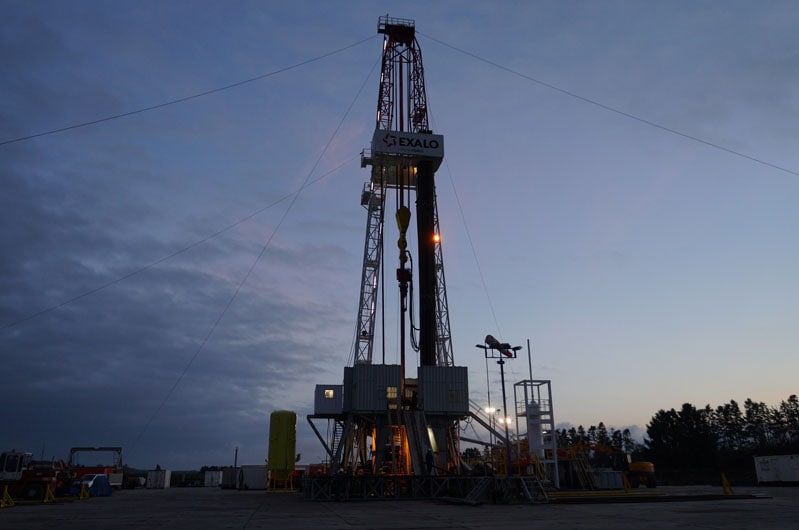
Cementing operator is one of those oilfield job titles that tells an outsider almost nothing about the actual job.
Are you mixing cement?
Driving a truck?
Operating pumps?
Working on the drilling rig?
Controlling pressure?
The answer is usually some combination of all of them.
Oilfield cementing crews are responsible for pumping specially designed cement into wells during drilling, completion, and repair operations.
It is physically demanding work involving heavy equipment, high pressure pumping, chemicals, trucks, long hours, and unpredictable schedules.
It can also be an entry point into the oil and gas industry for someone without a petroleum engineering degree.
For anyone considering the job, it helps to understand what actually happens during a cement job rather than judging the position from the word cement.
Why Do Oil and Gas Wells Need Cement?
When a well is drilled, steel casing is installed inside the drilled hole.
There is initially a space between the outside of the casing and the surrounding formation.
This space is called the annulus.
Cement is pumped into this space.
Once the cement sets, it helps support the casing and isolate different underground formations from each other.
That isolation is extremely important.
Without effective cement, fluids could potentially move between formations where they are not supposed to go.
Gas could migrate.
Water could communicate with hydrocarbon zones.
Pressure control could become more difficult.
The casing would also lack some of the support provided by the cement sheath.
Cement is therefore part of the well’s structure and pressure isolation system.
Is Oilfield Cement the Same as Construction Cement?
Not exactly.
Oil well cement is designed for conditions found underground.
The cement may have to travel thousands of feet down a well before being placed.
It can encounter high pressure.
Temperature can vary significantly.
The slurry needs to remain pumpable long enough to reach the required location.
Then it needs to develop sufficient strength after placement.
Different chemicals can be added to modify how the slurry behaves.
The cement program is therefore engineered for the particular well.
What Does a Cementing Operator Actually Do?
A cementing operator helps prepare, transport, operate, and maintain the equipment used during cementing operations.
Depending on experience level, duties can include:
Driving cementing equipment to location
Rigging up high pressure lines
Connecting pumping equipment
Preparing bulk cement systems
Operating pumps
Monitoring equipment
Mixing cement slurry
Handling chemicals
Maintaining trucks and pumping units
Cleaning equipment after the job
Helping pressure test the system
Rigging equipment down
Completing required paperwork
An experienced operator may be responsible for specific pieces of equipment while a supervisor manages the overall cementing operation.
Where Does the Cementing Crew Work?
Most primary cement jobs occur at drilling locations.
The drilling crew drills a section of the well.
Casing is run into the hole.
The cementing crew arrives and connects its equipment.
Cement is pumped.
After the cement operation is completed, the drilling operation can continue according to the well program.
Cementing crews can also work on producing wells during repair or remedial operations.
The job therefore overlaps with drilling, completion, and well intervention activities.
What Is Primary Cementing?
Primary cementing is the cement placement performed after a casing string is installed.
The objective is generally to place cement in the annular space between the casing and the formation.
Imagine a steel pipe inside a larger drilled hole.
Cement needs to fill the required space around the pipe.
Getting it there correctly is more complicated than simply pouring cement from the top.
The slurry is normally pumped down the inside of the casing and then forced around the bottom of the casing and upward into the annulus.
Why Is Cement Pumped Down the Casing First?
The casing provides a controlled path to the bottom of the well.
Cement slurry can be pumped down the casing using surface pumping equipment.
When it reaches the bottom, it flows through equipment at the casing shoe and begins moving upward around the outside of the casing.
This allows cement to be placed deep underground without trying to pump it directly down the narrow annular space from the surface.
What Is a Casing Shoe?
The casing shoe is located near the bottom of a casing string.
It helps guide the casing into the well and forms part of the equipment used during cementing.
Other components can be installed near the bottom of the casing depending on the design.
This area is important because the cement slurry has to transition from travelling down the inside of the casing to travelling upward through the annulus.
What Is a Cement Plug?
During many cementing operations, plugs are used to separate different fluids inside the casing.
For example, drilling fluid may already be inside the casing.
Spacer fluid may be pumped.
Cement follows.
Displacement fluid comes after the cement.
Plugs help keep these fluids separated and provide indications when particular stages of the operation have been completed.
The exact plug arrangement depends on the cementing program.
What Is a Spacer?
A spacer is a specially designed fluid pumped between drilling fluid and cement.
Drilling mud and cement are not always chemically compatible.
Simply allowing them to mix can damage the properties of the cement slurry.
A spacer helps separate them.
It can also help clean drilling fluid from casing and formation surfaces so the cement can establish better contact.
Good cement placement depends on much more than the cement itself.
What Is Displacement Fluid?
Once the required cement volume has been pumped into the casing, another fluid is pumped behind it.
This displacement fluid pushes the cement down the casing and into the annulus.
The cementing crew calculates and monitors volumes carefully.
Pump too little and the cement may not reach the intended location.
Pump too much and cement can be displaced farther than planned.
Volume control is therefore a major part of the job.
What Equipment Does a Cementing Operator Use?
The exact equipment depends on the company and operation.
A cementing spread may include:
Cement pumping units
Bulk cement equipment
Mixing systems
Chemical systems
High pressure iron
Hoses
Manifolds
Storage tanks
Water systems
Density measurement equipment
Pressure monitoring equipment
Trucks
The pumping unit is one of the central pieces of equipment.
It has to mix and pump cement under controlled conditions.
What Is a Cement Pumping Unit?
A cement pumping unit contains high pressure pumps and associated equipment used to move cement slurry into the well.
The unit may be truck mounted or skid mounted depending on the application.
The pumps must deliver the required rate while overcoming well pressure and friction.
During the job, operators monitor the pumping system closely.
Pressure can change as different fluids move through the well.
Unexpected changes can indicate a problem.
How Much Pressure Is Used During Cementing?
There is no single cementing pressure.
It depends on the well.
Depth matters.
Fluid density matters.
Pumping rate matters.
Casing size matters.
Well geometry matters.
Formation pressure matters.
Friction matters.
A shallow job can have very different pressure requirements from a deep high pressure well.
The important point for a new operator is that cementing equipment can contain significant stored energy.
High pressure lines deserve constant respect.
What Is High Pressure Iron?
In oilfield terminology, iron commonly refers to the heavy pressure containing pipes, unions, valves, and fittings used to connect pumping equipment.
These components create the flow path between the cementing unit and the well.
They are designed for specific pressure ratings and service conditions.
Correct assembly matters.
Inspection matters.
Pressure rating matters.
Line of fire awareness matters.
A high pressure connection is not just ordinary plumbing.
Why Is Rigging Up Such an Important Part of the Job?
Before pumping begins, the equipment has to be connected correctly.
Lines need to follow the planned flow path.
Connections must be properly made.
Valves need to be in the correct positions.
Equipment needs to be secured.
Pressure ratings need to be appropriate.
The system is then checked according to the job procedure.
A mistake during rig up may not become obvious until pressure is applied.
By then, correcting the mistake can be much more difficult.
What Is Pressure Testing?
Before pumping cement into the well, sections of the pumping system may be pressure tested.
The purpose is to verify that connections and pressure containing equipment can hold the required pressure.
A small leak at atmospheric pressure may look harmless.
The same failure under high pressure can release substantial energy.
Pressure testing gives the crew an opportunity to identify problems before the actual cement job begins.
What Does the Cementing Operator Watch While Pumping?
Several variables matter.
Pump pressure.
Pump rate.
Slurry density.
Fluid volumes.
Tank levels.
Equipment condition.
The operator also watches for leaks, unusual vibration, abnormal noise, changing pressure, and communication from other crew members.
A cement job may be designed on a computer before anyone reaches location.
But once pumping begins, field observations matter.
Why Is Cement Density Important?
The density of the cement slurry affects both placement and downhole pressure.
If density is wrong, the slurry may not behave as designed.
The cementing crew therefore needs to mix the slurry consistently.
Water concentration matters.
Cement concentration matters.
Additives matter.
Mixing performance matters.
A cement slurry is an engineered fluid.
Changing its composition changes its properties.
What Is Thickening Time?
Cement cannot begin setting before it reaches its intended location.
Thickening time describes how long the slurry remains sufficiently pumpable under specified conditions.
A deep well can require considerable time to mix, pump, and displace the cement.
The cement design therefore needs enough working time to complete the operation.
But excessively long setting times can delay the next stage of the well.
The chemistry has to match the operation.
What Are Cement Retarders?
Retarders are additives used to slow the setting behavior of cement.
They can be important in deeper or hotter wells where more pumping time is required.
Without appropriate control, cement could begin becoming too viscous before placement is complete.
That can create a serious operational problem.
The cementing crew does not casually change additive concentrations during a job.
The slurry design is prepared for the expected conditions.
What Are Cement Accelerators?
Accelerators do the opposite.
They help cement develop strength more quickly.
They can be useful when faster setting is desirable.
Shallow wells and certain low temperature applications may require different chemistry from deep hot wells.
This is one reason oilfield cementing is more technical than mixing ordinary concrete.
The same basic cement can behave very differently depending on additives and conditions.
What Is Free Water?
A poorly designed or unstable cement slurry can separate.
Water may separate from the slurry.
This is undesirable because the goal is to create a reliable cement barrier.
Cement properties are tested before critical operations to determine whether the slurry will perform under expected well conditions.
The laboratory side of cementing is therefore closely connected to the field operation.
Why Does Temperature Matter?
Chemical reactions in cement are strongly affected by temperature.
A slurry that behaves one way at surface temperature can behave differently deep underground.
Bottomhole conditions therefore matter when designing cement.
Engineers may simulate expected pressure and temperature in laboratory testing.
This helps estimate how the slurry will behave during the actual operation.
What Does a Cementing Supervisor Do?
The supervisor has greater responsibility for execution of the cementing job.
They coordinate with the drilling team and company representative.
They review the pumping program.
They monitor volumes and pressures.
They help ensure the correct fluids are pumped in the correct sequence.
They respond to changing conditions.
They also supervise the cementing crew.
An operator who learns the technical side of the work may eventually progress toward supervisory responsibilities.
Do You Need an Engineering Degree to Be a Cementing Operator?
Usually not.
Cementing operator positions are generally field roles.
Employers often value mechanical ability, driving qualifications, industrial experience, reliability, and willingness to work demanding schedules.
A degree can be relevant for engineering or certain technical positions, but it is not normally the basic requirement for operating cementing equipment.
Requirements vary by employer and location.
Is a Commercial Driving Licence Important?
It can be extremely useful for land based cementing work.
Cementing operations involve moving heavy trucks and equipment between locations.
An employee who can legally operate the required vehicles is more useful to the crew.
Specific licence requirements depend on jurisdiction, vehicle type, and employer.
Someone trying to enter oilfield services should read current job postings in their region before paying for additional qualifications.
Is Cementing a Good Entry Level Oilfield Job?
It can be.
Cementing exposes a new worker to drilling operations, high pressure pumping, well construction, fluid systems, heavy equipment, and oilfield safety.
You can learn how a well is built rather than performing only one isolated task.
The tradeoff is the lifestyle.
Hours can be unpredictable.
The work can be physical.
Travel can be significant.
Equipment maintenance can continue after the actual pumping job is finished.
What Is a Typical Day Like?
There may not be a typical day.
You could arrive at the shop expecting maintenance work.
Then a call comes in.
Equipment needs to be prepared.
The crew drives several hours to a drilling location.
The casing operation is delayed.
You wait.
Eventually the rig is ready.
The crew rigs up.
Equipment is tested.
The cement job begins.
Pumping takes several hours.
The crew rigs down.
Then equipment has to be cleaned and returned.
A job that looks short on the pumping schedule can consume a much larger part of the day.
Why Is There So Much Waiting?
Cementing is only one part of drilling a well.
The cement crew depends on other operations being completed first.
Casing has to be ready.
The drilling rig has to be ready.
The well has to be in the expected condition.
Equipment from other service companies may need to be moved.
Problems earlier in the operation can delay everything afterward.
The cementing crew may arrive according to the original schedule and then wait hours before pumping.
This is a normal part of many service company jobs.
Can Cementing Crews Sleep at the Wellsite?
Working arrangements vary significantly.
Some operations use camps.
Some crews stay in hotels.
Some locations have sleeping facilities.
Some jobs involve long periods of waiting around the location.
Fatigue management is extremely important because driving often forms part of the job.
Working long hours and then driving several hours creates an obvious risk.
Companies have policies intended to manage these situations, but workers also need to recognize when fatigue is affecting them.
Is Cementing Physically Hard?
It can be.
There is heavy equipment.
Rigging work can be demanding.
Workers spend time outdoors.
Weather can be severe.
There can be climbing, lifting, carrying, cleaning, and maintenance.
Modern equipment has reduced some manual work, but cementing is still a field service job.
Anyone applying solely because they heard oilfield jobs pay well should understand the physical and lifestyle requirements.
Why Is Cleaning Such a Big Part of Cementing?
Because cement hardens.
That simple fact creates a major operational challenge.
Cement left inside equipment can become a solid obstruction.
Mixing equipment, lines, tanks, and other components therefore need proper cleaning after operations.
A new employee may be surprised by how much time is spent washing and maintaining equipment.
The glamorous part is pumping a critical job.
The practical part is making sure the equipment is ready to do it again.
What Happens If Cement Sets Inside the Equipment?
It can create an expensive problem.
Hardened cement can block flow paths.
Valves can become unusable.
Lines can become restricted.
Mixing systems can be damaged.
Removing hardened material can require substantial labor or component replacement.
Cleaning is therefore not busywork.
It protects the equipment and prepares the spread for the next job.
What Does the Bulk Plant Do?
Dry cement and additives need to be prepared and delivered to the field.
Bulk facilities store and handle the materials used for cementing jobs.
Depending on the system, dry cement can be blended with selected additives before being transported to location.
The field crew then mixes the dry material with water and other required components to create the pumpable slurry.
Accurate material handling matters because the slurry needs to match the approved design.
What Happens If the Cement Job Goes Wrong?
Several types of problems can occur.
Cement may not reach the intended height.
Fluid losses can occur.
Equipment can fail.
Pressure can behave unexpectedly.
Contamination can affect the slurry.
Channels may develop.
Gas migration can occur.
The cement may not provide adequate isolation.
Some problems are discovered immediately.
Others may become apparent later during testing or production.
Remedial cementing may then be required.
What Is Remedial Cementing?
Remedial cementing is performed to repair or improve an existing cement barrier.
A producing or completed well may develop an isolation problem.
Engineers first try to determine where communication is occurring.
A cement treatment can then be designed to place material in the required area.
Remedial jobs can be more challenging than primary cementing because the well already exists and access to the problem area may be limited.
What Is a Cement Squeeze?
A squeeze cementing operation places cement under pressure into a selected area of the well.
The goal may be to seal unwanted communication, repair a leak path, isolate perforations, or restore a barrier.
The cement is not simply pumped until the well is full.
Placement has to be controlled.
Pressure response can provide important information during the operation.
Squeeze cementing is a specialized form of remedial work.
What Is Lost Circulation During Cementing?
Sometimes the formation cannot support the pressure created during cement placement.
Fluid begins entering fractures or highly permeable zones instead of remaining where intended.
This is called lost circulation.
Severe losses can prevent the planned cement column from being established.
Engineers therefore consider formation strength when designing cement density and pumping rates.
The challenge is to place the cement without exceeding what the formation can tolerate.
Why Can’t You Just Use Heavier Cement?
Heavier cement creates greater hydrostatic pressure.
That may be useful for controlling formation pressure.
But excessive pressure can fracture weak formations and cause losses.
A cement program therefore has to balance several competing requirements.
The slurry needs appropriate density.
It must remain pumpable.
It must eventually develop strength.
It must avoid excessive formation pressure.
It must also provide adequate isolation.
There is rarely one property that can be maximized without affecting something else.
What Is Waiting on Cement?
After cement has been placed, operations may pause while it develops sufficient strength.
This period is commonly called waiting on cement.
The required time depends on the cement system and well conditions.
The drilling crew cannot simply continue immediately if the cement has not developed the properties needed for the next operation.
Time spent waiting costs money because the rig remains expensive even when it is not drilling.
This creates strong incentive to design cement that develops adequate strength efficiently without sacrificing reliability.
How Do Engineers Know Whether the Cement Job Worked?
Several methods can be used.
Pumping records are reviewed.
Volumes are compared with the plan.
Pressure behavior is analyzed.
Pressure testing may be performed later.
Specialized logging tools can sometimes evaluate cement condition behind casing.
No single measurement gives a perfect picture in every well.
Engineers combine available evidence to determine whether the required isolation was achieved.
What Is a Cement Bond Log?
A cement bond log is a wireline measurement used to help evaluate the condition of cement behind casing.
The tool uses acoustic behavior to provide information about how the casing is coupled to the material around it.
The interpretation can help identify areas where cement bonding may be poor.
It does not simply take a photograph of the cement.
Like many downhole measurements, the result needs technical interpretation.
Why Is Communication So Important During a Cement Job?
Several groups may be involved.
The drilling crew.
Casing crew.
Cementing crew.
Mud engineer.
Company representative.
Other service personnel.
A valve opened by one group can affect another group’s equipment.
The cementing supervisor needs to know when the rig is ready.
The rig needs to know when pumping begins.
Volumes and pressure changes need to be communicated.
Complex operations become safer when everyone understands the current stage of the job.
What Are the Main Safety Hazards in Cementing?
High pressure is one of the major hazards.
Others can include:
Heavy vehicles
Rotating machinery
Suspended loads
Chemical exposure
Pinch points
Hot equipment
Noise
Slippery surfaces
Fatigue
Pressurized iron
Moving equipment
Workers also need to consider the hazards associated with the well itself, including hydrocarbons and hydrogen sulfide where applicable.
What Is Line of Fire in Cementing?
Imagine a high pressure connection fails.
Where would the line move?
Where would the fluid travel?
Where could fragments go?
Those areas are potential lines of fire.
A worker should avoid placing their body where released energy is likely to travel.
This principle applies during pressure testing and pumping as well as during rigging operations.
One of the most useful habits in oilfield work is constantly asking what could move if something failed.
Why Should You Never Hit Pressurized Equipment?
Because stored pressure can turn a mechanical failure into a violent release.
A connection that will not move may tempt someone to strike or adjust it.
If the equipment is under pressure, that can be extremely dangerous.
Pressure needs to be properly isolated and verified before work is performed according to the required procedure.
Never assume a line is depressurized simply because a pump has stopped.
What Skills Help a Cementing Operator Advance?
Mechanical understanding helps.
Basic mathematics helps.
Driving ability helps.
Equipment troubleshooting helps.
Communication helps.
But one of the biggest advantages is understanding the actual cementing process.
Do not only learn which button starts the pump.
Learn why the pump rate matters.
Learn why density matters.
Learn what displacement means.
Learn why pressure changes.
Learn what is happening underground.
The operator who understands the process is much more valuable than someone who can only repeat a sequence of actions.
Can a Cementing Operator Become a Supervisor?
Yes.
That is a common progression for experienced field personnel in some organizations.
A supervisor needs a stronger understanding of cement calculations, equipment, well conditions, pressure behavior, job planning, and crew management.
They also communicate directly with the customer and other people responsible for the well.
The transition means taking responsibility for the entire operation rather than only one piece of equipment.
What Other Jobs Can Cementing Experience Lead To?
Cementing provides experience with pumps, pressure, fluids, wells, trucks, and field operations.
Depending on the worker and available opportunities, experience may support moves into:
Coiled tubing
Stimulation services
Well intervention
Field supervision
Operations coordination
Equipment maintenance
Technical services
Sales
Other pressure pumping roles
Some workers stay in cementing for their entire field career.
Others use it as a way to gain broad oilfield experience.
Is Cementing Better Than Frac?
Neither job is automatically better.
They expose workers to different operations.
Frac crews focus heavily on stimulation and large scale pressure pumping.
Cement crews work closely with well construction and casing operations.
Schedules, pay structures, equipment, and career opportunities vary by company and region.
Someone choosing between them should consider what they want to learn, not only the advertised hourly wage.
Is Cementing Better Than Wireline?
Again, they are very different.
Wireline work can involve downhole tools, logging, perforating, depth control, and specialized well intervention.
Cementing involves fluid systems, high pressure pumps, bulk materials, well construction, and heavy equipment.
A mechanically minded person interested in pumps and fluids may enjoy cementing.
Someone more interested in downhole measurements and tools may prefer wireline.
What Should You Expect as a New Cementing Operator?
Expect to know very little at first.
You will probably spend significant time learning equipment.
You may clean more equipment than you expected.
You will learn connections.
Valves.
Pumps.
Trucks.
Pressure lines.
Fluid systems.
Safety procedures.
You may spend hours waiting and then suddenly have a large amount of work to do.
Pay attention to experienced operators who explain why something is being done rather than only telling you what to do.
Those explanations are where much of the useful learning happens.
What Questions Are Asked in a Cementing Operator Interview?
Entry level interviews may focus on practical issues.
Can you work long hours?
Can you travel?
Are you comfortable driving large vehicles if required?
Can you work outdoors?
Do you understand basic mechanical equipment?
How do you approach safety?
What would you do if you noticed a leak?
What would you do if you did not understand an instruction?
Why do you want to work in oilfield cementing?
The employer usually does not expect an inexperienced applicant to design a cement slurry.
They want someone who can be trained and trusted around industrial equipment.
How Should You Prepare for the Interview?
Learn the basic purpose of cementing.
Understand what casing is.
Understand what the annulus is.
Know that cement is normally pumped down the casing and displaced upward around the outside.
Understand that the job involves high pressure equipment.
Learn basic concepts such as pressure testing, line of fire, pumps, valves, and stored energy.
You do not need to pretend to be an expert.
Showing that you researched the actual operation already separates you from applicants who only know that oilfield work can pay well.
Is Cementing a Good Long Term Career?
It can be for someone who likes field operations.
There is technical depth beyond the entry level operator role.
Experienced personnel can learn primary cementing, remedial cementing, pressure pumping, slurry behavior, equipment troubleshooting, and job supervision.
The larger question is often lifestyle.
Long hours and unpredictable calls can become harder as personal circumstances change.
Some workers enjoy field rotations for decades.
Others eventually move into coordination, technical, sales, maintenance, or management positions.
Frequently Asked Questions
What does a cementing operator do?
A cementing operator helps transport, prepare, operate, and maintain the equipment used to mix and pump cement into oil and gas wells.
Do you need a degree to become a cementing operator?
Usually not. Operator roles are generally field positions, although requirements vary between employers.
Why is cement pumped into an oil well?
Cement helps support casing and isolate underground formations so fluids do not move through unwanted paths around the casing.
Where does the cement go?
During primary cementing, slurry is commonly pumped down the inside of the casing, around the bottom, and upward into the annular space outside the casing.
Is oilfield cementing hard work?
It can be physically demanding and may involve long hours, heavy equipment, outdoor work, high pressure pumping, travel, and unpredictable schedules.
What is a cementing unit?
A cementing unit contains equipment used to mix and pump cement slurry into the well at the required rate and pressure.
What is a cement spacer?
A spacer is a fluid pumped between drilling mud and cement to reduce contamination and help prepare surfaces for effective cement placement.
What does waiting on cement mean?
Waiting on cement is the period after placement when operations pause so the cement can develop sufficient strength for the next stage of the well operation.
What is squeeze cementing?
Squeeze cementing is a remedial operation in which cement is placed under controlled pressure into a selected area to repair or improve well isolation.
Is cementing an entry level oilfield job?
Some companies hire and train people for entry level cementing operator positions. Driving qualifications, mechanical experience, and industrial experience can improve an applicant’s chances.
Does a cementing operator need a commercial driving licence?
It is commonly valuable for land operations because heavy trucks and equipment must be transported between well locations. Exact requirements depend on the employer and jurisdiction.
Is cementing dangerous?
The work involves real hazards including high pressure equipment, heavy vehicles, chemicals, suspended loads, moving machinery, fatigue, and stored energy. Training, equipment integrity, procedures, and good communication are essential.
Can a cementing operator become a supervisor?
Yes. Experienced operators who develop strong technical knowledge and leadership skills can progress into supervisory and other senior field roles.
Is cementing a good way to get into oil and gas?
It can be a useful entry point because it provides exposure to drilling rigs, well construction, pumps, fluids, pressure control, casing operations, and other oilfield services.