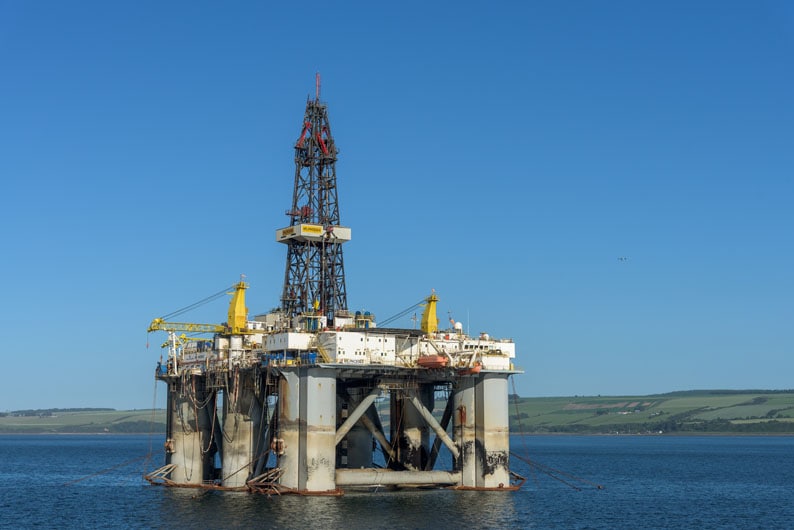
Oil companies can spend months studying geology, seismic data, reservoir models, nearby wells, and pressure information before choosing where to drill.
Then the rig arrives.
The well is drilled thousands of feet into the earth.
Millions of dollars may already have been spent.
And sometimes the result is simple.
There is not enough oil or gas to justify completing the well.
This is called a dry hole.
A dry hole does not necessarily mean the well contains absolutely no hydrocarbons.
It means the well did not find oil or natural gas in quantities that can be economically produced under the conditions being evaluated.
That distinction matters.
A well can encounter oil shows and still be classified as unsuccessful.
It can encounter gas that will not flow at a useful rate.
It can find excellent reservoir rock with no hydrocarbons.
It can find hydrocarbons in rock that is too tight to produce commercially.
It can even discover a technically producible accumulation that is simply too small or too expensive to develop.
Dry holes are one of the clearest reminders that petroleum exploration deals with uncertainty underground.
What Is a Dry Hole in Oil and Gas?
A dry hole is a drilled well that does not justify completion as a commercial oil or gas producer.
The well may contain no meaningful hydrocarbons.
It may contain only water.
It may contain small hydrocarbon shows.
It may find hydrocarbons that cannot flow at an economic rate.
The exact classification depends on the operator, regulatory definitions, and purpose of the well.
The practical outcome is usually the same.
The company decides not to complete the well as a normal producing oil or gas well.
Does a Dry Hole Literally Mean the Well Is Dry?
No.
A dry hole can contain plenty of fluid.
That fluid may simply be water.
The term refers to the absence of commercially useful oil or gas production, not the absence of liquids.
A well can therefore be completely full of formation water and still be called dry.
This often confuses people who hear that a well produced water after drilling.
Finding water does not automatically mean the drilling operation failed mechanically.
The well may have successfully reached the target formation while discovering that the target contains water instead of commercially producible hydrocarbons.
Why Would an Oil Company Drill Somewhere Without Knowing Oil Is There?
Because there is no perfect method for observing everything underground before drilling.
Geologists and geophysicists can collect a remarkable amount of information from the surface.
They can map rock formations.
Analyze seismic reflections.
Study existing wells.
Examine regional geology.
Model structures.
Estimate reservoir properties.
Evaluate source rocks.
Study migration pathways.
But these tools provide interpretations.
The drill bit provides the physical test.
Until a well penetrates the target, uncertainty remains.
How Do Oil Companies Decide Where to Drill?
The process depends on whether the company is exploring a new area or developing a known reservoir.
For conventional exploration, the company may evaluate several major geological requirements.
There needs to be a source of hydrocarbons.
Those hydrocarbons need to have formed.
They need to migrate toward the prospect.
A reservoir rock needs to be present.
The reservoir needs enough porosity and permeability.
A trapping geometry needs to exist.
A seal needs to prevent the hydrocarbons from escaping.
The timing of these events also needs to work.
A prospect can look excellent overall while failing because of one missing element.
What Is a Petroleum System?
A petroleum system describes the geological elements and processes required to create and preserve an oil or gas accumulation.
It commonly involves:
Source rock
Hydrocarbon generation
Migration
Reservoir rock
Trap
Seal
Proper timing
If one critical element fails, a commercial accumulation may not exist.
This is why exploration wells can fail even after sophisticated geological analysis.
The subsurface system has several conditions that must all work together.
What Is Source Rock?
Source rock is organic rich rock capable of generating petroleum under appropriate temperature and pressure conditions.
Organic material becomes buried over geological time.
As burial increases, heat and pressure change that material.
Under suitable conditions, oil and gas can form.
But the presence of organic material alone is not enough.
The source rock must reach the correct maturity.
If it remains too cool, significant petroleum generation may never occur.
If it becomes excessively mature, the type of hydrocarbons generated can change.
Can a Well Be Dry Because No Oil Was Ever Generated?
Yes.
A prospect can contain what appears to be a good reservoir and trap while lacking an effective mature source rock.
In that situation, there may simply have been no significant petroleum available to charge the structure.
Exploration teams try to evaluate source maturity before drilling, but uncertainty remains, especially in areas with limited well data.
What Is Hydrocarbon Migration?
Oil and gas usually do not remain exactly where they were generated.
They can migrate through permeable rocks, fractures, and other pathways.
Eventually they may enter a reservoir and accumulate beneath a sealing layer.
A prospect therefore needs more than a good source rock.
The generated hydrocarbons also need a pathway to reach the target.
A beautiful reservoir can remain full of water if oil and gas never migrated into it.
Can Migration Cause a Dry Hole?
Yes.
Imagine a source rock generates large amounts of oil.
A nearby sandstone has excellent porosity.
A structural trap exists.
But a geological barrier prevents oil from reaching the sandstone.
The reservoir remains water filled.
The exploration well reaches exactly the expected rock at exactly the expected depth and still becomes a dry hole.
The problem was not reservoir presence.
It was charge.
What Is Reservoir Rock?
Reservoir rock is rock capable of storing and transmitting fluids.
Sandstone and carbonate rocks are common examples, although many different reservoir types exist.
Two important properties are porosity and permeability.
Porosity describes the amount of pore space.
Permeability describes how easily fluids can move through connected pore spaces.
A rock can have good porosity but poor permeability.
That means it may contain hydrocarbons but not allow them to flow efficiently into the well.
Can Oil Be Present but the Well Still Be Considered Dry?
Yes.
This is extremely important.
Commercial success is not simply about detecting a hydrocarbon molecule.
A formation may contain oil but have poor permeability.
The hydrocarbon interval may be too thin.
The accumulation may be too small.
Water production may be excessive.
Pressure may be poor.
Development costs may be too high.
The oil quality may be difficult to process or transport.
A well can therefore encounter hydrocarbons and still not justify completion.
What Is a Trap?
A petroleum trap is a geological configuration that allows hydrocarbons to accumulate instead of continuing to migrate.
Because oil and gas are generally less dense than formation water, they tend to move upward when pathways exist.
A trap blocks that movement.
Structural traps can result from folding or faulting.
Stratigraphic traps can result from changes in rock type or depositional geometry.
Some prospects involve combinations of these mechanisms.
If the trap does not close as expected, hydrocarbons may escape.
How Can Seismic Data Make a Trap Look Better Than It Really Is?
Seismic surveys provide indirect images of underground rock boundaries.
They are incredibly useful, but they are not photographs.
The data must be processed and interpreted.
Depth conversion introduces uncertainty.
Fault positions can be uncertain.
Rock velocities can vary.
A structure that appears closed on the seismic interpretation may turn out to have a spill point or opening that allows hydrocarbons to escape.
A small interpretation error at great depth can be enough to change the drilling result significantly.
What Is a Seal?
A seal is low permeability rock that prevents hydrocarbons from continuing to migrate.
Shale is a common sealing rock.
Salt can provide an extremely effective seal in certain geological settings.
A trap without an effective seal may not retain hydrocarbons.
The structure can be present.
The reservoir can be present.
Oil may even have migrated through the area.
But if the seal fails, the accumulation may leak over geological time.
Can Oil Have Been There in the Past and Be Gone Today?
Yes.
Hydrocarbons may have entered a reservoir and later escaped.
Fault movement can damage a seal.
Erosion can alter burial conditions.
Structural changes can open migration pathways.
Over geological time, petroleum systems evolve.
The subsurface configuration present today is not necessarily the same as when hydrocarbons were first generated.
Exploration teams therefore study geological history, not just present day structure.
Why Is Timing Important?
Suppose a perfect trap exists today.
That does not guarantee it existed when oil was migrating through the area.
If hydrocarbons migrated before the trap formed, they may have continued elsewhere.
By the time the trap developed, the main migration event could already be over.
The opposite problem can also occur.
A trap may form, fill, and later be disrupted.
Correct geological timing is therefore a critical part of exploration risk.
What Happens When the Drill Bit Reaches the Target Formation?
The drilling team does not usually experience a dramatic moment where oil suddenly blasts out of the ground.
Modern wells are deliberately kept under pressure control.
Drilling mud normally prevents formation fluids from flowing freely into the well.
Instead, the team gathers evidence.
Rock cuttings are examined.
Gas levels in the returning drilling fluid can be monitored.
Downhole measurements can be collected.
Mud loggers may identify hydrocarbon shows.
Logging tools can evaluate rock and fluid properties.
The operator combines these observations before deciding what the well actually found.
What Are Oil Shows?
An oil show is evidence suggesting hydrocarbons are present in rock encountered by the well.
Shows can appear in cuttings, cores, drilling fluid, gas measurements, fluorescence tests, logs, and other data.
A show is encouraging.
It is not the same as a commercial discovery.
A small amount of oil can exist in a formation that has no realistic production value.
Exploration teams therefore evaluate both presence and producibility.
What Does It Mean If the Well Finds Only Water?
It depends on what the geologists expected.
If the target reservoir was predicted correctly but contains water, several interpretations are possible.
The trap may not have received hydrocarbon charge.
The well may have been drilled below the hydrocarbon water contact.
The hydrocarbon column may be smaller than expected.
The trap may have leaked.
The prospect may never have contained oil or gas.
The well result becomes evidence that helps distinguish between these possibilities.
Can the Company Accidentally Drill Below the Oil?
Yes, depending on the geometry.
In a conventional reservoir, gas may occupy the upper portion of the structure, oil can occur below the gas, and formation water may occur deeper.
The boundaries are commonly called fluid contacts.
A well drilled in the wrong structural position might encounter water even though hydrocarbons exist elsewhere in the reservoir.
That does not automatically mean the entire prospect is dry.
The company must determine whether the well location missed the accumulation or whether the original geological model was wrong.
What Is the Oil Water Contact?
The oil water contact is the approximate boundary separating an oil bearing portion of a reservoir from the underlying water bearing portion.
The contact is not always perfectly sharp.
Capillary effects can create transition zones.
Its depth can also vary across complicated reservoirs.
Knowing the contact helps engineers estimate the height and volume of the hydrocarbon column.
An exploration well can provide crucial information about this boundary.
What Is a Gas Water Contact?
A gas water contact is the boundary between gas bearing reservoir rock and underlying water bearing rock when no significant oil interval is present between them.
As with an oil water contact, the real transition can be more complicated than a simple horizontal line.
Finding the contact helps define the size of the gas accumulation.
How Do Well Logs Help Determine Whether Oil or Gas Is Present?
Well logs measure physical properties of the formation.
Different tools can help estimate:
Porosity
Rock type
Electrical resistivity
Fluid saturation
Density
Natural radioactivity
Acoustic properties
Formation pressure
The interpretation combines several measurements.
For example, water containing dissolved salts often conducts electricity better than hydrocarbon filled pore space.
Resistivity measurements can therefore contribute to saturation analysis.
No single log should automatically be treated as perfect proof.
What Is Formation Pressure Testing?
Special downhole tools can measure pressure at selected depths.
Pressure data help determine whether intervals communicate with one another.
They can help identify fluid gradients.
Engineers can use pressure behavior to estimate whether the formation contains gas, oil, or water.
Pressure measurements can also help identify fluid contacts.
This information is especially valuable in exploration wells where very little direct reservoir data existed before drilling.
Why Would a Company Run a Drill Stem Test?
A drill stem test allows engineers to evaluate how a formation actually flows under controlled conditions.
The formation is opened to the well for a selected period.
Pressure response is recorded.
Fluids may be recovered.
The test can help answer important questions.
Will the reservoir flow?
At what rate?
What fluid is present?
What is the formation pressure?
How rapidly does pressure recover?
A promising log response does not always translate into good production performance, so testing can reduce uncertainty.
Can a Well Be Abandoned Without Being Flow Tested?
Yes.
If the logs, samples, and other information clearly show that the target has no commercial potential, there may be little reason to spend additional money testing it.
A flow test has cost and operational risk.
Companies perform tests when the information could influence a decision.
If the result is already clear enough, the operator may proceed toward abandonment.
Who Decides That a Well Is a Dry Hole?
The decision normally involves the operator’s technical and management teams.
Geologists evaluate the geology.
Petrophysicists interpret logs.
Reservoir engineers evaluate fluid and flow potential.
Drilling personnel provide operational information.
Commercial teams consider development economics.
Partners may also participate when ownership is shared.
Eventually the company decides whether further testing or completion is justified.
Is Every Exploration Well Expected to Produce Oil?
No.
Exploration drilling exists specifically because uncertainty remains.
If the company already knew exactly where a commercially productive reservoir was located, the operation would be closer to development drilling.
Exploration wells test geological ideas.
Some succeed.
Some fail.
The objective is to improve the company’s understanding while searching for commercial resources.
What Is an Exploration Well?
An exploration well is drilled to test for hydrocarbons in an area or reservoir that has not yet been established as commercially productive.
It can test a new geographical area.
A deeper formation beneath an existing field.
An extension beyond the known edge of a reservoir.
A previously untested geological concept.
Exploration wells generally carry more subsurface uncertainty than normal development wells.
What Is a Wildcat Well?
Wildcat is an older industry term generally associated with an exploration well drilled away from established production or into a poorly understood area.
Wildcat wells historically carried substantial geological risk.
A successful wildcat could discover an entirely new field.
An unsuccessful one could become an expensive dry hole.
The term is still understood, although formal classifications may use other terminology.
What Is a Development Well?
A development well is drilled within or around a reservoir that has already been discovered and evaluated sufficiently for development.
The company has much more information.
Existing wells provide formation depths.
Reservoir properties are better understood.
Fluid contacts may be mapped.
Seismic interpretation can be calibrated with actual wells.
Development drilling therefore normally has a higher probability of finding the intended reservoir than frontier exploration.
Can a Development Well Still Be Dry?
Yes.
Reservoirs are not perfectly uniform.
Faults can compartmentalize the field.
Sandstone can become shale.
Reservoir quality can deteriorate.
Fluid contacts can differ from expectations.
A development well can also encounter technical issues that prevent useful production.
The risk is usually lower than in exploration drilling, but it does not disappear.
Why Are Modern Unconventional Wells Less Likely to Be Traditional Dry Holes?
Many shale and tight reservoir developments drill repeated wells into formations already known to contain hydrocarbons across large areas.
The main question is often not whether hydrocarbons exist at all.
The major questions become well productivity, completion effectiveness, reservoir quality, and economics.
Horizontal drilling can keep a well inside a known productive formation for long distances.
This is different from conventional exploration where a company may be testing whether a discrete trap contains hydrocarbons at all.
Can a Shale Well Still Be an Economic Failure?
Absolutely.
A well can successfully intersect a hydrocarbon bearing shale and still produce less than expected.
Completion performance can be poor.
Reservoir quality can vary.
Costs can be too high.
Commodity prices can fall.
Production decline can be faster than expected.
The well may therefore fail economically even though nobody would describe it as a classic geological dry hole.
What Happens Immediately After the Company Realizes the Well Is Dry?
The company does not simply pull the rig away immediately.
Several decisions remain.
Should additional logs be run?
Should sidewall cores be collected?
Should pressure measurements be taken?
Should another formation be tested?
Should the well be deepened?
Should the well be sidetracked?
Could the borehole be useful for another purpose?
What information should be collected before abandonment?
An unsuccessful exploration well may be the only direct subsurface data available for a large area.
The company often wants to learn as much as possible before losing access to the hole.
Why Collect More Data From a Well That Will Never Produce?
Because the information can influence future wells worth far more than the remaining data collection cost.
Suppose the well proves the reservoir sandstone exists but contains water.
That removes one uncertainty.
Suppose it proves the target reservoir is absent entirely.
That is a very different failure.
Suppose the reservoir is excellent but the source rock never matured.
Again, that changes the exploration model.
A dry hole with good data can prevent the company from drilling several additional dry holes.
What Is Dry Hole Analysis?
Dry hole analysis is the process of determining why a well failed.
The objective should be more specific than saying there was no oil.
The team asks which assumption was incorrect.
Was the trap absent?
Was the reservoir absent?
Was reservoir quality poor?
Did the seal fail?
Was there no hydrocarbon charge?
Did migration occur in the wrong direction?
Was the prospect drilled at the wrong structural position?
Was the hydrocarbon accumulation too small?
Understanding the failure mechanism improves future exploration decisions.
Why Is Saying No Oil Not Enough?
Because it does not tell the company how to change the next prospect.
Imagine two dry holes.
The first found excellent reservoir rock full of water because hydrocarbons never migrated into the structure.
The second found hydrocarbons but the predicted sandstone reservoir was almost entirely shale.
Both wells failed.
But they failed for completely different reasons.
The next exploration decision should therefore be different.
Can a Dry Hole Lead to a Later Discovery?
Yes.
A dry hole can reveal crucial information about formation depth, reservoir presence, rock quality, fluid contacts, source maturity, pressure, fault geometry, and seismic interpretation.
The geological model can then be updated.
The next well may be moved to a better structural position.
A different target may be selected.
A fault may be reinterpreted.
A migration pathway may become clearer.
Exploration history contains many cases where unsuccessful wells contributed information that helped later discoveries.
Why Not Drill Another Well Right Beside the Dry Hole?
Sometimes that would make no sense.
If the target reservoir is completely absent, moving a short distance may not solve the problem.
If the structure was filled with water because the trap never received hydrocarbons, another nearby well may also be dry.
But if the first well missed the crest of a narrow reservoir because of a structural interpretation error, a nearby well could potentially succeed.
The dry hole analysis determines whether another location is justified.
What Is a Sidetrack?
A sidetrack is a new wellbore drilled from an existing well rather than beginning an entirely new well from the surface.
The new path leaves the original hole at a selected depth.
This can allow the operator to target a different underground location.
If an exploration well narrowly misses the intended structure or reservoir, a sidetrack may sometimes be considered.
The decision depends on geological confidence, drilling feasibility, and cost.
Can a Dry Hole Be Deepened?
Yes, if deeper targets exist and the well design allows it.
An exploration program may identify several possible reservoir intervals.
The primary target can fail while deeper secondary targets remain attractive.
The company then decides whether the potential value of continuing deeper justifies the extra drilling cost and risk.
This decision can be made quickly while the expensive drilling rig is already on location.
Why Is Rig Time So Important in the Decision?
Drilling rigs are expensive operating systems with large crews and support requirements.
Every additional day costs money.
An exploration team cannot study the dry hole for several months while keeping the rig waiting.
Some decisions need to be made within hours.
Should the crew run another logging tool?
Take more samples?
Test an interval?
Drill deeper?
Sidetrack?
Begin abandonment?
This is why companies prepare decision trees and contingency plans before drilling.
What Happens If the Well Is Officially Abandoned?
The well is secured according to the applicable abandonment program and regulations.
Barriers are installed to isolate formations and prevent unwanted fluid movement.
Cement is commonly used.
Sections of casing may remain underground.
The wellhead and surface equipment can eventually be removed.
The site can then move toward reclamation according to local requirements.
The objective is to leave the well in a safe long term condition.
Is a Dry Hole Filled Completely With Cement?
Not necessarily.
Well abandonment design is more specific than simply filling the entire borehole from bottom to surface with cement.
Cement barriers are placed at locations selected to isolate formations and provide permanent well integrity.
The exact design depends on geology, casing configuration, regulations, well conditions, and jurisdiction.
Several barriers may be required.
Why Does a Dry Hole Need to Be Plugged?
An open well can connect underground formations that were naturally separated.
Formation water could move between zones.
Gas could migrate upward.
Pressure could communicate through the wellbore.
Fluids could potentially reach the surface.
Proper abandonment restores isolation.
A dry hole may have no commercial value, but it still penetrates underground pressure systems that need to remain controlled.
What Happens to the Casing?
Some casing may remain permanently underground.
Other equipment near the surface can be removed.
The exact abandonment procedure depends on well construction and regulatory requirements.
The objective is not necessarily to recover every piece of steel.
Recovering deeply cemented casing can be impractical.
The priority is secure isolation of the well.
What Happens to the Drilling Rig?
Once the well work is complete, the rig is prepared for movement.
Equipment is dismantled or configured for transport.
Loads are moved by trucks or other transportation methods.
The rig may travel to another well for the same operator or to an entirely different customer.
The fact that the well was dry does not mean the drilling contractor did something wrong.
The rig’s job was to drill the planned well safely.
Geological success is a separate matter.
Does the Drilling Company Lose Money When the Well Is Dry?
Not necessarily.
Drilling contractors are generally paid to provide drilling services according to contractual terms.
The operator or project owners carry much of the geological and investment risk.
If the drilling contractor safely drills the well as specified, the contractor has performed its service whether the reservoir contains oil or water.
The financial loss from a dry hole mainly belongs to the companies funding the exploration project.
How Much Can a Dry Hole Cost?
The range is enormous.
A relatively shallow onshore exploration well can cost far less than a complex deep offshore well.
Costs can include:
Seismic exploration
Engineering
Land or offshore access
Permitting
Rig services
Drilling fluids
Casing
Cementing
Logging
Directional services
Personnel
Marine support
Helicopters
Testing
Abandonment
A deepwater dry hole can represent a very large investment.
The same geological result onshore may cost a fraction as much.
Why Would Companies Risk So Much Money?
Because a successful discovery can create enormous value.
One exploration well may test a structure capable of supporting many future development wells.
If a field contains hundreds of millions of barrels of recoverable oil, the economic value can greatly exceed the cost of several unsuccessful exploration wells.
Exploration economics therefore deal with portfolios and probabilities.
Companies know not every prospect will succeed.
The expected value of successful discoveries has to justify the failures.
What Is Geological Probability of Success?
Before drilling, exploration teams estimate the chance that a prospect contains a successful hydrocarbon accumulation.
They may assess individual geological risks.
Reservoir probability.
Trap probability.
Seal probability.
Charge probability.
Other elements.
These risks can be combined into an overall probability.
The exact methodology varies between organizations.
The important point is that the company normally knows the well has a possibility of failure before drilling begins.
What Does a 25 Percent Chance of Success Mean?
It does not mean the well will somehow be 25 percent successful.
The outcome is usually much more binary.
The well may succeed.
Or it may fail.
A 25 percent geological probability suggests that prospects with similar evaluated risk would be expected to succeed only some of the time across many attempts.
For one individual well, the uncertainty remains until drilling provides evidence.
Why Drill a Prospect With a Low Chance of Success?
Because probability is only one part of the economic decision.
The size of the possible discovery matters.
Suppose one prospect has a high chance of finding a tiny accumulation.
Another has a lower chance of finding a giant field.
The larger prospect may still have greater expected value.
Companies balance probability, potential resource size, development cost, timing, commodity prices, strategic importance, and many other factors.
What Is Expected Value in Exploration?
Expected value is a way of combining possible financial outcomes with their probabilities.
A simplified example can illustrate the idea.
Imagine an exploration well costs 20 million dollars.
If successful, the discovery could create 200 million dollars of value.
If the estimated probability of success is sufficiently attractive after considering development risks and costs, drilling may make economic sense.
Real evaluations are much more complicated.
But exploration decisions are not based simply on whether failure is possible.
Failure is always possible.
Does a Dry Hole Mean the Geologists Made a Mistake?
Not necessarily.
Exploration is probabilistic.
A technically strong prospect can fail.
If the geologists estimated a 30 percent chance of success, they were already acknowledging a substantial chance of a dry hole.
The important question is whether the risks were evaluated realistically and whether the company learns from the result.
Repeated unexpected failures caused by the same overlooked factor would be more concerning.
Can a Prospect Look Perfect Before Drilling?
It can look very attractive.
But there is always uncertainty when important subsurface information is missing.
Seismic data cannot directly answer every reservoir question.
Regional geology cannot perfectly predict local rock quality.
Source models contain assumptions.
Fault behavior can be difficult to determine.
The purpose of the exploration well is to convert some of those assumptions into measurements.
What Happens to Seismic Interpretation After a Dry Hole?
The new well provides a precise depth reference.
Geophysicists can compare actual formation depths with the depths predicted from seismic data.
If the prediction was wrong, the seismic velocity model may need adjustment.
Faults can be remapped.
Horizon interpretations can change.
A dry hole can therefore improve the accuracy of the entire regional seismic interpretation.
This can influence prospects far beyond the well itself.
Why Is Well Depth Information So Valuable?
Before drilling, formations may be mapped using indirect measurements.
After drilling, the company knows exactly which rocks occurred at the well location and at what measured depths.
That information can calibrate geological and geophysical models.
One exploration well can therefore reduce uncertainty across a large surrounding area.
This data value is one reason a dry hole is not scientifically useless.
What Happens to the Prospect After a Dry Hole?
Several outcomes are possible.
The prospect can be abandoned entirely.
The structure can be reinterpreted.
Another well location can be proposed.
A deeper target can remain active.
The area can be held for future technology.
The company can sell or relinquish its interest.
Additional seismic can be acquired.
The correct response depends on why the first well failed.
When Does a Company Give Up on an Exploration Area?
Usually when the remaining probability of discovering enough commercial resources no longer justifies additional spending.
One dry hole may not be enough.
Several dry holes can progressively reduce confidence.
If wells repeatedly show poor reservoir, no hydrocarbon charge, or incorrect geological assumptions, future prospects become harder to justify.
Eventually the exploration capital moves elsewhere.
Oil companies constantly compare opportunities from different regions.
Can Higher Oil Prices Make an Old Dry Hole Interesting Again?
Sometimes.
Remember that a dry hole can include a well that found hydrocarbons but not enough to justify commercial completion at the time.
Economics change.
Oil prices change.
Gas prices change.
Infrastructure can arrive.
Drilling technology improves.
Completion technology improves.
A marginal discovery that was unattractive decades ago may deserve reevaluation later.
However, a well that found no reservoir or no hydrocarbon charge cannot be fixed simply by raising oil prices.
Can Hydraulic Fracturing Turn an Old Failure Into a Producer?
In some cases, technology can change what is considered economically producible.
Low permeability reservoirs that were once ignored became important when horizontal drilling and hydraulic fracturing improved their economics.
But stimulation cannot manufacture hydrocarbons where none exist.
The rock still needs sufficient hydrocarbon content and suitable characteristics.
Technology can improve recovery.
It cannot create a petroleum system that was never there.
Can a Dry Hole Be Converted Into a Water Well?
Occasionally a borehole may have potential for another approved use, but this is not an automatic outcome.
Oil and gas wells have different construction objectives from ordinary water wells.
Formation depths, casing design, fluid chemistry, contamination risks, regulations, and ownership all matter.
In many cases, permanent abandonment remains the appropriate outcome.
Can a Dry Hole Be Used for Carbon Storage?
Potentially, certain wells or geological formations may later be evaluated for other subsurface uses.
But a dry oil well does not automatically make a good carbon storage well.
Carbon storage requires suitable reservoir capacity, injectivity, sealing formations, pressure management, well integrity, and regulatory approval.
An old exploration well can provide valuable geological data even if the original borehole itself is not reused.
Can Dry Holes Help Find Geothermal Resources?
Sometimes the temperature and geological data from oil and gas wells can be useful for evaluating geothermal potential.
A petroleum dry hole can still provide information about subsurface temperature, rock type, pressure, and permeability.
Whether actual conversion is practical depends on location and well condition.
Again, unsuccessful for petroleum does not mean useless for every possible subsurface purpose.
What Does the Company Report to Investors After a Dry Hole?
Publicly traded companies may announce significant exploration results when required or when they are material to the business.
The wording can include terms such as unsuccessful exploration well, non commercial discovery, water bearing reservoir, or dry hole.
The market reaction depends on how important the prospect was.
A small dry hole in a large exploration portfolio may have limited impact.
Failure of a highly anticipated major prospect can have a much larger financial effect.
What Is a Non Commercial Discovery?
A non commercial discovery is different from finding absolutely no hydrocarbons.
The well has found oil or gas.
But the accumulation is not considered economically developable under the current assumptions.
Possible reasons include:
Small volume
Poor reservoir productivity
Difficult location
High development cost
Poor fluid quality
Lack of infrastructure
Low commodity price
The discovery is technically real but commercially unattractive.
What Is the Difference Between a Dry Hole and a Non Commercial Discovery?
The terminology can vary, but conceptually the difference is useful.
A dry hole generally fails to establish a commercially useful oil or gas well.
A non commercial discovery specifically indicates that hydrocarbons were found but development does not currently make economic sense.
In casual discussion, people may still call both unsuccessful wells dry holes.
Technical reports may use more precise classifications.
Is an Exploration Dry Hole Considered Wasteful?
It represents an economic loss if viewed only as an individual well.
But exploration cannot exist without taking geological risk.
The question is whether the well was drilled for a rational reason based on the available evidence.
A disciplined exploration program expects some failures.
Companies attempt to ensure that successful discoveries create enough value to compensate for unsuccessful wells.
They also try to extract as much geological learning as possible from each failure.
Why Are Dry Holes Important to Petroleum Engineers?
A dry hole is not only a geological issue.
Reservoir engineers can analyze pressure and rock quality.
Petrophysicists can refine log interpretation.
Drilling engineers learn about formation behavior.
Geomechanics specialists gain pressure and strength data.
Future well designs can improve.
Even when there is no producer, the well can provide real engineering measurements that did not exist before.
What Should Someone New to Oil and Gas Understand About Dry Holes?
The most important lesson is that drilling for oil is not simply choosing a location and digging until oil appears.
A commercial petroleum accumulation requires many geological conditions to align.
Companies use advanced technology to estimate those conditions before drilling.
But the earth cannot be modeled perfectly.
Exploration wells exist because direct evidence is still needed.
Some wells prove the geological idea.
Others show exactly where the idea was wrong.
Both produce information.
Only one produces oil or gas.
Frequently Asked Questions
What is a dry hole in oil and gas?
A dry hole is a well that does not find oil or gas in sufficient quantities or with sufficient productivity to justify completion as a commercial producer.
Does a dry hole contain no fluid?
Not necessarily. It may contain formation water or small amounts of hydrocarbons.
Can a dry hole contain oil?
Yes. A well can encounter oil shows or a small accumulation and still be considered unsuccessful if commercial production is not justified.
Why do oil companies drill dry holes?
Subsurface geology cannot be known perfectly before drilling. Seismic data, geological models, and nearby wells reduce uncertainty but cannot eliminate it.
What happens if an exploration well finds only water?
The company evaluates why the target is water bearing. Possible causes include lack of hydrocarbon charge, incorrect structural interpretation, failed sealing, or drilling below the hydrocarbon accumulation.
What is an exploration well?
An exploration well tests for hydrocarbons in a new area, new reservoir, or extension that has not yet been established as commercially productive.
What is a wildcat well?
Wildcat is a traditional term for an exploration well drilled in an area with limited established production or geological control.
What is the difference between an exploration well and a development well?
An exploration well tests uncertain petroleum potential. A development well is drilled after a reservoir has already been discovered and is better understood.
Can a development well become a dry hole?
Yes. Reservoir variability, faults, poor rock quality, unexpected fluid contacts, and other factors can still make a development well unsuccessful.
How do geologists know whether a well found oil?
They use information from cuttings, mud logging, gas measurements, well logs, pressure measurements, fluid samples, cores, and sometimes flow tests.
What are oil shows?
Oil shows are indications that hydrocarbons are present in rock encountered by the well. They do not automatically prove a commercial discovery.
What happens after a dry hole is confirmed?
The operator may collect additional data, evaluate deeper targets, consider a sidetrack, or proceed with permanent abandonment.
Why collect more information from a dry hole?
The data can explain why the prospect failed and improve geological models used for future exploration wells.
What is dry hole analysis?
It is a detailed evaluation of why an exploration target failed, including reservoir, trap, seal, hydrocarbon charge, migration, and other possible causes.
Is a dry hole immediately plugged?
Not always. The operator may perform additional logging, sampling, testing, or geological evaluation before beginning abandonment.
What happens when a dry hole is abandoned?
Permanent barriers are installed to isolate underground formations and maintain long term well integrity. Surface equipment can then be removed and the site can be reclaimed according to applicable requirements.
Does the drilling contractor lose money if the well is dry?
Usually the operator or project owners carry the geological risk. The drilling contractor is generally paid to perform drilling services according to its contract.
Can a dry hole later become useful?
Sometimes. New technology, different economics, new geological interpretations, or alternative subsurface uses can create value from information or formations encountered by an old unsuccessful well.
Can higher oil prices turn every dry hole into a producer?
No. Higher prices can improve the economics of marginal hydrocarbon discoveries, but they cannot solve a well that contains no useful reservoir or no hydrocarbons.
Are dry holes common in oil exploration?
They are a normal part of conventional petroleum exploration because companies are testing uncertain geological prospects. Development drilling in well understood reservoirs generally has less geological uncertainty.
Can one dry hole cause a company to abandon an entire area?
Sometimes, but not necessarily. The decision depends on why the well failed and whether other prospects remain technically and economically attractive.
Can a dry hole help discover oil somewhere else?
Yes. It can provide direct information about geology, formation depth, reservoir quality, pressure, fluid contacts, source rocks, and seismic interpretation that improves the next drilling decision.