If you are looking for a job in the oil and gas industry, two occupations you will frequently encounter are coiled tubing operator and hydraulic fracturing operator.
Both can offer opportunities to earn substantial income.
Both involve specialized equipment, high pressure systems, demanding schedules, and working in remote oilfield locations.
And both can provide career paths for people who do not have a university degree or previous experience in oil and gas.
But there are important differences between them.
A hydraulic fracturing crew might spend weeks working on a multiwell pad, pumping thousands of cubic metres of fluid and large quantities of proppant into underground formations.
A coiled tubing crew might spend several days removing plugs from a recently fractured well, cleaning debris out of a wellbore, or performing another type of well intervention.
A fracturing operator may spend much of their career working around large pumping equipment, blenders, chemical systems, and sand handling equipment.
A coiled tubing operator works with continuous steel tubing, injection equipment, pressure control systems, and specialized downhole tools.
Both occupations require technical knowledge.
However, the skills, daily responsibilities, career progression, and working conditions are different.
So which one should you choose?
Is coiled tubing harder than frac?
Which job has better pay?
Which one involves more physical work?
And which occupation provides better opportunities to become a supervisor, technical specialist, or engineer?
This guide explains the differences between coiled tubing and hydraulic fracturing jobs, including what beginners actually do, typical schedules, compensation, training requirements, and long term career opportunities.
What Is the Difference Between Coiled Tubing and Hydraulic Fracturing?
The biggest difference is what each service is designed to accomplish.
Hydraulic fracturing is primarily used to stimulate an oil or natural gas reservoir.
The process involves pumping specially designed fluids into a well at sufficient pressure to create or extend fractures in the underground formation.
A material called proppant, commonly sand, is transported into the fractures to help keep them open after the treatment.
This creates conductive pathways that allow oil or natural gas to flow more effectively toward the well.
Coiled tubing is different.
It involves deploying a continuous length of steel tubing into a well using specialized surface equipment.
The tubing is stored on a large reel and pushed or pulled into the well using an injector.
It provides a way to circulate fluids, deploy tools, and perform certain operations inside the well without repeatedly connecting and disconnecting individual joints of pipe.
Coiled tubing is used for activities such as well cleanouts, plug removal, nitrogen lifting, selected stimulation operations, and other well interventions.
The easiest way to understand the difference is this:
Hydraulic fracturing is primarily concerned with stimulating the reservoir.
Coiled tubing is primarily concerned with accessing and performing operations inside the wellbore.
The two services can be used during different stages of the same well’s development.
They are not competing technologies, and one does not necessarily replace the other.
How Hydraulic Fracturing Works
Imagine an oil company has drilled a horizontal well into a tight oil formation.
The well has reached its planned depth.
The required casing and cementing operations have been completed.
But the reservoir has very low permeability, which makes it difficult for oil to flow through the rock toward the wellbore.
The producer may decide to hydraulically fracture the well.
A fracturing company brings specialized equipment to the location.
The equipment may include high pressure pumping units, blending equipment, water transfer systems, chemical storage and dosing systems, proppant storage, and data acquisition systems.
During the treatment, the crew pumps fluid and proppant according to an engineered program.
Modern horizontal wells are often stimulated in multiple stages.
Each stage targets a particular portion of the well.
The operation may continue over many stages and, on larger projects, across several wells on the same pad.
The engineering team monitors treatment pressure, pumping rate, proppant concentration, and other operating parameters.
The objective is to place the designed treatment while remaining within established equipment and well limitations.
After the stimulation program, the well may require additional operations before production begins.
Depending on the completion design, those operations might include plug removal, cleanout, flowback, or other activities.
This is one area where coiled tubing may become involved.
How Coiled Tubing Works
Now imagine that the same horizontal well has completed its hydraulic fracturing program.
During a plug and perforate completion, temporary isolation plugs may be installed to separate stages.
Some plugs are designed to dissolve or degrade.
Others may need to be mechanically removed or milled out before the well can be prepared for production.
If mechanical removal is required, coiled tubing can be one of the methods used.
A coiled tubing crew arrives with specialized equipment.
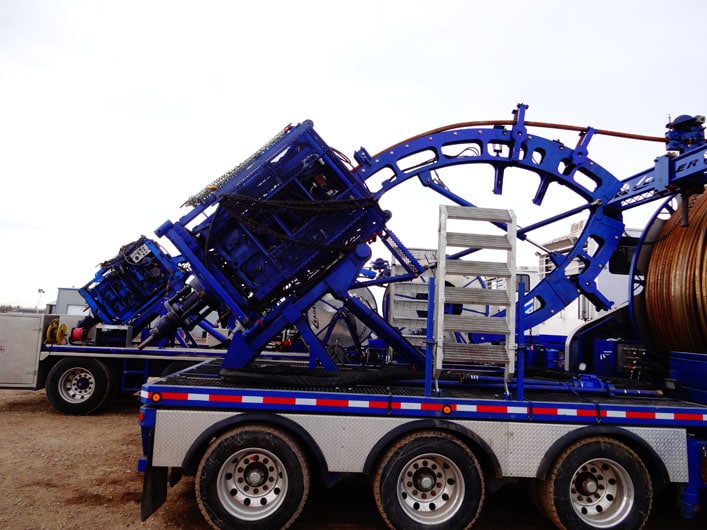
The main unit carries a long continuous steel tube on a reel.
An injector is positioned over the well and controls the movement of the tubing.
Appropriate pressure control equipment is installed as part of the approved well intervention arrangement.
A downhole tool assembly is connected to the tubing.
Depending on the job, this assembly may contain a motor, mill, nozzle, or another tool.
The tubing is deployed into the well, allowing the planned intervention to be carried out.
For a plug removal job, the downhole equipment may be used to mill out the required plugs while fluids are circulated to transport debris.
Coiled tubing can also be used for wellbore cleanouts, nitrogen lifting, selected acid treatments, and other operations.
These activities require knowledge of the well, downhole equipment, hydraulic systems, tubing limitations, and pressure control.
Not every well needs a coiled tubing operation after fracturing.
The required work depends on the completion design, well conditions, and the producer’s operating plan.
What Equipment Does a Frac Operator Work With?
A hydraulic fracturing location can contain a large amount of equipment.
One of the most recognizable pieces is the high pressure pumping unit.
Depending on the fleet design, the pumps may be powered by diesel engines, electric motors, or other power configurations.
Their purpose is to deliver fluid into the well at the required pressure and flow rate.
However, pumping units are only one part of the operation.
High Pressure Pumps
These units provide the pressure and flow needed for the treatment.
Operators inspect, monitor, and help maintain the equipment according to their qualifications and assigned responsibilities.
They need to understand important operating parameters and recognize abnormal conditions.
Blender
The blender combines fluid, proppant, and designated additives to produce the required treatment mixture.
Its operation is important because changes in slurry properties can affect the treatment.
Proppant Handling Equipment
Sand or another proppant must be stored, transferred, and delivered to the blending system.
Equipment may include silos, containers, conveyors, or other handling systems.
Chemical Systems
Hydraulic fracturing treatments may use additives selected for specific operating conditions.
The equipment must deliver the intended quantities according to the approved treatment design.
Water Transfer and Hydration Equipment
Large quantities of water are required for many fracturing operations.
Some treatments also require fluid preparation using hydration or other conditioning systems.
Data Acquisition and Control Systems
Operators and technical personnel monitor treatment parameters, equipment conditions, and operational performance.
Some systems support centralized control of multiple pieces of equipment.
A new frac employee will not necessarily operate all this equipment.
They usually begin with assigned responsibilities and progress through company training and competency assessments.
Understanding how the systems interact is important for career advancement.
What Equipment Does a Coiled Tubing Operator Work With?
Coiled tubing equipment is different from a hydraulic fracturing fleet.
Instead of concentrating primarily on pumping large quantities of fluid and proppant, the coiled tubing system concentrates on controlled deployment of tubing and tools into a well.
Coiled Tubing Reel
The reel stores the continuous steel tubing.
The tubing can be thousands of metres long, depending on the equipment and application.
The reel is not the main component responsible for pushing the tubing into the well.
That function belongs primarily to the injector.
Injector Head
The injector grips the tubing and controls its movement into or out of the well.
Its operation is particularly important because the tubing is subjected to significant forces.
Guide Arch
Often called a gooseneck, the guide arch directs the tubing from the reel toward the injector.
The tubing bends as it moves through the system.
Repeated bending is one of the factors that must be considered when managing coiled tubing fatigue.
Pressure Control Equipment
Coiled tubing operations may be performed on wells that contain pressure.
Appropriate pressure control equipment, including a stripper and blowout preventer arrangement where required, forms part of the approved system for managing well pressure.
The specific configuration depends on the intervention program and applicable requirements.
Hydraulic Power and Control Systems
These systems power and control major equipment functions.
Operators need to understand equipment limits, monitoring systems, and the approved operating procedures.
Downhole Tools
Depending on the application, coiled tubing may carry motors, mills, nozzles, measurement tools, or other specialized assemblies.
Pumping and Nitrogen Equipment
Some coiled tubing operations require separate pumping equipment, nitrogen services, or other supporting systems.
These may be supplied by the same company or another service provider.
One important difference is that a coiled tubing crew may need to understand both surface equipment and what is happening with tools thousands of metres below ground.
That creates opportunities to develop specialized knowledge of well interventions.
What Does an Entry Level Frac Operator Actually Do?
A new hydraulic fracturing employee should not expect to immediately operate an entire pumping fleet from a control cabin.
Most companies begin by teaching new workers the basic equipment and operating procedures.
Entry level duties may include inspecting equipment, performing approved maintenance activities, preparing hoses and connections, assisting with rigging equipment into the worksite, and supporting more experienced operators.
A new employee may initially be assigned to a particular piece of equipment.
For example, they might spend time working with pumping units.
They learn how to perform inspections, identify obvious mechanical problems, recognize alarms, and understand the basic operating parameters.
As experience develops, they may qualify on additional systems.
An operator who understands pumping units, blending, fluid systems, and the general treatment process may become a stronger candidate for senior positions.
However, some employees choose to specialize in particular equipment rather than qualify on every system.
There is also substantial maintenance work in hydraulic fracturing.
High pressure pumping equipment operates under demanding conditions.
Components wear out.
Mechanical problems develop.
The equipment requires inspection, servicing, and repairs by authorized personnel.
For beginners, this means that a significant portion of the job may involve cleaning, maintaining, and preparing equipment rather than operating it continuously.
What Does an Entry Level Coiled Tubing Employee Actually Do?
An entry level coiled tubing position may be advertised as operator assistant, equipment operator trainee, or junior operator.
The exact title depends on the company.
The employee usually begins by learning the equipment, participating in inspections, and assisting qualified personnel with job preparation.
Responsibilities may include preparing equipment for transport, helping with approved setup activities, inspecting tools, maintaining equipment, and supporting the operating crew.
New workers also need to become familiar with the tubing reel, injector, hydraulic systems, pressure control equipment, and supporting equipment.
Coiled tubing operations often involve additional preparation because the tools being deployed must match the planned intervention.
For example, a cleanout job and a milling job may require different tool assemblies and supporting services.
New employees are not expected to independently design these assemblies or make critical operating decisions.
Those responsibilities belong to qualified personnel following the approved program.
Over time, an operator can develop a better understanding of how tubing forces, well conditions, circulation, and downhole tools affect the operation.
This technical knowledge becomes increasingly valuable in more senior roles.
Is Coiled Tubing Harder Than Frac?
This is one of the most common questions people ask when comparing the two jobs.
The answer depends on what you mean by harder.
Are you talking about physical work?
Technical complexity?
Long working hours?
Responsibility?
Or the difficulty of becoming a qualified operator?
Both occupations can be challenging for different reasons.
A fracturing employee may work on a large location containing many pumping units, extensive piping, proppant handling equipment, and several supporting systems.
Setup, equipment maintenance, and site preparation can be physically demanding.
A coiled tubing employee may work with a smaller crew but still have demanding equipment setup, tool preparation, maintenance, and intervention responsibilities.
Coiled tubing work also involves understanding the behaviour of tubing and downhole tools in a pressurized well.
One occupation is not automatically more difficult than the other.
A new frac employee may struggle with the size and complexity of the equipment spread.
A new coiled tubing employee may find the equipment deployment and well intervention concepts challenging.
Both require training, concentration, and experience.
Which Job Is More Physically Demanding?
Hydraulic fracturing can involve substantial physical work, especially during rigging, maintenance, and equipment preparation.
Workers may spend long periods standing, climbing equipment, moving tools, and performing repetitive maintenance tasks.
The worksite can be large, which means employees may also spend considerable time moving between equipment areas.
Coiled tubing work can involve physically demanding setup and removal of equipment, handling tools, preparing connections, and supporting maintenance activities.
Some jobs involve frequent mobilization between locations.
The level of physical effort depends heavily on the equipment.
Modern mechanized systems can reduce certain manual handling tasks.
Older equipment may require more physical work.
It is also important to recognize that an employee’s physical workload can change as they advance.
A trainee may spend considerable time assisting with equipment preparation.
An experienced operator may spend more time monitoring and controlling equipment.
A supervisor may spend more time coordinating personnel, reviewing job requirements, and communicating with the customer.
However, greater responsibility does not automatically mean less fatigue.
Senior personnel may face more demanding decisions and administrative responsibilities.
Neither coiled tubing nor frac should be considered an easy job.
Coiled Tubing vs Frac Work Schedules
Work schedules can have a major influence on which occupation is more attractive.
Both jobs may involve long shifts and extended periods away from home.
However, there can be differences in how the work is organized.
Hydraulic Fracturing Schedules
Fracturing companies often operate on rotational schedules.
Depending on the employer and location, examples may include 14 days working followed by 7 days off, 15 days working followed by 6 days off, or other arrangements.
These are examples, not guaranteed industry standards.
Many fracturing operations continue around the clock when a project is active.
That means employees may work day or night shifts.
On a large multiwell pad, the frac crew may remain at the location for an extended period.
There can be relatively predictable work while the project is active.
However, schedules can change when equipment fails, a project is delayed, or a customer adjusts its completion program.
Coiled Tubing Schedules
Coiled tubing companies may also use scheduled rotations.
Some crews work 14 days on and 7 days off or another established schedule.
Others operate with more variable dispatch arrangements.
The work can depend on individual well interventions and the availability of jobs.
A coiled tubing crew may spend several days on one well before moving to another.
Some interventions take only a relatively short time.
Others can take much longer because of well conditions, equipment problems, or changes to the planned operation.
A job may also be delayed while waiting for the well to become available or for other services to finish their work.
This can create uncertainty in the schedule.
However, it does not mean every coiled tubing company has unpredictable hours.
Some have established work programs and regular rotations.
Before accepting either position, ask about the actual schedule rather than assuming the job title determines your time off.
Which Job Is Better for Fly In and Fly Out Work?
Both coiled tubing and hydraulic fracturing companies may offer rotational jobs requiring travel.
In Western Canada, some employers provide transportation arrangements, accommodation, or access to camps.
However, not every rotational oilfield job includes paid flights.
A company may require employees to report to a designated yard or departure point using their own transportation.
From there, the crew may travel to the worksite together.
Another employer might provide flights to a remote operating region.
The arrangements depend on the company, location, and employment contract.
If your goal is to work a rotation while living in another province, investigate whether the employer provides flights and where the designated departure point is located.
Also confirm whether travel days are included in the rotation and how travel time is compensated.
Two jobs advertised with the same rotation can provide very different amounts of actual time at home.
Coiled Tubing vs Frac Pay: Which Pays More?
Compensation is often the deciding factor for people entering oilfield services.
Both occupations can provide strong earning potential.
However, it is difficult to establish that one consistently pays more.
The Government of Canada’s Job Bank publishes wage information for both coiled tubing operators and fracturing operators.
For Alberta, the wage information updated on November 19, 2025, reported the following hourly amounts:
Low wage: $29.00.
Median wage: $40.63.
High wage: $47.30.
All figures are in Canadian dollars.
The underlying reference period was 2023 to 2024.
There is an important detail about these numbers.
The Job Bank occupational pages for coiled tubing operators and fracturing operators use the same National Occupational Classification group, NOC 84101.
Therefore, the identical wage figures do not mean the two jobs actually pay the same.
They mean that the published data are not detailed enough to establish a reliable difference between these two specific occupations.
Actual wages depend on the employer, operating region, employee qualifications, job responsibilities, and compensation arrangements.
Why Hourly Wages Can Be Misleading
Imagine you receive two hypothetical job offers.
The fracturing company offers $36 per hour.
The coiled tubing company offers $39 per hour.
The coiled tubing offer appears better.
But the frac position might provide more consistent working hours during a busy completion program.
The coiled tubing position could involve more gaps between assignments.
Or the opposite could happen.
The coiled tubing company may have a full schedule of contracted work while the fracturing crew experiences delays.
Annual income depends on more than the hourly wage.
You also need to consider paid hours, overtime eligibility, job bonuses, field allowances, travel compensation, and periods without work.
A slightly lower hourly wage can sometimes produce higher annual earnings.
What About Bonuses and Allowances?
Some oilfield service employers provide additional compensation beyond the base hourly rate.
This may include job bonuses, field allowances, subsistence payments, or other premiums.
Other employers use more straightforward hourly arrangements.
A position advertised with an attractive daily amount may include assumptions about overtime or allowances.
Ask the employer to explain exactly how the amount is calculated.
Also confirm which payments are guaranteed and which depend on actual job activity.
You should evaluate total expected annual compensation, not simply the highest number appearing in a job advertisement.
Can You Earn $100,000 a Year in Coiled Tubing or Frac?
Yes, annual earnings of $100,000 or more are possible in both occupations.
However, they should not be treated as guaranteed entry level income.
Reaching that level depends on hourly compensation, overtime, the number of working days, bonuses, and how consistently work is available.
An experienced operator with substantial paid hours may earn considerably more than a newly hired trainee.
A senior operator or supervisor may receive additional compensation because of increased responsibility.
But employees who experience seasonal interruptions or extended periods without assignments may earn much less than anticipated.
This distinction is especially important when comparing oilfield jobs with conventional full time employment.
A high hourly wage has limited value if the actual number of paid hours is substantially lower than expected.
Before accepting a position, ask how many hours employees in comparable roles have actually worked during the past year.
A credible employer may be able to explain typical utilization without promising future earnings.
## Is It Easier to Get Hired in Frac or Coiled Tubing?
For someone without previous oilfield experience, hydraulic fracturing may provide more entry level opportunities in certain regions because a large fracturing fleet can require a substantial number of employees.
A fracturing operation involves pumping, blending, proppant handling, fluid systems, maintenance, and other support activities.
This creates several possible starting positions.
However, the number of available jobs depends on current industry activity and the specific companies recruiting.
Coiled tubing crews are often smaller, and some employers prefer applicants who already have experience operating oilfield equipment.
A coiled tubing company may be looking for someone who understands hydraulic systems, pressure control, or commercial equipment transportation.
That does not mean beginners cannot get hired.
Some companies offer trainee and operator assistant positions.
A person with experience in trucking, industrial maintenance, heavy equipment, or another oilfield service may also have transferable skills.
If you have no previous experience, search for both occupations.
Do not assume that coiled tubing is unavailable to beginners or that every fracturing company hires inexperienced workers.
The actual hiring requirements matter more than the general reputation of the occupation.
Do You Need a Class 1 Licence for Coiled Tubing or Frac?
A commercial driving licence can be valuable in both occupations.
In Canada, some coiled tubing and hydraulic fracturing positions require a Class 1 driver’s licence.
Others may accept applicants with a regular driver’s licence for certain trainee or noncommercial operating positions.
The requirements depend on the equipment and the employee’s assigned duties.
For example, a coiled tubing unit may be mounted on a heavy commercial vehicle.
A qualified employee who drives that vehicle may need a Class 1 licence.
Other crew members may have responsibilities that do not involve driving the unit.
Hydraulic fracturing operations also involve trucks and specialized equipment that may require commercial driving qualifications.
In the United States, some positions require a Commercial Driver’s License, commonly called a CDL.
The required licence class and endorsements depend on the vehicle, cargo, and applicable regulations.
A commercial licence can increase the number of positions for which you qualify.
However, obtaining one does not automatically qualify you to operate specialized oilfield equipment.
If you do not have a Class 1 licence or CDL, look for operator trainee, assistant, maintenance helper, or other positions where commercial driving is not a requirement.
Before spending money on a driving course, investigate whether your target employers provide driver training or support employees who want to obtain the required licence.
What Safety Certificates Do You Need?
The training requirements depend on the employer, jurisdiction, and worksite.
In Western Canada, commonly requested qualifications may include H2S Alive, Standard First Aid, Common Safety Orientation, WHMIS, and other courses applicable to the work.
Employees involved in particular activities may need additional training.
For example, pressure control training may be important for coiled tubing personnel with well control responsibilities.
Workers involved in transporting regulated dangerous goods may require appropriate TDG training.
Hydraulic fracturing workers also receive training specific to high pressure pumping systems, chemical handling, and equipment operation.
The important distinction is between general site access training and qualifications that establish competency to perform specialized work.
Completing H2S Alive does not make someone a qualified coiled tubing operator.
Likewise, completing a general oilfield safety course does not qualify someone to operate a fracturing pump.
Companies must provide appropriate training, supervision, and competency assessment for assigned responsibilities.
If you are applying for entry level work, focus on the certificates employers actually require.
Avoid spending substantial amounts on unrelated training before you have identified your target positions.
Coiled Tubing vs Frac: Which Job Is More Dangerous?
Both occupations involve serious operating hazards.
However, the main risks are not identical.
Hydraulic Fracturing Hazards
Hydraulic fracturing operations involve high pressure lines, pumping equipment, rotating machinery, heavy vehicles, and large quantities of fluids and proppant.
A failure in high pressure equipment can have severe consequences.
Workers can also encounter hazards related to chemical handling, moving equipment, noise, and vehicle movements.
Another important issue is exposure to respirable crystalline silica.
Many fracturing operations use sand as proppant.
When sand is transferred or handled, dust may be generated.
The U.S. National Institute for Occupational Safety and Health has documented potentially hazardous crystalline silica exposures during hydraulic fracturing operations.
Exposure depends on the equipment, materials, engineering controls, operating practices, and working conditions.
Employers should implement appropriate controls and exposure management programs.
Coiled Tubing Hazards
Coiled tubing operations involve high pressure well conditions, moving tubing, hydraulic equipment, suspended loads, and specialized pressure control systems.
Tubing is subjected to significant mechanical stresses during deployment and retrieval.
Damage, fatigue, or other tubing integrity problems can create serious operational risks.
The injector and other moving equipment also create hazardous areas.
Well control is particularly important because some interventions take place on wells that contain significant pressure.
A crew must work within the approved well control plan, equipment limits, and operating procedures.
Which Is Safer?
There is no reliable basis for declaring one occupation universally safer than the other.
The risk depends on the specific operation and how it is managed.
For beginners, the quality of the employer’s training, supervision, equipment maintenance, and safety management is extremely important.
Do not judge safety only by whether the equipment looks smaller or whether the job appears less physically demanding.
Which Job Offers Better Technical Experience?
Both occupations provide useful technical experience, but the knowledge develops in different directions.
Hydraulic fracturing employees can develop a strong understanding of pumping systems, fluid movement, equipment hydraulics, diesel or electric power systems, and treatment execution.
They may also gain exposure to treatment data, equipment performance analysis, and completion operations.
Coiled tubing employees can develop experience with tubing mechanics, pressure control, well intervention, circulation, downhole tools, and operating conditions inside a wellbore.
For someone interested in mechanical equipment and high pressure pumping, fracturing may be an excellent technical foundation.
For someone interested in downhole operations and well interventions, coiled tubing may be more closely aligned with their interests.
However, the exact position matters.
A fracturing maintenance specialist may develop more mechanical expertise than someone working primarily with other equipment.
A coiled tubing operator who participates in complicated interventions may develop different technical skills from someone assigned to relatively routine operations.
The type of experience you gain depends on what you actually do, not simply the company name on your employment record.
How to Advance Your Career in Hydraulic Fracturing
A new fracturing employee may begin as an operator trainee.
The initial objective is to learn basic equipment operation, inspection, maintenance, and safety requirements.
As competence develops, the employee may qualify on additional equipment.
A typical progression could involve:
- Operator trainee.
- Qualified equipment operator.
- Senior operator.
- Lead operator or crew lead.
- Field supervisor.
- Operations superintendent or manager.
Not every company uses these exact titles.
Some organizations have more operator levels or separate career paths for equipment maintenance and technical personnel.
Advancement requires more than knowing how to operate a pump.
Senior personnel need to understand how the complete treatment system operates.
They must recognize equipment limitations, understand communication requirements, and respond appropriately to abnormal conditions.
A supervisor also needs to understand crew coordination, operating plans, equipment readiness, and risk management.
Other advancement opportunities may include technical support, equipment reliability, maintenance supervision, data acquisition, and field engineering positions for appropriately qualified employees.
One advantage of hydraulic fracturing experience is exposure to large scale pumping operations and complex equipment systems.
These skills may be useful when moving into other pressure pumping or technical occupations.
How to Advance Your Career in Coiled Tubing
Coiled tubing also offers a progression from entry level work into more technically responsible positions.
A typical career path might include:
- Operator assistant or trainee.
- Equipment operator.
- Qualified coiled tubing operator.
- Senior operator.
- Coiled tubing supervisor.
- Technical specialist, operations superintendent, or manager.
Again, job titles and responsibilities vary by employer.
To advance, employees need to develop knowledge beyond basic equipment operation.
They should understand the purpose of the intervention.
Why is the tubing being deployed?
What are the limitations of the equipment?
How are tubing forces monitored?
What is the purpose of the downhole tool assembly?
Which operating conditions require escalation?
How is tubing integrity managed throughout its service life?
Understanding these concepts helps prepare someone for more complex work.
Experienced operators may eventually specialize in challenging well interventions, downhole equipment, or technical planning.
Some move into field supervision.
Others pursue technical advisory positions or work with equipment manufacturers and service companies.
Can a Frac Operator Become a Completions Engineer?
This is a common long term goal for people working in hydraulic fracturing.
Field experience can provide valuable knowledge of how completion treatments are actually executed.
An experienced operator or field specialist may understand equipment performance, treatment rates, pressure behaviour, and common operational problems.
However, a completions engineer working for an oil and gas producer typically has broader responsibilities.
These may include completion design, engineering calculations, contractor evaluation, cost estimation, well integrity considerations, operational planning, and performance analysis.
Someone who has worked exclusively in fracturing equipment operation may need substantial additional knowledge and qualifications.
Professional engineering practice is also regulated in jurisdictions such as Alberta.
Field experience alone does not automatically establish eligibility for professional engineering positions.
For someone with appropriate engineering education and professional eligibility, fracturing field experience can be a useful foundation for moving into completions engineering.
For someone without that background, technical support, service coordination, or specialized operations may be more realistic advancement opportunities.
Can a Coiled Tubing Operator Become a Well Intervention Specialist?
Yes, this can be a relevant career direction.
A well intervention specialist may participate in planning, evaluating, and supporting operations performed inside existing wells.
Depending on the employer, these activities may involve coiled tubing, wireline, snubbing, pumping, fishing, or other services.
Experienced coiled tubing employees can bring valuable practical knowledge to this work.
They understand equipment limitations, operational risks, and the challenges that can arise during an intervention.
However, more technical positions may require knowledge of well construction, completion equipment, pressure control, downhole tools, and intervention planning.
Some roles may also require technical diplomas, engineering education, or other qualifications.
If you want to move in this direction, begin learning about the complete well intervention program rather than concentrating only on operating the coiled tubing unit.
Develop technical reporting skills.
Learn to interpret relevant operating information.
Understand the function of different downhole tools.
Ask about opportunities to support technical personnel.
The goal is developing from someone who performs assigned equipment operations into someone who understands the technical reasons behind the work.
Which Job Is Better if You Want to Work for an Oil and Gas Producer?
Both occupations can provide useful experience for someone who eventually wants to join an oil and gas producer.
However, they usually lead toward different opportunities.
Hydraulic fracturing experience is particularly relevant to well completions, pressure pumping, treatment execution, and service quality evaluation.
Experienced personnel with appropriate qualifications may pursue completion operations, technical support, or related coordination positions.
Coiled tubing experience is particularly relevant to well intervention, workovers, downhole operations, and production restoration activities.
Experienced personnel may pursue well intervention coordination, technical support, or specialized well servicing positions.
However, there is an important limitation.
A producer’s completion engineer or well intervention engineer often needs to evaluate several different services.
Someone who understands only one service may have significant gaps in their technical knowledge.
If moving to a producer is your goal, begin developing a broader understanding of the well life cycle.
Learn how drilling, completion, stimulation, intervention, and production operations fit together.
This can help you identify the additional experience and qualifications required for your target position.
Which Job Provides Better Mechanical Skills?
Hydraulic fracturing can provide substantial exposure to pumps, engines, transmissions, hydraulic systems, electrical equipment, and fluid handling equipment.
This may be particularly attractive to someone interested in mechanical maintenance.
For example, an employee who enjoys maintaining pumping units may eventually pursue a career in rotating equipment, industrial maintenance, or heavy equipment repair.
Coiled tubing equipment also contains complex mechanical and hydraulic systems.
The reel, injector, power equipment, hydraulic controls, and supporting machinery all require maintenance.
However, coiled tubing work may involve a greater concentration on the interaction between surface equipment and the tubing or tools deployed downhole.
Both occupations can support a future maintenance career.
If you want to become a certified mechanic, millwright, or another skilled tradesperson, investigate whether the employer offers a formal apprenticeship pathway.
Working around equipment does not automatically provide a recognized trade qualification.
Which Has Better Job Security?
Neither occupation guarantees consistent year round employment.
Hydraulic fracturing activity depends heavily on producer completion programs.
When producers drill and complete more wells, demand for fracturing equipment and personnel may increase.
When companies reduce development spending, fracturing demand can decline.
Coiled tubing work can be supported by both new well completion activity and interventions on existing wells.
That gives the service exposure to different types of work.
For example, coiled tubing may be required to remove plugs after fracturing.
It may also be used to clean out debris from an older producing well or perform another intervention.
However, this does not mean coiled tubing employment is automatically more secure.
Some coiled tubing companies concentrate heavily on work related to new well completions.
Others provide a broader range of intervention services.
Their workload can change significantly with customer spending and operating conditions.
In addition, some well interventions may be postponed when commodity prices are weak.
When evaluating job security, investigate the company’s customer base, the services it provides, and how regularly its equipment is utilized.
A company with consistent contracts and several types of work may provide a different employment experience from one dependent on a single project.
Will Automation Change Coiled Tubing and Frac Jobs?
Technology is changing both services.
Hydraulic fracturing companies have introduced developments such as electric pumping systems, improved equipment monitoring, remote diagnostics, and more automated controls.
These technologies can change the skills required of field personnel.
Workers may need stronger knowledge of electrical systems, sensors, digital controls, and data interpretation.
Coiled tubing companies are also developing more advanced monitoring, equipment control, and downhole measurement systems.
These technologies can improve the information available during interventions.
However, increased automation does not eliminate the need for qualified personnel to manage equipment, maintain systems, follow procedures, and respond to abnormal conditions.
For workers interested in long term career development, technical adaptability is important.
Learn how equipment works.
Understand the control systems.
Develop mechanical, electrical, and data analysis skills where relevant to your position.
Employees who can work effectively with changing technology may have more opportunities than those who rely entirely on familiarity with older equipment.
Can You Switch From Frac to Coiled Tubing?
Yes.
Some skills are transferable.
A fracturing employee may already understand pressure pumping, equipment inspections, hydraulic systems, field safety, and working in a well completion environment.
This can be useful when applying for coiled tubing positions.
However, they still need to learn the equipment and concepts specific to well intervention.
For example, operating a fracturing pump does not automatically qualify someone to operate a coiled tubing injector.
Tubing mechanics, pressure control, downhole tools, and intervention procedures require separate training.
The same principle applies when moving from coiled tubing to fracturing.
A coiled tubing operator may have valuable experience with pressure systems and oilfield operations.
But they still need to learn the pumping, blending, proppant handling, and treatment processes used by the fracturing company.
Switching services can be a useful way to broaden your experience.
However, you may need to enter at a different operator level while developing the competencies required for the new occupation.
Coiled Tubing vs Frac for Someone Without Experience
If you have never worked in the oilfield, hydraulic fracturing may be attractive because it offers exposure to a wide range of equipment and operating systems.
It can be a useful starting point for someone interested in mechanical equipment, pressure pumping, or field operations.
Coiled tubing may appeal more to someone interested in well intervention, downhole tools, and the technical challenges of working inside an existing well.
However, it is not necessary to have a long term specialization figured out before your first oilfield job.
You may discover that the work you expected to enjoy is not what you prefer once you gain experience.
Someone might begin in fracturing and realize they enjoy equipment maintenance.
Another worker might start in coiled tubing and discover an interest in technical well intervention planning.
Your first job provides an opportunity to learn about the industry and identify which responsibilities interest you.
The quality of training and supervision is particularly important at this stage.
A reputable employer that provides effective training can be more valuable than a slightly higher hourly wage at a company with limited support for new workers.
Questions to Ask Before Accepting a Frac Job
Before accepting a hydraulic fracturing position, ask the employer several important questions.
What equipment will you initially be assigned to?
Does the company provide training for employees without experience?
Will you be required to obtain a commercial driving licence?
What is the normal work rotation?
Does the crew work both day and night shifts?
How are overtime and field allowances calculated?
What percentage of your working time is typically spent operating equipment compared with maintenance and preparation?
How often do crews experience periods without assigned work?
What opportunities are available to qualify on additional equipment?
Can operators progress into technical support or supervision?
The answers can help you understand whether the position is appropriate for your experience and career goals.
Questions to Ask Before Accepting a Coiled Tubing Job
For coiled tubing, some of the questions are different.
Does the company accept inexperienced operators?
Is a Class 1 licence or CDL required?
What types of interventions does the company primarily perform?
Does it specialize in plug removal after fracturing, well cleanouts, nitrogen operations, or a wider range of services?
How are new employees trained on the equipment?
What training is required before taking on pressure control responsibilities?
Does the company use regular rotations or dispatch crews according to job requirements?
How frequently do employees travel between locations?
What is the typical crew size?
Are there opportunities to become a senior operator, supervisor, or technical specialist?
One especially useful question is what type of work the company performs most frequently.
A coiled tubing business that specializes in routine completion related operations may offer a different technical experience from one that performs a broad range of challenging well interventions.
Common Mistakes People Make When Choosing Between Coiled Tubing and Frac
One mistake is choosing entirely based on the hourly wage.
The number of paid hours and the consistency of work can be equally important.
Another mistake is assuming coiled tubing is easier because the crew is often smaller.
Smaller crews do not necessarily mean less responsibility or less physical work.
Some beginners also believe hydraulic fracturing involves nothing more than watching pump pressures.
In reality, equipment preparation, maintenance, inspections, and coordination are major parts of the operation.
Another misconception is that working in coiled tubing automatically leads to engineering.
The technical experience can be valuable, but engineering positions may require formal education and professional licensing.
Similarly, working on a frac crew does not automatically qualify someone for completions engineering with a producer.
It is also a mistake to assume that a larger company always provides a better career.
Large organizations may offer structured training and multiple departments.
Smaller companies may provide opportunities to develop broader responsibilities.
The actual employer, crew, equipment, training, and available positions matter more than company size alone.
Coiled Tubing vs Frac: Which Should You Choose?
If your priority is learning about high pressure pumping equipment, fluid systems, mechanical maintenance, and large completion operations, hydraulic fracturing may be a better fit.
It can provide an introduction to complex oilfield equipment and opportunities to progress into senior operating or supervisory roles.
If you are more interested in well interventions, downhole equipment, pressure control, and working inside existing wells, coiled tubing may be the more attractive choice.
It can provide a foundation for a career in specialized intervention operations and technical support.
If your primary motivation is maximizing annual income, do not assume either occupation will consistently pay more.
Compare actual job offers.
Look at base wages, available working hours, overtime, bonuses, travel, and compensation during periods without active jobs.
If work and life balance matters most, investigate the rotation and travel requirements of the specific employer.
Both occupations can involve demanding schedules.
And if your long term goal is moving into engineering or another technical profession, begin investigating the education and qualifications required for that position.
The best starting job is one that helps you develop relevant experience while meeting your immediate financial and personal needs.
Final Thoughts: Is Coiled Tubing or Frac the Better Oilfield Career?
Coiled tubing and hydraulic fracturing are both important parts of modern oil and gas operations.
Fracturing crews help improve the ability of wells to produce hydrocarbons from underground formations.
Coiled tubing crews perform specialized work inside wells, including cleanouts, tool deployment, plug removal, and other interventions.
Both occupations can provide good earning potential.
Both offer opportunities for people without university degrees.
And both can lead to more responsible operating, technical, and supervisory positions.
But the daily work is different.
Hydraulic fracturing involves large pumping systems, fluid preparation, proppant handling, and complex treatment operations.
Coiled tubing involves continuous steel tubing, specialized injection equipment, downhole tools, and well interventions.
For beginners, the decision should not be based entirely on which job sounds more impressive or which employer advertises the highest hourly wage.
Think about what you want to learn.
Consider the type of equipment you enjoy working with.
Evaluate the schedule and travel requirements.
Investigate the employer’s training program and opportunities for advancement.
And remember that you can change career directions as you gain experience.
Starting in hydraulic fracturing does not mean you must remain in pumping operations for your entire career.
Starting in coiled tubing does not mean you can never move into another service or technical role.
The oil and gas industry offers many opportunities to develop transferable skills.
The important thing is to use your experience to become more technically competent and better qualified over time.
A job that pays well today can be attractive.
But a job that helps you develop valuable skills, build a strong professional reputation, and qualify for better positions in the future can be even more valuable.
The best choice between coiled tubing and frac is ultimately the one that gives you the right combination of earnings, working conditions, technical development, and opportunities to build the career you want in oil and gas.