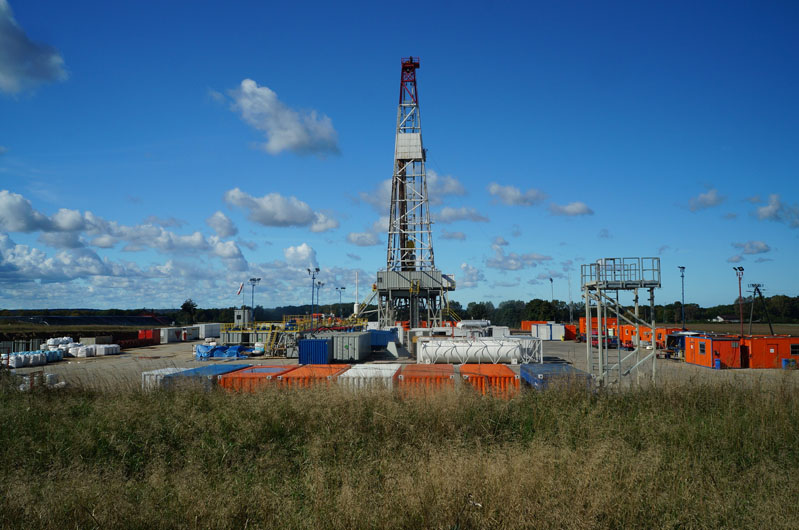
You get your first oilfield rotation.
The job is several hours away from home.
Now you need to figure out how you are actually getting there.
Do you need a pickup truck?
Can you drive a normal car?
Does the company fly you to camp?
Do you leave your vehicle at an airport for two weeks?
Does a crew truck pick you up?
Are you expected to drive directly to the lease?
This is something many new oilfield workers think about only after they receive a job offer.
The good news is that you do not automatically need to buy an expensive pickup truck just because you are starting work in oil and gas.
Your transportation depends almost entirely on where the company expects you to report.
Some workers drive a small car to an airport and fly to site.
Some drive to a company yard and leave their personal vehicle there.
Some take a company bus from Edmonton or Calgary.
Some drive to camp on paved roads.
Others travel dozens of kilometres down rough lease roads where a low car would be a poor choice.
Before buying anything, find out how your specific rotation works.
Do You Need a Pickup Truck to Work in the Oilfield?
No.
This is one of the biggest misconceptions about starting an oilfield job.
You do not automatically need a pickup.
Plenty of oil and gas workers commute in ordinary cars because their personal vehicle never goes anywhere near the actual worksite.
They drive to an airport.
They drive to a bus pickup location.
They drive to a company shop.
They drive to a hotel.
From there, the company transports them to work.
If that is your situation, a reliable car may be all you need.
Buying a large pickup before you know your transportation requirements can be an expensive mistake.
Ask One Question Before Buying a Vehicle
Ask your employer:
Where am I expected to report at the beginning of my rotation?
That question usually determines everything.
You might be told to report to:
An airport
A company yard
A park and ride location
A bus terminal
A hotel
A camp
A field office
A drilling rig
A plant
A wellsite
These are completely different transportation situations.
Someone driving to Calgary International Airport does not need the same vehicle as someone expected to drive directly to a remote gas well.
How Do Oilfield Workers Usually Get to Their Rotation?
There are several common arrangements.
Some workers fly.
Some use company buses.
Some meet a crew truck.
Some drive themselves to camp.
Some drive themselves to the worksite.
Some use a combination of all of these.
For example, you might drive from your house to Edmonton, park your car, fly north, take a bus from the airport to camp, and then use another bus between camp and the worksite every day.
Your personal vehicle may never leave Edmonton.
What Is Fly In Fly Out Work?
Fly in fly out means workers travel by air to and from the general project area for each rotation.
This is common for certain remote mining, oil sands, construction, and industrial projects.
The employer may provide flights from designated travel hubs.
Calgary and Edmonton are common transportation hubs for Alberta projects.
Some employers provide the entire flight.
Others provide flights only from a specific location.
You may be responsible for reaching that location yourself.
This detail matters.
A job advertising provided flights does not always mean the company will fly you from your hometown.
What Vehicle Do You Need for Fly In Fly Out Work?
Usually whatever reliably gets you to the airport.
A normal car can be completely adequate.
Your vehicle may sit in airport or company parking for the entire rotation.
Fuel economy, reliability, winter starting, and parking costs may matter more than off road capability.
There is little reason to buy a heavy pickup simply to park it at an airport for fourteen days.
If you already own a reliable car, use it unless your employer tells you something different.
Where Do You Leave Your Vehicle When You Fly to Work?
This varies.
Workers may use airport parking, company parking, private parking services, or get dropped off by someone.
Long rotations can make airport parking expensive.
Before your first trip, find out whether the employer has an arrangement with a particular parking provider.
Some companies have designated employee parking.
Some workers arrange rides with family.
Others share transportation with coworkers.
Calculate the cost before choosing the easiest parking option.
Paying daily parking rates through repeated long rotations can add up quickly.
Can You Take a Bus to an Oilfield Camp?
Yes.
Company buses are common on large industrial projects.
Workers may board at a city, airport, company yard, or designated parking area.
The bus then transports employees to camp or directly to the project.
Once you are on that bus, your personal vehicle is irrelevant.
This arrangement is particularly useful because the company controls site traffic and reduces the number of private vehicles moving through industrial areas.
If a company provides a bus, use the transportation instructions they give you.
Do not decide to drive yourself to a restricted location simply because you prefer your own vehicle.
What Is a Park and Ride Arrangement?
Some companies use designated parking locations where workers leave their personal vehicles and transfer to company transportation.
You drive to the pickup location.
You park.
Then everyone boards a bus or crew vehicle.
At the end of the rotation, the company brings workers back.
This is common where allowing hundreds of employee vehicles onto the worksite would create traffic and parking problems.
In this situation, almost any reliable personal vehicle can work because it only needs to reach the parking location.
What Is a Crew Truck?
A crew truck is a company vehicle used to move workers between a shop, hotel, camp, or jobsite.
Service companies frequently use crew trucks.
You might drive your car to the company shop early in the morning and then travel to the field with several coworkers in a company pickup.
On other jobs, the crew truck may remain with workers for the entire rotation.
If the company provides the field vehicle, there is little reason to put your own vehicle through rough lease roads.
Should You Use a Company Truck If One Is Available?
Usually, yes.
If your employer expects field driving and provides an appropriate company vehicle, use it according to company policy.
Oilfield roads can be hard on vehicles.
Gravel can damage paint and windshields.
Mud can fill wheel wells.
Ruts can damage low vehicles.
Rough roads accelerate suspension wear.
Long distances add kilometres rapidly.
Using the company vehicle keeps much of that wear off your personal vehicle.
It can also simplify fuel, insurance, maintenance, and site access.
When Would You Need Your Own Vehicle at an Oilfield Job?
You may need your own vehicle if the employer expects you to travel independently to:
The company yard
A hotel
A camp
A project staging area
A field office
Different worksites
Some companies pay mileage.
Others provide a vehicle allowance.
Others expect workers to cover normal commuting themselves.
Make sure you understand the arrangement before accepting a distant field position.
A job that requires extensive personal vehicle use can cost more than you expect once fuel, tires, repairs, insurance, and depreciation are included.
Can You Drive a Normal Car to an Oilfield Camp?
Sometimes.
Many large camps are accessible by good roads.
If your route is paved or well maintained gravel, a reliable car may be perfectly adequate.
You will often see ordinary cars parked at camps.
The important question is not whether the destination is called an oilfield camp.
The question is what the road to that camp looks like.
A major oil sands camp and a small remote drilling camp can have completely different access conditions.
Can You Drive a Car on a Lease Road?
Sometimes, but it depends heavily on the road.
A dry, maintained gravel road can be easy for a car.
The same road after heavy rain can become deeply rutted and muddy.
Winter can bring packed snow, drifting snow, ice, and reduced visibility.
Spring breakup can create especially difficult road conditions in some producing areas.
Ground clearance becomes important when ruts deepen.
A normal car may physically reach many oilfield locations during good conditions.
That does not mean it is the best vehicle for doing it repeatedly.
What Is a Lease Road?
A lease road is an access road leading to oil and gas facilities, wellsites, drilling locations, and other field infrastructure.
Some lease roads are excellent.
Others are rough.
Conditions depend on weather, traffic, maintenance, soil, location, and project activity.
You can encounter:
Gravel
Mud
Deep ruts
Potholes
Snow
Ice
Dust
Loose rock
Washouts
Steep grades
Narrow sections
Heavy truck traffic
Do not judge every lease road by the first good one you drive.
When Does a Pickup Truck Make Sense?
A pickup makes sense when you genuinely need its capabilities.
That can include regular travel on poor roads, transporting tools, carrying equipment, dealing with deep snow, towing, or driving to remote field locations.
A truck can provide:
More ground clearance
Four wheel drive
More cargo space
Better ability to carry dirty equipment
Greater capability on rough roads
That can be very useful for field workers.
But usefulness does not mean you need the largest truck available.
Do You Need a Diesel Pickup?
No.
A diesel truck can be excellent for heavy towing and demanding work.
It can also be expensive to purchase and maintain.
If your only task is driving yourself to camp with one suitcase, a large diesel truck offers very little benefit.
You may spend thousands more on the vehicle while never using the capability you paid for.
Buy a diesel because your actual transportation needs justify it.
Do not buy one because you think oilfield workers are supposed to own one.
Do You Need a Lifted Truck?
No.
A moderate amount of factory ground clearance is useful on rough roads.
A large suspension lift is not a requirement for working in oil and gas.
Modified trucks can actually create additional expenses through tires, suspension wear, steering components, fuel consumption, and insurance considerations.
Some employers may also have requirements concerning vehicles used for company business.
A reliable factory vehicle with good tires is usually more useful than an extreme modification built mainly for appearance.
Is Four Wheel Drive Worth Having?
If you regularly travel into remote field locations, four wheel drive is very useful.
Mud, loose gravel, snow, and steep access roads can challenge two wheel drive vehicles.
Four wheel drive provides additional traction.
It does not make you invincible.
A four wheel drive truck can still slide on ice.
It can still become stuck in deep mud.
It can still leave the road if driven too fast.
The biggest advantage is having additional traction when conditions deteriorate.
What About All Wheel Drive?
All wheel drive can be excellent for commuting, winter highways, maintained gravel roads, and many camp access routes.
A good all wheel drive crossover with proper tires can handle conditions that would challenge a small front wheel drive car.
For someone who needs one vehicle for normal life and occasional industrial travel, this can be a practical compromise.
However, all wheel drive does not automatically provide the ground clearance or durability needed for severely rutted lease roads.
Know where you are actually going.
Is Front Wheel Drive Enough?
For paved roads, airports, company yards, towns, and maintained camp access, yes.
A front wheel drive car with good winter tires can be a very capable winter commuter.
Problems begin when road clearance becomes the limiting factor.
A car can have adequate traction while still being too low for deep snow or ruts.
This distinction matters.
Four driven wheels do not help much if the bottom of the vehicle is sitting on the road.
What Is More Important, Four Wheel Drive or Good Tires?
Both matter, but tires are extremely important.
A four wheel drive truck on poor tires can perform worse than people expect.
Good tires improve acceleration, braking, steering, and stability.
Four wheel drive mainly helps the vehicle move.
It does not magically improve braking on ice.
For winter rotations in Alberta and British Columbia, suitable winter tires can be one of the best investments you make.
The ability to stop safely matters more than the ability to accelerate quickly.
Do You Need Winter Tires for Oilfield Work?
If you regularly drive during Canadian winter conditions, proper winter tires are highly recommended.
Certain routes and jurisdictions may also have specific legal tire requirements during part of the year.
Check the rules for the roads you actually use.
Even where winter tires are not legally required, they can provide significantly better cold weather traction than many other tires.
Remote work means you may travel before sunrise, after dark, during storms, and when roads have not yet been cleared.
Do not build your transportation plan around perfect weather.
What About Studded Tires?
Studded tires can provide excellent traction on certain icy surfaces.
Rules vary by province and season.
They also create more road noise and are unnecessary for many workers who mainly travel maintained highways.
Whether they make sense depends on your location and driving conditions.
A worker regularly traveling northern ice covered roads has different needs from someone driving from suburban Calgary to the airport.
Why Is Ground Clearance Important?
Deep ruts can become one of the biggest problems for cars.
The wheels may follow the tracks while the centre of the vehicle contacts the raised portion of the road.
Snow can create the same problem.
Low bodywork, oil pans, exhaust components, and underbody panels can be damaged.
Ground clearance matters more as road quality decreases.
If your employer expects you to drive directly to remote field locations, ask coworkers what vehicles they actually use.
They know the road better than someone selling vehicles in a city dealership.
Should You Buy a New Vehicle for Oilfield Work?
Usually not before you know what the job requires.
Oilfield travel can be hard on vehicles.
A brand new vehicle can quickly collect:
Rock chips
Windshield damage
Mud
Dust
Door dings
Paint scratches
High mileage
Interior dirt
Suspension wear
If you are going to drive rough industrial roads every day, you may actually prefer a dependable vehicle that you are not afraid to use.
Reliability matters much more than having something impressive.
Why Do Oilfield Vehicles Get So Many Windshield Chips?
Gravel roads and heavy truck traffic throw rocks.
Following too closely makes the problem worse.
Large trucks can throw substantial debris.
Slow down when approaching other traffic.
Leave space.
Replace damaged windshields when required for safe visibility.
A cracked windshield may seem like a minor inconvenience until bright morning or evening sun makes the damage interfere with your vision.
Should You Buy a Used Truck Instead?
A reliable used truck can make sense for someone who genuinely needs field capability.
You avoid some of the depreciation of a new vehicle and may worry less about cosmetic damage.
But an unreliable cheap truck can become a serious problem.
Remote breakdowns are inconvenient and sometimes dangerous.
A lower purchase price is not useful if the vehicle constantly needs repairs.
Mechanical condition matters more than age alone.
What Should You Check Before Taking a Vehicle Into the Field?
Basic reliability becomes important when you are driving far from services.
Check:
Tires
Spare tire
Battery
Brakes
Engine oil
Coolant
Windshield washer fluid
Wipers
Lights
Heating system
Charging system
Four wheel drive operation where applicable
Do not wait for the first major snowstorm to discover your battery is weak or your spare tire is flat.
Why Is a Good Battery Important?
Cold weather reduces battery performance.
A vehicle that starts easily during summer can struggle at extremely low temperatures.
If your car sits outside for two weeks while you are on rotation, the situation can be even worse.
A healthy battery is particularly important when leaving vehicles in northern parking lots during winter.
Test an older battery before severe cold arrives.
Should Your Vehicle Have a Block Heater?
In very cold regions, a block heater can be useful and sometimes extremely important.
Many parking areas at northern camps, hotels, and workplaces have electrical outlets for this purpose.
The availability of power varies.
Make sure your cord is suitable and in good condition.
If you expect extreme cold, ask whether the parking area provides plug ins.
Returning after a long night shift to a vehicle that will not start is an unpleasant way to learn why this matters.
What Should You Keep in the Vehicle During Winter?
Prepare for the possibility that a normal drive becomes much longer.
Useful emergency equipment can include:
Warm clothing
Gloves
Winter boots
Blanket
Flashlight
Charging cable
Portable battery pack
Snow brush
Ice scraper
Shovel
Traction aid
Booster cables or a booster pack
Basic first aid supplies
Drinking water
Some food
Warning equipment
The exact kit depends on how remote your travel is.
Someone traveling isolated northern roads needs more preparation than someone driving across Edmonton.
Should You Carry Extra Fuel?
Only when it is actually necessary and when it can be transported safely and legally.
Most workers traveling established highways do not need extra fuel containers.
Remote operations can be different.
Plan your fuel stops before heading into an unfamiliar region.
Gas stations become much less frequent as you leave populated areas.
Do not repeatedly arrive at a remote job with the fuel warning light on.
A fuel tank is much more useful when it contains fuel.
Should You Carry a Full Size Spare Tire?
For frequent remote road travel, having a usable spare is important.
Some modern vehicles include only a small temporary spare or repair kit.
That may be inconvenient on rough roads far from a tire shop.
Know what your vehicle actually has.
Do not discover this after a sharp rock destroys a tire fifty kilometres from town.
If your job requires extensive remote travel, tire repair planning deserves more attention than it would during normal city commuting.
What About Cell Phone Service?
Do not assume you will have coverage everywhere.
Some oil and gas regions have excellent service around towns and major facilities but weak or nonexistent coverage farther into the field.
Download maps before leaving when appropriate.
Know your route.
Follow company check in procedures.
Some employers use radios, satellite communications, or worker monitoring systems for remote travel.
Do not ignore those systems because you think your phone will always work.
Should You Use GPS on Lease Roads?
GPS is useful, but it should not replace proper directions.
Industrial roads change.
Some routes shown on consumer mapping applications may be private, closed, unsuitable, or simply wrong.
Companies may provide detailed directions, coordinates, maps, road names, kilometre markers, or site specific navigation instructions.
Use the company’s directions.
A navigation application does not know whether a road is currently washed out or restricted to authorized traffic.
What Are Kilometre Markers?
Remote resource roads often use kilometre references to identify locations.
Workers may describe a site using the road name and kilometre location.
Learn how the local road system works.
This becomes particularly important during emergencies.
Saying you are somewhere north of town is not useful enough if emergency assistance needs to locate you.
Know where you are.
What Is Road Radio Protocol?
Some resource roads use designated radio channels and calling procedures to help traffic communicate.
Drivers may announce locations and direction of travel.
This is particularly important on narrow industrial roads with heavy truck traffic.
Requirements vary by region and company.
If your route requires a radio, learn the correct procedure before driving it.
Do not buy a random radio and assume you understand local traffic protocol.
Why Are Heavy Trucks a Concern on Oilfield Roads?
Oilfield roads carry equipment much larger than your personal vehicle.
You may encounter:
Tank trucks
Vacuum trucks
Bed trucks
Drilling equipment
Cranes
Lowboys
Logging trucks
Chemical trucks
Water trucks
Oversize loads
Give them space.
Do not follow closely.
Do not stop in locations where a heavy vehicle cannot pass safely.
A loaded truck may need far more distance to stop than your car.
Why Should You Slow Down on Gravel?
Loose gravel reduces traction.
Dust can reduce visibility.
Rocks can damage vehicles.
Corners can become slippery.
Road edges may be soft.
Driving rapidly because you are late for shift is one of the worst decisions you can make.
Leave earlier.
The job will still be there when you arrive.
You need to arrive safely enough to perform it.
What Is Spring Breakup?
In parts of Western Canada, warmer spring weather causes frozen ground and roads to thaw.
Road conditions can deteriorate substantially.
Mud becomes deeper.
Road restrictions may be introduced.
Access to certain areas becomes more difficult.
A road that was firm and easy during winter can become challenging during spring.
This is another reason not to assume one vehicle will perform the same way throughout the year.
Are Winter Roads Easier Than Muddy Roads?
Sometimes.
Frozen ground can create a firm surface.
But winter introduces ice, snow, drifting, extreme cold, and reduced visibility.
Summer mud may create deep ruts and soft road shoulders.
Neither condition is automatically easier.
The safest vehicle and driving style depend on the actual road.
Experienced field workers respect seasonal changes rather than assuming their truck can handle everything.
Do You Need a Vehicle at Camp?
Often no.
Many remote camps operate almost like closed transportation systems.
Workers arrive by company transportation.
Buses move them from camp to the worksite.
They return to camp on the same transportation.
Your personal vehicle may remain hundreds of kilometres away.
This is why asking about transportation before buying a truck is so important.
You may discover that you would barely use it.
Can You Drive Your Own Vehicle Around an Oil Sands Site?
Usually site transportation is tightly controlled.
Large industrial facilities may require specific authorization, training, vehicle equipment, identification, and permits before a vehicle can enter operating areas.
Workers commonly use buses and approved company vehicles.
Do not assume that because you drove to camp you can drive directly around the mine or plant.
Follow the site’s transportation rules.
What If Your Employer Says You Need a Reliable Vehicle?
Ask what that means.
It could mean you need transportation to the company shop.
It could mean you will be driving hundreds of kilometres between wells.
Those are very different requirements.
Ask:
Will I take my vehicle onto lease roads?
How far will I drive for work?
Is mileage paid?
Will I transport tools or equipment?
Is four wheel drive required?
Does the company provide a field truck?
Will I need commercial insurance?
Specific answers prevent expensive misunderstandings.
Does the Employer Pay Mileage?
Some employers pay employees for approved business use of personal vehicles.
Others provide company vehicles.
Some positions include a vehicle allowance.
Normal commuting may be treated differently from business travel.
The arrangement depends on the employer and tax rules.
Get the policy in writing where possible.
Do not assume a casual conversation about fuel money means all of your vehicle costs are covered.
Is a Vehicle Allowance the Same as Having a Company Truck?
No.
A vehicle allowance gives you money toward using your own vehicle.
You still own the vehicle.
That means you may still be responsible for depreciation, repairs, tires, insurance, maintenance, and replacement.
A company truck places many of those costs on the employer.
An allowance can still be attractive.
Just calculate the real cost of putting substantial field mileage on your own vehicle.
What About Insurance?
Tell your insurance provider how you actually use the vehicle.
Personal commuting and significant business use may not be treated the same way.
Do not assume your policy automatically covers every type of work travel.
This becomes particularly important if you receive payment for business vehicle use or regularly transport work equipment.
Insurance is something you want clarified before an accident rather than afterward.
Should You Carpool With Coworkers?
Carpooling can make sense when several workers live in the same area and report to the same location.
It reduces fuel costs and mileage.
It can also make long drives less lonely.
But agree on expectations.
Who drives?
How is fuel handled?
What happens if someone stays late?
Does everyone work the same rotation?
Do not make your ability to reach work completely dependent on an unreliable coworker.
Have a backup plan.
Can Your Employer Require You to Meet at the Shop Instead?
Yes.
Many service companies want workers to report to the company yard.
The crew then loads equipment and travels to the field in company vehicles.
In this case your personal commute ends at the shop.
This is one of the most common arrangements for field service workers.
A normal car is usually adequate if the shop is located in town and accessible by normal roads.
What If You Stay in a Hotel Instead of Camp?
Some crews stay in hotels in nearby towns.
Workers may drive personal vehicles to the hotel.
A company truck or crew truck then transports everyone to the worksite.
Again, your personal vehicle may never touch a lease road.
This arrangement is common enough that you should not assume remote oilfield work automatically requires owning a truck.
What If You Are Expected to Drive Directly to the Rig?
Then transportation requirements become more important.
Ask about road conditions.
Ask whether the route is maintained.
Ask what coworkers drive.
Ask whether four wheel drive is recommended or required.
Ask whether there is parking at location.
Ask whether the road requires radio communication.
If experienced workers tell you the access road regularly becomes deeply rutted and muddy, believe them.
That information is more useful than generic advice about which vehicle looks suitable for oilfield work.
Is a Small SUV a Good Oilfield Vehicle?
For many workers, yes.
A reliable crossover or SUV with all wheel drive, good ground clearance, and proper tires can be an excellent compromise.
It can handle normal daily life comfortably while being more capable on gravel and snow than a low car.
It may also use less fuel than a large pickup.
If you do not need to tow or carry large equipment, a truck bed may provide little practical benefit.
Choose based on actual use.
Is a Half Ton Pickup Enough?
For personal field transportation, a half ton pickup is more than enough for many workers.
You usually do not need a heavy duty truck unless you are towing or carrying loads that justify it.
A larger truck can cost more to purchase, fuel, insure, maintain, and repair.
Remember that your personal transportation is supposed to help you earn money.
It should not consume a huge portion of your income simply because it matches an oilfield image.
Do You Need to Carry Tools in Your Own Truck?
Usually not unless the job specifically requires it.
Many companies provide work vehicles and company tools.
Tradespeople may have personal tools depending on their employment arrangement.
Clarify this before purchasing toolboxes, fuel tanks, racks, or other equipment for a personal vehicle.
Do not turn your truck into a work unit before confirming that the company expects you to use it that way.
What Is the Best First Vehicle for Someone Starting in Oil and Gas?
The best first vehicle is usually the reliable one you already own.
Start the job.
Learn the transportation routine.
Talk to coworkers.
See the roads.
Then decide whether you genuinely need something different.
If you discover your car spends every rotation parked at an airport, keep the car.
If you discover you are driving remote lease roads every day, then a truck or higher clearance vehicle may make sense.
Buy based on experience rather than imagination.
Why Should You Wait Before Financing an Expensive Truck?
Your first oilfield job may not last forever.
The schedule may not suit you.
The project may end.
You may change companies.
You may move into a role with a company vehicle.
You may discover that the truck is unnecessary.
Taking on a large monthly vehicle payment before your first rotation can trap you financially.
Oil and gas income can be good.
That does not make every expensive purchase affordable.
Use the industry to improve your financial position rather than using your first paycheque to create new debt.
What Should You Spend Money on First?
Reliability.
Good tires.
Proper maintenance.
A healthy battery.
A good spare tire.
Emergency supplies.
These things matter more than cosmetic modifications.
If your current vehicle can safely and reliably perform the transportation your employer requires, you already have what you need.
What About Fuel Economy?
Oilfield rotations can involve substantial driving.
A difference of several litres per 100 kilometres becomes meaningful when you drive thousands of kilometres every month.
If you do not need heavy towing capability, consider fuel use when choosing a vehicle.
A large truck can consume considerably more fuel than a car or crossover.
High oilfield earnings do not make fuel free.
Transportation costs should be part of your job comparison.
What If the Company Pays for Fuel?
That helps, but understand the policy.
Company fuel cards are generally for approved business use.
Do not assume they cover personal commuting.
Misusing a company fuel card can turn a small personal expense into an employment problem.
Follow the rules.
Why Is Fatigue One of the Biggest Transportation Risks?
The drive home after a rotation can be more dangerous than people expect.
You may have just finished several consecutive twelve hour shifts.
You may have worked nights.
Your sleep schedule may be disrupted.
You are excited to get home.
Then you begin a five hour drive.
That combination can be dangerous.
Do not treat fatigue as something you can defeat through willpower.
If you are too tired to drive safely, address it before beginning the trip.
Is It Safe to Drive Home Immediately After Night Shift?
It depends on how rested you are and how far you need to travel.
There is no prize for reaching home as quickly as possible.
Some workers sleep before beginning a long drive.
Others share driving.
Some employers arrange transportation specifically to reduce this risk.
Plan your rotation travel realistically.
The end of shift does not automatically mean you are safe to drive for several more hours.
Why Are Rotation Travel Days So Tiring?
A travel day can involve several stages.
You might finish packing at camp.
Take a bus.
Wait at an airport.
Take a flight.
Collect luggage.
Reach your parked vehicle.
Then still have a long drive home.
The entire process can consume much of the day.
When comparing rotational jobs, consider door to door travel time rather than only the length of the flight.
A two hour flight does not mean a two hour commute.
Should You Live Close to the Travel Hub?
Some rotational workers deliberately live near major departure hubs because it simplifies travel.
Others accept a longer commute because they prefer living somewhere else.
There is no universal answer.
If you fly every fourteen days, the distance from home to the departure point becomes a recurring part of your lifestyle.
Include it when deciding whether a job rotation is actually attractive.
Can You Work an Alberta Rotation While Living in Another Province?
Sometimes.
Workers travel from across Canada to major projects.
But the employer may provide transportation only from designated hubs.
You may need to pay for your own flight to Calgary or Edmonton before joining company transportation.
Read the travel policy carefully.
A job described as fly in fly out can still leave you responsible for a significant portion of the trip.
Questions to Ask Before Your First Rotation
Before spending money on transportation, find out:
Where do I report?
Does the company provide flights?
Which city do those flights leave from?
Is transportation provided from the airport?
Is camp transportation provided?
Can personal vehicles be taken to camp?
Do I need a vehicle at the worksite?
Will I travel on lease roads?
Is four wheel drive required?
Does the road require a radio?
Is mileage paid?
Is parking provided?
Who pays for airport parking?
Is travel time paid?
Will I receive a company truck?
These questions can save you thousands of dollars.
A Simple Example
Imagine you live in Calgary and get hired for a fourteen day camp rotation in northern Alberta.
The company tells you to report to Calgary International Airport.
They provide the flight north.
A company bus takes you from the northern airport to camp.
Another bus takes you between camp and the worksite every day.
At the end of the rotation, the process happens in reverse.
In that situation, buying a pickup truck for work would make almost no sense.
Your vehicle only needs to take you from your home to the airport.
Now imagine another job.
You live in Grande Prairie.
The company expects you to drive from the shop to different remote wells using your own vehicle and pays mileage.
Some locations are reached by rough gravel and muddy lease roads.
Now ground clearance, four wheel drive, tires, cargo space, insurance, maintenance, and vehicle wear become much more important.
Same industry.
Completely different transportation requirement.
Frequently Asked Questions
Do you need a truck to work in the oilfield?
No. Many workers use normal cars because company transportation takes them from an airport, shop, hotel, or parking area to the actual worksite.
Can you drive a car to an oilfield camp?
Often yes if the camp is reached by paved or well maintained roads. Confirm road conditions before travelling.
Can you drive a car on lease roads?
Some lease roads are suitable for cars during good conditions. Others have deep ruts, mud, snow, and rough surfaces where more ground clearance is useful.
Do you need four wheel drive for oilfield work?
Not for every job. It becomes useful when you regularly travel remote roads, snow, mud, or difficult terrain.
Is all wheel drive good enough?
It can be excellent for highways, winter commuting, gravel roads, and many camp access routes. Severe lease roads may require more ground clearance and capability.
Do you need a diesel truck?
No. Most workers do not need a diesel simply to commute to an oilfield rotation.
Do you need a lifted truck?
No. Reliable transportation, suitable ground clearance, and good tires are much more important.
Should you buy a truck before your first oilfield job?
Usually not. Find out how the company handles transportation first.
Do oilfield companies provide trucks?
Many field positions provide company vehicles for work travel.
Do companies provide flights to camp?
Some rotational jobs provide flights from designated hubs such as Calgary or Edmonton. The exact arrangement depends on the employer.
What does fly in fly out mean?
It generally means workers fly to the project region for their work rotation and fly home when the rotation ends.
Does fly in fly out mean the company pays from your home?
Not necessarily. Some employers provide travel only from designated departure cities.
Do oilfield companies provide buses?
Many large projects use company buses between cities, airports, camps, and worksites.
Can you leave your car at the airport for your entire rotation?
Yes. Many rotational workers do this, although long term parking costs should be considered.
Do camps have parking for personal vehicles?
Some do. Others restrict personal vehicle access. Confirm before driving there.
What vehicle is best for rough lease roads?
A reliable vehicle with suitable ground clearance, good tires, and four wheel drive can be useful where roads are consistently rough.
Are winter tires important for Alberta oilfield work?
Yes. Proper winter tires can significantly improve cold weather traction and braking performance.
Is a pickup better than an SUV?
It depends on the job. A pickup is useful for cargo and rough work. An SUV or crossover may be more practical if you mainly carry yourself and luggage.
Is a half ton pickup enough?
For personal transportation, it is more than enough for many field workers.
Should you buy a new truck for oilfield work?
Not necessarily. Field roads can quickly cause paint chips, windshield damage, high mileage, and general wear.
Does the company pay mileage if you use your own vehicle?
Some employers do. Others provide company vehicles or allowances. Confirm the policy before accepting the job.
Do you need special insurance if you use your car for work?
Significant business use can affect insurance requirements. Discuss your actual vehicle use with your insurance provider.
What should you keep in your vehicle during winter rotations?
Carry appropriate emergency clothing, a flashlight, charging equipment, a scraper, a shovel, basic emergency supplies, and other equipment appropriate to how remote your route is.
Do remote oilfield roads have cell service?
Not always. Know your route and follow company communication procedures.
What is the biggest transportation mistake new oilfield workers make?
Buying a vehicle before they know what the job actually requires.
You might imagine yourself driving deep into the bush every day and discover that your entire rotation starts with parking at an airport.
Find out where you report, how the company transports workers, and what roads you personally need to drive.
Then choose the vehicle.
For many people starting in oil and gas, the best vehicle is simply the reliable one they already own.