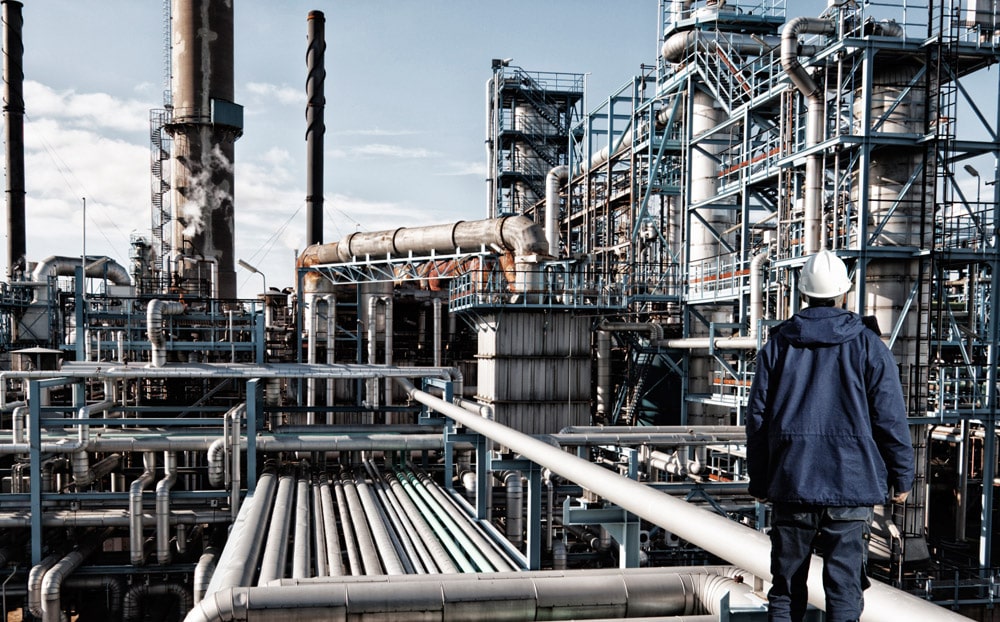
Walk through a refinery, gas plant, oil sands facility, or petrochemical complex and you will see thousands of metres of piping wrapped in insulation and covered with metal cladding.
Large vessels are insulated.
Heat exchangers are insulated.
Tanks can be insulated.
Steam lines are insulated.
Cold process lines are insulated.
Some equipment is covered with removable insulation blankets so maintenance workers can access valves and flanges.
The people installing and repairing these systems are industrial insulators.
In Alberta, the trade is officially known as Insulator, Heat and Frost.
It is one of the less talked about skilled trades in oil and gas, even though almost every major process facility depends on insulation.
For someone looking for a hands on industrial career, it can provide a path into refineries, oil sands facilities, gas plants, maintenance shutdowns, petrochemical plants, power facilities, and large construction projects.
It is also a recognized apprenticeship trade in Alberta.
What Does an Industrial Insulator Actually Do?
An industrial insulator installs materials that control heat transfer.
Sometimes the objective is keeping heat inside a pipe.
Sometimes the objective is keeping heat out.
Sometimes insulation prevents condensation.
Sometimes it protects workers from extremely hot surfaces.
Sometimes it keeps process fluids from freezing.
Sometimes it helps maintain the temperature required for a chemical or refining process.
The insulator measures the equipment, cuts insulation to the correct dimensions, fits it around the equipment, installs vapour barriers where required, and then protects the insulation with an outer covering.
That outer covering is often metal.
The finished work you see around refinery piping is therefore much more than wrapping something in fibreglass.
Where Do Oil and Gas Insulators Work?
Industrial insulators can work almost anywhere process equipment needs temperature control.
Common workplaces include:
Refineries
Natural gas plants
Oil sands facilities
Petrochemical plants
LNG facilities
Pipeline stations
Compressor stations
Tank farms
Power plants
Industrial construction projects
Maintenance shutdowns
Fabrication facilities
Some people work mainly on new construction.
Others specialize in maintenance.
Many move between projects depending on where work is available.
Why Do Oil and Gas Facilities Need So Much Insulation?
Process plants continuously heat and cool fluids.
Every uninsulated hot pipe loses energy to the surrounding air.
Every cold pipe absorbs heat from its surroundings.
Multiply that across an entire refinery and the energy loss can become enormous.
Insulation reduces that heat transfer.
This can improve energy efficiency, maintain process temperature, protect equipment, prevent condensation, and improve personnel safety.
In some services, losing too much heat can actually affect whether the process works correctly.
Insulation is therefore part of process design, not simply something added to make pipes look finished.
What Is Hot Insulation?
Hot insulation is installed on equipment operating above ambient temperature.
Examples include:
Steam piping
Hot oil piping
Process vessels
Heat exchangers
Furnaces and associated piping
Boiler systems
Exhaust systems
Hot hydrocarbon lines
The insulation reduces heat loss.
It can also reduce the external surface temperature so workers are less likely to contact extremely hot metal.
Different insulation materials are selected for different temperature ranges and environments.
What Is Cold Insulation?
Cold insulation is used where process temperatures are below ambient temperature.
This can include refrigeration systems, cryogenic systems, cold natural gas processing equipment, and certain LNG applications.
Cold insulation creates different challenges.
Warm humid air wants to reach the cold surface.
If moisture reaches that surface, condensation can form.
At sufficiently low temperatures, that moisture can freeze.
Preventing moisture entry is therefore extremely important.
This is why vapour barriers become a major part of cold insulation work.
What Is Cryogenic Insulation?
Cryogenic systems operate at extremely low temperatures.
LNG is an obvious oil and gas example.
Equipment handling very cold fluids requires insulation systems specifically designed for those conditions.
The materials, joints, vapour barriers, supports, and installation quality all become extremely important.
Small installation defects can allow moisture into the system.
That moisture can create ice and reduce insulation performance.
The growing LNG industry creates another area where experienced industrial insulators can use their trade.
What Materials Do Industrial Insulators Use?
The material depends on temperature, process service, mechanical requirements, fire resistance, moisture resistance, and engineering specifications.
Common materials can include mineral wool, fibreglass, calcium silicate, cellular glass, elastomeric products, and other specialized insulation systems.
An apprentice learns which materials are appropriate for different applications.
You are not simply choosing whichever insulation happens to be available.
The wrong material can perform poorly or fail under operating conditions.
What Is Metal Cladding?
After insulation is installed, it often needs protection from weather and physical damage.
Industrial insulators commonly install thin metal covering over the insulation.
This covering is sometimes called jacketing or cladding.
Aluminum and stainless steel are common materials depending on the service.
The finished metal covering protects the insulation from rain, snow, ultraviolet exposure, impact, and other environmental conditions.
Good cladding also gives the equipment the clean finished appearance people associate with industrial facilities.
Do Industrial Insulators Work With Sheet Metal?
Yes.
A significant part of the trade involves measuring, laying out, cutting, shaping, and installing metal covering.
Pipes are relatively simple compared with irregular equipment.
Valves, elbows, reducers, vessel heads, flanges, tees, and complex shapes require more careful layout.
Experienced insulators can fabricate covers that fit equipment very closely.
This is one reason the trade requires more skill than it first appears.
What Is Lagging?
The word lagging is sometimes used for the protective outer covering installed over insulation.
Terminology varies between industries and locations.
Workers may use words such as jacketing, cladding, or lagging depending on the application.
A new apprentice quickly learns the terminology used by the employer and project.
What Is a Removable Insulation Blanket?
Some equipment needs regular maintenance or inspection.
Permanently covering it with rigid insulation and metal can make access difficult.
Removable insulation blankets can be fabricated to fit around valves, flanges, turbines, exhaust components, and other equipment.
They are designed so workers can remove them, perform maintenance, and reinstall them.
These blankets also require accurate measurement and fabrication.
Poor fitting removable insulation loses heat and can leave hot surfaces exposed.
Why Are Valves Harder to Insulate Than Straight Pipe?
Straight pipe has a consistent shape.
A valve does not.
It has a body, bonnet, stem, actuator, flanges, bolts, and moving components.
Maintenance workers may also need access.
An insulator has to understand what can be covered and what needs to remain accessible.
The insulation system also needs to fit without interfering with valve operation.
Complex shapes are where trade skill becomes obvious.
What Is Heat Tracing?
Some pipes contain fluids that could freeze or become too viscous if they cool.
Electrical or steam heat tracing can provide additional heat along the pipe.
Insulation is then installed over the traced piping to retain that heat.
The insulator needs to work without damaging the tracing system.
Insulation and heat tracing often work together.
Heat tracing adds heat.
Insulation reduces how quickly that heat escapes.
Why Is Steam Piping Heavily Insulated?
Steam carries large amounts of thermal energy.
An uninsulated steam line can lose significant heat.
The surface can also become hot enough to cause serious burns.
Insulating steam piping reduces heat loss and lowers external surface temperature.
Good insulation therefore improves both energy efficiency and personnel protection.
Why Are Some Pipes Left Uninsulated?
Not every pipe needs insulation.
Some processes do not require temperature control.
Some equipment needs heat to escape.
Certain components may need to remain visible for inspection.
Engineering specifications determine which systems are insulated and which are not.
An insulator follows drawings and specifications rather than assuming every pipe should be covered.
What Is Corrosion Under Insulation?
Corrosion under insulation is an important problem in process facilities.
Water can enter damaged or poorly sealed insulation.
The moisture becomes trapped against the metal surface.
Corrosion can then develop where nobody can easily see it.
The outside of the insulation may appear normal while pipe wall thickness is being lost underneath.
This is known as corrosion under insulation.
It is commonly shortened to CUI in industry.
Why Is CUI Such a Serious Problem?
The insulation hides the metal surface.
Operators cannot simply look at the pipe during a normal round.
Water can remain trapped for long periods.
Certain temperature ranges can create particularly favourable corrosion conditions.
If deterioration continues long enough, the pipe may eventually require repair or replacement.
Insulation quality therefore influences more than energy efficiency.
Good weather sealing can help protect equipment integrity.
Do Insulators Remove Insulation for Inspection?
Yes.
Inspection crews often need access to the underlying pipe or vessel.
An insulator may remove selected sections so inspectors can perform ultrasonic thickness measurements or other examinations.
After the inspection or repair is complete, the insulation is replaced.
During major maintenance programs, large quantities of insulation may be removed and later reinstalled.
This creates considerable work during plant shutdowns.
What Happens During a Refinery Shutdown?
A planned shutdown creates intense activity.
Equipment that normally operates continuously is taken out of service.
Vessels are opened.
Piping is inspected.
Valves are repaired.
Heat exchangers are serviced.
Weld repairs are completed.
All of that work often requires insulation to be removed first.
Once mechanical work and inspection are complete, the insulation has to go back on.
Insulators can therefore be extremely busy during shutdowns.
Projects may use large temporary workforces working long shifts for several weeks.
Are Industrial Insulators Busy During Turnarounds?
They can be very busy.
Insulation is often one of the first things removed before maintenance begins and one of the final things restored before equipment returns to service.
This creates work at both ends of the project.
Large turnarounds may involve hundreds or thousands of tradespeople.
For an apprentice, shutdown work can provide exposure to many types of equipment in a short period.
The tradeoff is that the schedule can be demanding.
What Hours Do Industrial Insulators Work?
It depends on the type of employment.
Maintenance workers at permanent facilities may have relatively regular schedules.
Construction projects can use longer shifts.
Remote oil sands work may use rotational schedules.
Shutdowns may involve twelve hour shifts for many consecutive days.
Night shift is also possible.
The schedule can change significantly throughout a career.
Someone who likes project work may deliberately chase shutdowns and overtime.
Someone who wants more predictable hours may eventually target permanent maintenance positions.
Do Industrial Insulators Work in Camps?
Yes.
Remote oil and gas projects can use camp accommodation.
This is especially common on large northern Alberta projects and other remote industrial developments.
Workers stay in camp during the work portion of the rotation.
Transportation arrangements vary by employer.
Some workers are flown or bused to the project.
Others drive to a transportation hub.
Camp work can increase earning potential through long shifts and overtime, but it also means spending significant time away from home.
Is Insulation Work Physically Demanding?
Yes, although it is different from some heavier construction trades.
Insulators climb scaffolds.
They carry material.
They work overhead.
They kneel and crouch.
They cut and fit material.
They move around equipment.
They can spend much of the shift on their feet.
Some insulation materials are lightweight individually, but repetitive handling throughout a long shift still becomes tiring.
The trade also requires good hand coordination and attention to detail.
Do Insulators Work at Heights?
Frequently.
Industrial piping is installed throughout large structures.
Some lines may be many metres above ground.
Insulators commonly work from scaffolding, lifts, platforms, and other approved access systems.
Comfort with heights is therefore useful.
Someone with a severe fear of working above ground may find certain industrial projects difficult.
Fall protection requirements depend on the work and site.
Do Insulators Work in Confined Spaces?
They can.
Equipment and piping can be located in tight areas.
Certain projects can also involve work inside vessels or other spaces under controlled conditions.
Confined space work requires the appropriate procedures, permits, atmospheric testing, and rescue planning.
An insulator should never enter a confined space simply because insulation needs to be installed there.
The same site safety rules apply as they do to every other trade.
Is Insulation Work Itchy?
Sometimes.
This is one of the first questions people ask.
Certain fibrous insulation materials can irritate skin.
Dust can also be unpleasant.
Proper work clothing, gloves, eye protection, respiratory protection where required, and good hygiene help reduce exposure.
Different materials feel very different to work with.
An experienced industrial insulator may work with numerous products over a career.
Do Industrial Insulators Need Respirators?
Certain tasks may require respiratory protection depending on the material and exposure conditions.
Projects have occupational hygiene procedures defining when specific protection is required.
Removing old insulation can create different hazards from installing new material.
Workers need to know what material they are dealing with before disturbing it.
Never assume old insulation is harmless simply because it looks similar to modern material.
What About Asbestos?
Older industrial facilities can contain asbestos containing insulation and related materials.
Asbestos disturbance requires specialized procedures and controls.
Ordinary insulation removal should not continue when suspect material is discovered unless the work has been properly assessed and the required abatement procedures are in place.
Industrial insulators need strong awareness of this issue because they routinely work around older insulation systems.
Training and responsibilities vary by employer and jurisdiction.
Is Industrial Insulation a Skilled Trade in Alberta?
Yes.
Insulator, Heat and Frost is a designated trade in Alberta.
The apprenticeship program currently contains four periods.
Each period includes 1620 hours of on the job work experience and six weeks of classroom instruction.
The program is designed so each period takes approximately one year.
The structure was updated beginning in 2025 to align more closely with current national standards.
How Do You Become an Insulator Apprentice in Alberta?
The traditional route begins by finding an employer willing to hire and sponsor you as an apprentice.
You work under qualified supervision and accumulate apprenticeship hours.
You also complete the required classroom instruction and theory examinations.
After meeting the apprenticeship requirements, you can earn journeyperson status.
You can also pursue the Red Seal examination.
The important point is that apprenticeship is not only school.
Most of the learning happens while actually working in the trade.
Do You Go to School Before Finding an Employer?
The traditional apprenticeship route normally begins with employment and apprenticeship registration.
You then alternate between work experience and classroom training.
There are also recognized training programs and pre apprenticeship opportunities that can help people prepare for the trade.
But completing a course does not automatically guarantee a job.
If your objective is apprenticeship, the employer relationship is extremely important because you need qualifying work experience.
Where Do Alberta Insulator Apprentices Attend School?
Current apprenticeship classroom instruction is available through institutions including NAIT and SAIT.
The classroom portion covers trade theory and practical knowledge that complements field experience.
Training becomes progressively more advanced as apprentices move through the program.
Before registering for any program, check the current Alberta apprenticeship requirements because trade programs can be updated.
What Are the Alberta Apprenticeship Entrance Requirements?
Current Alberta requirements provide several ways to meet the educational entrance standard.
Applicants can qualify through specified high school English and mathematics courses, an accepted equivalency credential, or an apprenticeship entrance examination.
Specific requirements can change.
Anyone planning to enter the trade should verify the current requirements before making education decisions.
The most important practical step is still finding an employer willing to train you.
How Long Is the Alberta Insulator Apprenticeship?
The current Alberta program has four periods.
Each period includes 1620 hours of qualifying work experience and six weeks of classroom instruction.
That means completing the full traditional program generally takes around four years.
The exact calendar time can vary depending on how consistently you work and when you attend training.
Construction employment can fluctuate, so some apprentices accumulate hours faster than others.
How Much Does an Apprentice Insulator Get Paid?
Apprentice pay increases as the worker progresses through the trade.
In Alberta, minimum apprentice wage percentages are tied to the rate received by the lowest paid journeyperson insulator employed by the same company.
Current minimum percentages are:
First period: 50 percent
Second period: 60 percent
Third period: 70 percent
Fourth period: 80 percent
Actual compensation can be higher depending on employer, agreement, location, overtime, and project conditions.
Remote projects and shutdown work can also create significant overtime.
How Much Do Journeyperson Insulators Make?
Pay varies widely.
Location matters.
Union agreements matter.
Industrial work can pay differently from commercial work.
Shutdown overtime can dramatically increase annual income.
Remote rotations can also change total compensation.
Current Alberta labour market information shows that experienced insulators can earn strong skilled trade wages.
But someone looking at annual income should separate normal hourly compensation from years containing exceptional amounts of overtime.
A worker earning large shutdown pay may also be working extremely long hours to produce it.
Is Insulation a Red Seal Trade?
Yes.
Insulator, Heat and Frost is a Red Seal trade.
Eligible workers can write the interprovincial examination and earn the Red Seal endorsement.
That credential demonstrates a recognized national standard and can improve mobility between Canadian provinces and territories.
For someone planning a long industrial career, portability can be very valuable.
Oil and gas projects move.
Workers often move with them.
Can You Start With No Previous Construction Experience?
Yes, employers can hire first period apprentices without previous insulation experience.
You still need to convince someone to give you the first opportunity.
Construction experience can help because it proves you understand jobsites, tools, PPE, long shifts, and industrial work.
But every journeyperson started without insulation experience at some point.
Employers mainly need apprentices who are reliable, safe, teachable, and willing to work.
What Would You Do as a First Period Apprentice?
Do not expect to begin with the most complicated fabrication.
A new apprentice learns the basics.
You may help move material.
You learn measurements.
You cut insulation.
You install simple pipe insulation.
You learn how jacketing is fitted.
You help prepare work areas.
You learn tools.
You learn how materials are stored and handled.
You watch experienced workers deal with elbows, valves, vessels, and complicated shapes.
Over time, you are given more independent work.
What Tools Do Industrial Insulators Use?
The trade uses a mix of basic hand tools and specialized fabrication tools.
Depending on the work, an insulator may use measuring tools, knives, snips, shears, punches, crimping tools, layout tools, drills, fastening equipment, and specialized cutting tools.
Metal layout and accurate measurement are important.
A small measuring error repeated across dozens of pieces creates poor fitting work and wasted material.
Experienced insulators become extremely efficient at measuring and fabrication.
Is There Much Math?
There is practical trade math.
You need to measure accurately.
You work with circumference, diameter, length, angles, spacing, and material layout.
Complex shapes require pattern development.
You do not need university mathematics to begin the trade.
You do need to become comfortable measuring carefully and applying the trade calculations taught during apprenticeship.
Attention to detail matters more than being a mathematics genius.
Do Insulators Read Drawings?
Yes.
Industrial work can require understanding drawings, specifications, equipment identification, insulation schedules, and project requirements.
You need to know which equipment receives insulation, which material is required, the required thickness, and what type of finish is specified.
On large projects, there can be several insulation systems being installed at the same time.
Guessing based on appearance is not acceptable.
The specification controls the work.
Why Does Insulation Thickness Change?
Different services require different amounts of insulation.
Factors can include process temperature, ambient conditions, energy conservation requirements, personnel protection, condensation control, insulation material, and engineering design.
A very hot steam line may need a different system from a moderately warm process pipe.
A cryogenic line can require a completely different design again.
An experienced insulator learns to understand the purpose behind the specification.
What Is Personnel Protection Insulation?
Some insulation is installed mainly to protect people from contact with hot surfaces.
A pipe may not require insulation for process reasons, but its surface temperature may present a burn hazard.
Insulation or guarding can reduce that risk.
The system may only need to cover areas where workers could reasonably make contact.
This is another example of why different pieces of equipment can have different insulation requirements.
Can Insulation Save a Refinery Money?
Absolutely.
Hot equipment continuously loses heat to its surroundings.
That heat originally came from fuel, steam, or another energy source.
Reducing heat loss lowers the energy required to maintain process conditions.
Across a large refinery operating continuously, efficient insulation can create substantial energy savings.
Damaged insulation therefore costs more than just the price of repairing the jacket.
It can increase ongoing operating cost.
Why Does Damaged Insulation Need to Be Repaired Quickly?
Once metal cladding is damaged, water can enter.
Wet insulation often performs worse than dry insulation.
It can also create conditions for corrosion under insulation.
The damage can spread as weather continues entering the system.
A relatively small repair made early can prevent a much larger replacement later.
Operators often report damaged insulation during field rounds for this reason.
What Happens When Insulation Gets Wet?
Performance can deteriorate.
Water can increase heat transfer through some insulation systems.
The added weight can damage supports and cladding.
Moisture can reach the metal surface.
Corrosion can begin underneath.
Freeze and thaw cycles can cause additional damage.
For cold systems, moisture penetration can be especially serious.
Keeping insulation dry is one of the main purposes of a properly installed weather barrier.
Why Are Insulators Needed During Maintenance?
Maintenance crews often cannot reach equipment until insulation is removed.
Imagine a flange is leaking.
The pipe is insulated.
Before mechanics can inspect the flange properly, someone needs to remove the cladding and insulation.
After repairs are complete, the insulation system needs to be restored.
Insulators therefore work closely with pipefitters, welders, inspectors, millwrights, operators, and other trades.
They are part of the maintenance sequence.
What Is an Insulation Box?
Certain valves, flanges, and pieces of equipment use fabricated removable covers.
Workers sometimes refer to these as boxes depending on local terminology and design.
The cover can be taken off when maintenance is required and replaced afterward.
Fabricating these shapes requires accurate field measurements.
A poorly built cover may interfere with equipment or leave large gaps.
Experienced workers become very skilled at visualizing how flat material needs to be shaped around complex equipment.
Is Industrial Insulation Repetitive?
Parts of it can be.
A long straight pipe rack may contain hundreds of similar sections.
That can become repetitive.
Other days involve complicated fittings, irregular equipment, repairs, or fabrication.
Large industrial projects provide more variety than some people expect.
Whether you enjoy the trade often depends on whether you like precise hands on construction work.
Is the Trade Hard on Your Body?
Any construction trade can be hard on the body if performed carelessly for years.
Insulators may spend significant time reaching, kneeling, climbing, and working overhead.
Repetitive hand movements are common.
Good work positioning matters.
Use the available access equipment.
Do not continually work from awkward positions when the task can be set up better.
The workers who last in industrial trades usually learn how to work efficiently rather than trying to overpower every task physically.
Is Industrial Insulation Dangerous?
The insulation itself is only one part of the work environment.
Oil and gas facilities can contain:
Hot equipment
Cold equipment
Hydrocarbons
Hydrogen sulfide
Pressure
Electrical systems
Working at heights
Confined spaces
Scaffolding
Heavy equipment
Construction traffic
Dust
Sharp metal
Insulators often work directly beside operating process equipment.
Understanding site hazards is therefore just as important as understanding insulation.
Why Are Metal Cuts Common?
Sheet metal edges can be extremely sharp.
Workers cut and shape metal jacketing throughout the day.
Gloves and careful handling matter.
A thin sheet can create a surprisingly deep cut.
New apprentices often learn quickly that metal cladding should be treated with respect even though it feels lightweight.
Do Insulators Work Outside in Winter?
Yes.
Many industrial facilities are mostly outdoors.
A refinery is not a giant heated building.
Piping racks, vessels, tanks, and equipment are exposed to weather.
In Alberta, that means hot summers and very cold winters.
You may be cutting metal while wearing winter gloves one month and working under intense sun later in the year.
Being able to tolerate outdoor conditions is useful in this trade.
Do Insulators Work Around Hot Equipment?
Yes.
Some maintenance occurs while neighboring equipment remains operating.
Hot surfaces can create uncomfortable working conditions even when the specific equipment being insulated is safe to work on.
The opposite can happen around refrigeration and cryogenic systems.
Industrial insulation is literally a trade built around temperature.
Workers need to respect both extremes.
Is This a Good Trade for Someone Who Wants Oil and Gas Work?
It can be.
The trade provides direct access to major industrial facilities.
You can gain experience in refineries, oil sands operations, gas plants, petrochemical facilities, LNG projects, and power generation.
It also provides a formal apprenticeship path rather than leaving you with only general labour experience.
Once you become qualified, you own a recognized trade that can be used outside oil and gas as well.
That portability is a major advantage.
Can Industrial Insulators Work Outside Oil and Gas?
Yes.
The trade is also used in commercial buildings, power plants, manufacturing, institutional facilities, heating systems, refrigeration, marine applications, and other industries.
Industrial work can pay differently and involve different schedules, but the fundamental trade remains useful.
This provides some protection from oil and gas cycles.
If one sector slows, your insulation skills do not disappear.
What Is the Difference Between Commercial and Industrial Insulation?
Commercial insulators commonly work on building systems such as heating, ventilation, plumbing, and mechanical equipment.
Industrial insulators work more heavily around process piping, pressure vessels, tanks, exchangers, turbines, industrial boilers, and similar equipment.
Industrial projects can involve larger pipe sizes, more extreme temperatures, more complex safety systems, and remote work.
The same trade can move between both environments.
Can Commercial Insulation Experience Help You Get Into Oil and Gas?
Yes.
You already understand insulation materials, measurements, fabrication, jacketing, and trade fundamentals.
The next step is learning industrial specifications, larger equipment, site safety requirements, and the work culture of operating facilities.
Commercial experience is therefore not wasted.
It can provide the foundation needed to move toward refinery or oil sands work.
Is Union Work Common?
Union representation is common in parts of the industrial insulation industry.
The International Association of Heat and Frost Insulators and Allied Workers represents workers in the trade in Canada and elsewhere.
Union availability depends on region, employer, and project.
Workers can also be employed in non union environments.
The best route depends on local opportunities and your career preferences.
Can a Union Help You Become an Apprentice?
Trade unions can be an important apprenticeship route.
Training centres may provide education, employer connections, and pathways into project work.
Availability depends on current labour demand.
Joining a union does not guarantee constant work.
Construction employment still moves with projects and shutdown schedules.
But for many tradespeople, union membership provides access to training and industrial employment opportunities.
What Is a Red Seal and Why Does It Matter?
A Red Seal endorsement demonstrates that a tradesperson has met the recognized interprovincial standard for the trade.
This can make it easier to work across Canada.
That matters in oil and gas because major projects can appear in different provinces.
An experienced Alberta insulator might later work on an LNG project in British Columbia or an industrial project elsewhere in Canada.
Mobility creates more employment options.
What Can You Do After Becoming a Journeyperson?
You do not have to remain in exactly the same position forever.
Possible progression can include:
Lead hand
Foreperson
General foreperson
Supervisor
Estimator
Planner
Quality control
Insulation inspector
Project coordinator
Training roles
Management
Some journeypersons start contracting businesses.
Others move toward specialized insulation systems.
Field knowledge can eventually become valuable in estimating and project planning because you understand how long work actually takes.
What Does an Insulation Estimator Do?
An estimator determines the material, labour, and cost required for insulation work.
They study drawings and specifications.
They calculate quantities.
They consider pipe sizes, equipment, fittings, insulation type, metal covering, access, labour productivity, and project conditions.
Experienced field workers can make strong estimators because they understand what drawings do not always show.
This can provide a less physical career path later in life.
Can Insulators Move Into Inspection?
Yes.
Experienced workers can develop specialized knowledge of insulation quality, installation specifications, weather sealing, and corrosion related concerns.
Some move toward quality control or inspection roles.
Additional training may be required depending on the position.
Understanding how insulation should be installed makes it much easier to recognize poor workmanship.
Can Insulation Lead to Supervisor Jobs?
Yes.
Large projects require people who can organize crews, coordinate materials, plan access, track progress, communicate with other trades, and maintain quality.
A good supervisor needs more than insulation skill.
They also need communication and planning ability.
Workers who learn the trade thoroughly and show leadership can progress into these positions.
Is Industrial Insulation Good Shutdown Work?
Yes.
Shutdowns create large amounts of temporary insulation work.
Equipment needs to be opened for inspection and maintenance.
Insulation comes off.
Repairs are completed.
Insulation goes back on.
Workers who are willing to travel between shutdowns can potentially work substantial overtime during busy periods.
But project work can be inconsistent.
One month may contain enormous hours.
Another period may be much quieter.
Budget based on realistic annual income rather than assuming shutdown overtime lasts forever.
Can You Make Good Money Chasing Shutdowns?
Potentially.
Journeyperson wages combined with long shifts, overtime, travel arrangements, and project premiums can produce strong earnings.
But there is a tradeoff.
You may spend considerable time away from home.
The schedule can be exhausting.
Work can end when the project finishes.
You may then wait for the next dispatch or job.
Some people love this lifestyle.
Others eventually seek stable maintenance employment.
What Should You Put on a Resume With No Insulation Experience?
Focus on transferable skills.
Construction experience
Industrial experience
Tool use
Measurements
Working at heights
Scaffolding experience
Sheet metal experience
Mechanical work
Safety training
Camp experience
Shutdown experience
Physical work
Reliable transportation
Willingness to travel
Do not claim insulation skills you do not have.
Your objective is convincing an employer that you can become a good apprentice.
What Should You Learn Before an Insulator Interview?
Know what the trade actually does.
Understand that you will work on piping, vessels, tanks, and equipment.
Know that the trade involves both insulation material and metal fabrication.
Understand that industrial work often occurs outside and at heights.
Know the apprenticeship structure.
Be prepared to work with your hands.
If you tell the interviewer you thought insulation meant installing insulation in house walls, you have not researched the position enough.
What Questions Might an Employer Ask?
They may ask whether you are comfortable working at heights.
They may ask about construction experience.
They may ask whether you can read a tape measure accurately.
They may ask about physical work.
They may ask whether you can travel.
For industrial positions, camp and shutdown availability may come up.
Safety questions are also common.
For a first apprentice position, the employer is not expecting you to know every insulation material.
They are deciding whether you are worth training.
What Makes a Good Apprentice Insulator?
Accuracy matters.
Listen carefully.
Measure twice.
Keep tools organized.
Take care of material.
Ask when you do not understand.
Do not hide mistakes.
Work safely at heights.
Learn from experienced journeypersons.
Try to understand why different insulation systems are installed instead of memorizing only the physical steps.
An apprentice who becomes reliable and produces clean work becomes valuable quickly.
What Makes Someone Bad at the Trade?
Poor measuring.
Rushing.
Wasting material.
Leaving openings where water can enter.
Ignoring specifications.
Damaging equipment.
Unsafe scaffold behaviour.
Constantly needing someone to correct basic work because they were not paying attention.
Industrial insulation often remains visible for years.
Poor workmanship is difficult to hide.
Quality matters.
Why Is Attention to Detail So Important?
Water can enter through a small poorly sealed joint.
A bad measurement can create a large gap.
Metal that looks acceptable from a distance may not shed water properly.
A missing vapour barrier seal can damage a cold insulation system.
The work is full of small details that affect long term performance.
Good insulation is not simply about making something look neat.
The details determine whether the system actually works.
Is Industrial Insulation a Good First Trade?
For the right person, yes.
It provides a formal apprenticeship.
It can lead to high paying industrial work.
It offers opportunities in oil and gas without locking you exclusively into oil and gas.
You work with your hands.
You can progress into supervision, estimating, inspection, and planning.
The disadvantages are also real.
The work can be dirty.
Some materials are irritating.
You may work at heights.
Shutdown schedules can be intense.
Remote jobs can keep you away from home.
You need to decide whether those conditions fit you.
A Practical Path Into Oil and Gas Insulation in Alberta
If you are starting with no experience, begin by learning what industrial insulators actually do.
Look at current apprentice openings.
Contact insulation contractors working in industrial facilities.
Investigate apprenticeship opportunities through employers and trade organizations.
Make sure you meet current Alberta apprenticeship entrance requirements.
If hired, register properly as an apprentice and begin accumulating qualifying work hours under a sponsor and qualified mentor.
Complete each classroom period as you progress.
Use your first years to learn more than basic pipe covering.
Learn metal layout.
Learn cold systems.
Learn hot systems.
Learn vessels.
Learn valves and removable insulation.
Learn why water entry matters.
Learn what corrosion under insulation looks like.
Eventually work toward journeyperson status and consider the Red Seal endorsement.
At that point, you do not simply have an oilfield job.
You have a portable skilled trade.
Frequently Asked Questions
What does an industrial insulator do in oil and gas?
An industrial insulator installs and repairs insulation systems on piping, tanks, vessels, heat exchangers, and other process equipment.
What is the trade called in Alberta?
The designated trade is called Insulator, Heat and Frost.
Is industrial insulation a skilled trade?
Yes. Alberta has a formal apprenticeship program for the trade.
How long is the apprenticeship in Alberta?
The current program has four periods. Each period includes 1620 hours of work experience and six weeks of classroom instruction.
Can you become an insulator with no experience?
Yes. Employers can hire first period apprentices and train them.
Do you need a college degree?
No. The normal career path is apprenticeship rather than a university degree.
Is insulation a Red Seal trade?
Yes. Qualified workers can pursue a Red Seal endorsement.
Do insulators work in refineries?
Yes. Refineries contain enormous amounts of insulated piping and equipment.
Do insulators work in oil sands facilities?
Yes. Oil sands construction, maintenance, and shutdown projects employ industrial insulators.
Do insulators work at gas plants?
Yes. Gas plants use insulation on hot process equipment, cold systems, piping, vessels, and other equipment.
Do industrial insulators work in camps?
Some do, especially on remote construction and maintenance projects.
Do insulators work twelve hour shifts?
They can. Long shifts are common on certain shutdown and rotational projects.
Is insulation work physical?
Yes. It involves climbing, carrying material, working overhead, kneeling, cutting, fabrication, and long periods on your feet.
Do insulators work at heights?
Frequently. Industrial piping and equipment can be located high above ground.
Is insulation work itchy?
Certain fibrous materials can irritate the skin. Proper clothing and protective equipment help control exposure.
Do insulators work around asbestos?
Older industrial facilities can contain asbestos containing materials. Suspect material must be handled under the appropriate assessment and abatement procedures.
What is corrosion under insulation?
It is corrosion that develops on metal hidden beneath insulation, often after moisture enters the insulation system.
What is metal jacketing?
It is protective metal covering installed over insulation to protect it from weather and physical damage.
What is a vapour barrier?
It is a layer designed to prevent moisture vapor from entering an insulation system, especially on cold equipment.
What is cryogenic insulation?
It is insulation designed for extremely low temperature equipment such as systems associated with LNG.
Can commercial insulators move into oil and gas?
Yes. Commercial insulation provides valuable trade skills that can transfer into industrial work.
Can industrial insulators work outside oil and gas?
Yes. The trade is also used in commercial construction, power generation, manufacturing, refrigeration, and many other industries.
How much do apprentice insulators make in Alberta?
Current Alberta apprenticeship rules set minimum percentages based on the journeyperson rate at the same employer. The minimum progresses from 50 percent in the first period to 80 percent in the fourth period.
Can industrial insulators make good money?
Experienced industrial workers can earn strong skilled trade wages, particularly when overtime, shutdown work, and remote projects are involved.
What can an insulator do later in their career?
Possible paths include journeyperson work, supervision, estimating, planning, quality control, inspection, training, and project management.
What is the biggest advantage of becoming an industrial insulator?
You can enter oil and gas while building a recognized trade that remains useful outside the industry.
Instead of having only experience from one oilfield job, you develop a skill you can take from refinery to gas plant, from oil sands project to LNG facility, and from one province to another.