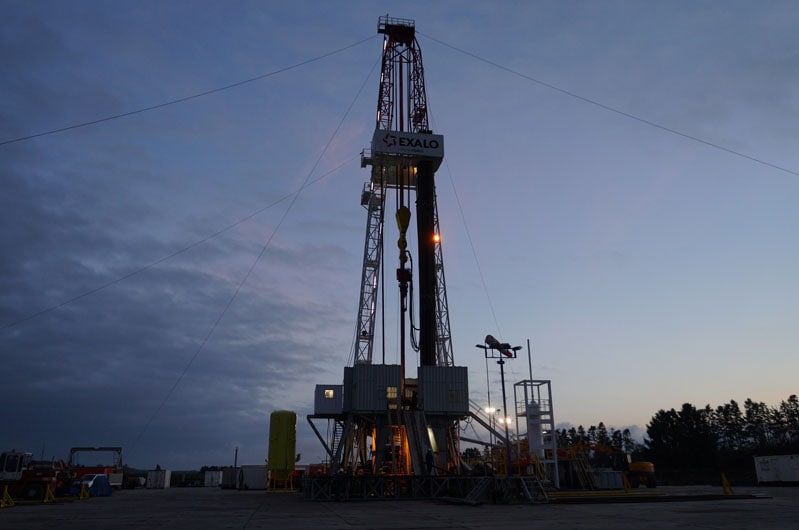
The rapid construction of artificial intelligence data centers is beginning to create an unusual new source of energy demand.
A single large data center campus can require as much electricity as a small city.
Some proposed developments are measured in hundreds of megawatts.
Others are approaching one gigawatt or more.
And unlike many industrial loads, the servers inside these facilities are expected to operate continuously.
That creates an obvious question for the oil and gas industry.
Where will all of that energy come from?
Renewable power will supply part of it.
Nuclear power could eventually supply much more.
Existing electrical grids will continue providing most data center power in many regions.
But over the next several years, natural gas appears likely to become one of the biggest beneficiaries of the data center boom.
The effect on crude oil is much smaller.
Data centers themselves do not consume large amounts of crude oil. Their strongest connection to oil comes through diesel backup generators, construction activity, transportation, lubricants, and other secondary demand.
Natural gas is different.
Gas can directly generate the enormous amounts of reliable electricity that data centers need.
That is why data center construction is beginning to influence power plants, pipelines, gas production, storage, compression, turbine manufacturing, and even where future data centers are located.
Why Do AI Data Centers Use So Much Electricity?
Traditional data centers have always consumed electricity.
AI has dramatically increased the amount of computing power that can be concentrated inside one facility.
AI servers use specialized processors that can consume far more electricity than traditional computer servers.
Those processors also generate enormous amounts of heat.
That means the facility needs electricity for more than computation.
Power is also required for cooling, pumps, networking equipment, storage systems, power conversion, lighting, and other supporting equipment.
A large AI campus can therefore become one of the largest individual electricity consumers in an entire region.
How Fast Is Data Center Electricity Demand Growing?
The numbers are becoming large enough that utilities and energy companies can no longer treat data centers as a small niche customer.
Global data center electricity consumption was around 485 terawatt hours in 2025.
Current international energy projections put that figure near 950 terawatt hours by 2030.
That would mean global data center electricity consumption roughly doubles in only five years.
AI focused facilities are expected to grow even faster.
The United States is particularly important.
Data centers are expected to account for a very large share of American electricity demand growth through the end of the decade.
This is occurring after many years when US electricity demand grew relatively slowly.
The power industry suddenly has to build for growth again.
Why Is Natural Gas So Important for Data Centers?
Data centers want several things from their electricity supply.
They want reliability.
They want large amounts of power.
They want electricity available every hour.
And increasingly, they want power quickly.
Natural gas can satisfy those requirements better than many alternatives in the near term.
A gas turbine or reciprocating engine can produce electricity regardless of whether the sun is shining or the wind is blowing.
Gas plants can also respond to changes in electrical demand.
Most importantly, the United States and Canada already have enormous natural gas production and pipeline systems.
That existing infrastructure gives gas an advantage.
The fuel already exists.
The challenge is getting enough of it to the correct location.
Does This Mean Data Centers Will Run Entirely on Natural Gas?
No.
The future electricity mix will be much more complicated.
Solar power is being added rapidly.
Wind will contribute.
Battery storage will become increasingly important.
Large technology companies are signing agreements involving nuclear power, geothermal energy, renewables, and other electricity sources.
But building reliable power systems requires more than calculating annual renewable energy production.
A data center needs electricity at three in the morning during a cold winter night when wind output may be low.
It also needs electricity during a hot summer evening when the grid is already heavily loaded.
That need for continuous power gives dispatchable generation substantial value.
For much of North America, natural gas is currently the most readily available dispatchable fuel.
How Much Natural Gas Could One Large Data Center Require?
A simple calculation shows why the gas industry is paying attention.
Imagine a one gigawatt data center campus.
One gigawatt equals one million kilowatts.
If that load operated continuously, it would consume about 24 million kilowatt hours of electricity every day.
Now imagine all of that electricity came from a modern gas plant using roughly 7,000 British thermal units of fuel for each kilowatt hour produced.
Daily fuel consumption would be roughly 168 billion British thermal units.
Depending on gas heating value, that is approximately 160 to 170 million cubic feet of natural gas per day.
A somewhat less efficient generation system could consume more than 200 million cubic feet per day.
That is for one large campus.
Several large campuses in the same region can therefore create natural gas demand measured in billions of cubic feet per day.
Of course, most data centers will not receive every kilowatt hour from natural gas.
But the example shows the scale involved.
How Much Additional Gas Demand Could Data Centers Create?
Forecasts vary widely because nobody knows how many announced data centers will actually be built.
Some projections suggest several billion cubic feet per day of additional North American natural gas demand could eventually come from electricity generation serving data centers.
More aggressive scenarios are substantially higher.
That would make AI infrastructure a meaningful new source of gas demand.
It would not exceed every other gas market.
LNG exports, residential heating, industrial consumption, and conventional power generation will remain extremely important.
But data centers are unusual because they are adding large concentrated loads in specific locations.
A few projects can materially change the gas requirements of one pipeline system.
What Is Behind the Meter Natural Gas Generation?
One of the most important developments is the growth of behind the meter power generation.
Instead of waiting for the electrical grid to deliver all of the required power, the data center can build dedicated generation beside or near the facility.
Natural gas turbines or large reciprocating engines produce electricity directly for the campus.
This can solve one of the biggest problems facing data center developers.
Grid connection delays.
A company may be able to construct the data center faster than the utility can build the transmission lines, substations, and generation required to serve it.
If obtaining grid power takes several years, building dedicated gas generation can become attractive.
For a technology company spending billions on computing equipment, getting the data center operating earlier can be worth an enormous amount of money.
Why Is Time to Power Becoming So Important?
Data center developers are competing to bring computing capacity online quickly.
A completed building without electricity cannot generate useful computing output.
The value of a new electrical connection is therefore becoming enormous.
In some regions, developers are being told that large grid connections could take years.
That changes the economics.
A gas generation project that looks expensive compared with ordinary utility electricity may still make sense if it allows a multibillion dollar data center to begin operating several years earlier.
This is creating an entirely new market for gas turbines, reciprocating engines, pipelines, compression, and distributed generation systems.
Are Data Centers Already Building Their Own Gas Plants?
Yes.
The trend has accelerated significantly.
Developers are planning dedicated gas generation at several large data center projects in the United States and Canada.
Some projects are using small modular gas turbines.
Others are planning large power stations.
Some use reciprocating natural gas engines.
In several cases, the power project is being developed almost as part of the data center itself.
A technology campus is beginning to look less like an ordinary commercial building and more like an industrial complex containing its own power plant.
Why Are Small Gas Turbines Becoming Popular?
Large combined cycle gas plants can be extremely efficient.
The problem is that major turbines and power projects can take years to obtain and construct.
Data center developers are often focused on speed.
Smaller gas turbines can be installed in modules.
Instead of waiting for one enormous generating unit, developers can add multiple smaller units as the campus grows.
These machines may not always have the lowest lifetime electricity cost.
But they can provide something technology companies increasingly value more.
Speed.
By late 2026, demand for these smaller turbines had become so strong that turbine availability itself was becoming a major constraint.
How Big Could Behind the Meter Gas Generation Become?
Current industry estimates suggest tens of gigawatts of behind the meter natural gas generation could be installed in the United States by 2030.
Data centers account for most of the expected growth in some forecasts.
That is a substantial change.
Natural gas demand associated with data centers is therefore no longer only an indirect question about what fuel a utility uses.
In some projects, the data center company is directly creating the demand for a new gas fired power plant.
That makes the connection between AI and natural gas much easier to see.
What Does This Mean for Natural Gas Pipelines?
A large gas power plant needs a large and reliable fuel supply.
That means pipeline capacity.
Imagine a region attracting several gigawatts of data center development.
The electrical generation serving those centers could require hundreds of millions or even billions of cubic feet of gas every day.
Existing pipelines may not have enough capacity during periods of peak demand.
Pipeline companies can respond by:
Adding compression
Looping existing pipelines
Expanding laterals
Building new connections
Expanding storage
Constructing new pipeline sections
Increasing capacity into power generation regions
This is one reason pipeline companies are increasingly talking about data center demand during investor presentations.
The AI boom is becoming a midstream story.
Could Data Centers Create New Pipeline Projects?
Yes.
Some already are.
A data center campus built near an existing major pipeline may need only a lateral and metering station.
A very large power development could require much more infrastructure.
The economics are especially attractive when a data center company or power generator is willing to sign a long term gas transportation contract.
Pipeline companies prefer predictable contracted demand.
A data center that expects to operate continuously for many years can provide exactly that.
Why Does Natural Gas Storage Become More Important?
Gas demand changes constantly.
A data center load may be relatively steady, but the entire gas system is not.
Winter heating demand can surge.
LNG terminals consume large volumes.
Industrial plants use gas.
Power plants may suddenly need additional fuel during extreme weather.
Storage helps balance those differences.
If data centers increase the amount of gas being consumed continuously, the margin between normal demand and maximum system capacity becomes smaller.
That can increase the value of storage, pipeline flexibility, and reliable deliverability.
The question becomes not only whether North America has enough gas underground.
It becomes whether enough gas can reach the correct location on the coldest or hottest day of the year.
Will Data Centers Increase Natural Gas Drilling?
Potentially.
But the relationship is not immediate.
A power company does not order a new gas turbine and cause a drilling rig to appear the next morning.
The first response may come from existing production.
Then pipeline utilization rises.
Gas prices may strengthen.
Producers begin seeing stronger future demand.
If prices and long term contracts justify additional activity, drilling can increase.
The effect will depend heavily on the basin.
Areas with abundant low cost gas and good pipeline access are in a stronger position to respond.
Which Natural Gas Basins Could Benefit?
Large gas producing regions with access to population centers and power markets are obvious candidates.
In the United States, this includes areas connected to Appalachian gas, the Permian Basin, Haynesville production, and other major supply regions.
Texas is particularly important because it combines enormous gas supply, a rapidly growing electricity market, available land, and significant data center development.
Appalachian gas could also benefit because major data center growth is occurring in the eastern United States.
The obstacle there is often not lack of gas.
It is pipeline capacity.
Western Canada has similar potential because Alberta and British Columbia contain enormous gas resources.
Why Could Appalachian Gas Become More Valuable?
The Appalachian region contains some of the world’s largest low cost natural gas resources.
At times, producers have struggled with pipeline constraints that limit access to new customers.
Data center electricity demand creates another potential market close to the producing region.
If new gas plants are constructed near data center clusters, regional gas demand increases.
That can improve pipeline utilization and potentially support stronger local gas prices.
But infrastructure remains the key.
Gas in the ground has little value to a power plant if there is no pipeline capacity connecting the two.
What Does the Data Center Boom Mean for Texas Natural Gas?
Texas may be one of the biggest beneficiaries.
The state has enormous gas production.
It has extensive pipelines.
It has a large competitive electricity market.
It has land.
And data center developers are proposing very large projects.
Texas has also experienced huge volumes of proposed data center grid connections.
That has encouraged developers to consider dedicated generation rather than waiting for the grid.
Natural gas is one of the most obvious fuels for those projects.
The result could be another major source of demand competing with LNG exports, industrial users, residential customers, and conventional power plants.
What Could Data Centers Mean for Alberta Natural Gas?
Alberta may be one of the most interesting places to watch.
The province has enormous natural gas resources, experienced energy workers, cool weather, available land, and a power market where private companies can build generation.
It also has rapidly growing interest from data center developers.
By the middle of 2026, companies had requested roughly 19,500 megawatts of new data center connections in Alberta.
For comparison, Alberta’s historical record electricity demand was around 12,800 megawatts.
Not all of those proposed projects will be built.
In fact, only a fraction can connect under the initial grid allocation.
But the scale of the requests shows what developers are considering.
The province is actively encouraging large data centers to bring new generation or storage with them rather than depending entirely on existing electricity supply.
Natural gas fits directly into that strategy.
Are Large Alberta Data Centers Already Being Paired With Gas Generation?
Yes.
One major data center campus announced north of Edmonton in 2026 is planned at approximately one gigawatt and is being paired with a dedicated natural gas power project approaching the same scale.
Other Alberta projects are also considering data centers colocated with gas fired generation.
This model is especially interesting for Alberta because the province does not need to import the fuel.
Gas can be produced, processed, transported, and consumed within the same regional energy system.
That creates opportunities for producers, midstream companies, power developers, construction companies, and service businesses.
Could Alberta Become an AI Energy Hub?
It is possible, although there are major uncertainties.
Alberta has several advantages.
Cheap natural gas is one.
Cold weather can reduce cooling requirements during parts of the year.
The province has substantial industrial construction experience.
It has existing power and pipeline infrastructure.
Large projects can also potentially integrate carbon capture, renewable electricity, battery storage, or other technologies.
But electricity infrastructure, water, permitting, transmission capacity, emissions, and project economics will determine how many announced developments actually proceed.
The requested data center capacity is far larger than what Alberta can simply connect today.
New supply has to be built.
Will Data Centers Raise Natural Gas Prices?
They could contribute to higher prices, particularly in regions where pipeline capacity is already tight.
But data centers will not determine gas prices by themselves.
Natural gas prices are influenced by many factors including:
Weather
Production
LNG exports
Storage inventories
Pipeline capacity
Industrial demand
Electricity demand
Data centers add another source of consumption to that system.
The effect becomes more important when several demand sources grow at the same time.
North America is currently experiencing exactly that situation.
LNG export capacity is expanding while electricity consumption is also increasing.
That creates the possibility of a tighter gas market than producers experienced during periods of weak demand growth.
Could Data Centers Increase Gas Price Volatility?
Yes.
The issue is particularly important at regional hubs.
Imagine a pipeline system that normally has plenty of unused capacity.
A new one gigawatt gas powered data center complex begins operating.
Another gas plant is built nearby.
Suddenly the pipeline is much more heavily utilized.
During normal weather there may still be enough gas.
Then an extreme cold event arrives.
Residential heating demand surges at the same time the data centers continue consuming electricity.
The system can become tight.
That can create sharp regional price movements.
Data centers are therefore not just a question of annual gas consumption.
Their effect on peak deliverability matters too.
Could Data Centers Compete With LNG Exports for Natural Gas?
In some regions, yes.
US LNG export capacity is expanding rapidly.
Those terminals can consume enormous quantities of natural gas.
At the same time, power generators may require more gas for data centers.
Both sectors are competing for supply from the same producing basins and pipeline networks.
That does not necessarily create a physical shortage.
North America has enormous gas resources.
But new wells, pipelines, compression, storage, and processing may be required to keep supply growing with demand.
This competition is one reason natural gas infrastructure investment is accelerating.
Could Canadian LNG and Data Centers Compete for Western Canadian Gas?
Potentially.
Western Canada is increasing LNG export capacity while Alberta is trying to attract major data center investment.
Both create additional markets for natural gas.
That could be very positive for producers.
It could also tighten regional supply and infrastructure if growth happens faster than pipelines and production can respond.
The ultimate effect depends on how much LNG capacity is built, how many data centers actually proceed, and how quickly Western Canadian production grows.
For gas producers, having several competing customers is generally preferable to depending on one market.
Will Data Centers Have the Same Effect on Crude Oil?
No.
The effect on crude oil demand is much smaller.
Data centers consume electricity, not barrels of crude.
Modern electric grids rarely generate large amounts of electricity directly from crude oil in North America.
Natural gas therefore has the much stronger connection.
Oil will still benefit indirectly.
Construction requires diesel.
Backup generators often use diesel.
Workers and equipment require transportation.
Large campuses consume lubricants and other petroleum products.
But these volumes are relatively small compared with global transportation fuel consumption.
Data centers are unlikely to become a major direct driver of global crude oil prices.
Why Do Data Centers Use Diesel Generators?
Data centers cannot afford to suddenly lose power.
If grid electricity disappears, backup systems need to respond quickly.
Battery systems can bridge the first moments of an outage.
Diesel generators can then provide longer backup power.
Large campuses may contain a substantial number of generators.
Diesel remains popular because the equipment is proven, fuel can be stored on site, and engines can start quickly.
The total installed backup generator capacity around data centers is already substantial.
Will Data Center Backup Generators Create Large Diesel Demand?
They will create some additional demand, but installed generator capacity should not be confused with normal fuel consumption.
Backup generators may sit unused for most of the year.
They operate during tests, maintenance events, grid failures, and other emergencies.
A facility might therefore own hundreds of megawatts of diesel generation while using relatively little diesel during normal operation.
Fuel demand can become significant during a prolonged outage.
But under ordinary conditions, these generators are insurance rather than continuous power plants.
Could Natural Gas Replace Diesel Backup Generators?
In some applications.
Natural gas engines and turbines are increasingly being considered for both primary and backup power.
Gas eliminates the need to store enormous quantities of diesel on site.
But pipeline gas introduces a different dependency.
If both the electrical grid and gas system are disrupted, backup capability can be affected.
Diesel has the advantage of physical fuel storage at the facility.
Future data centers may therefore use combinations of batteries, diesel, natural gas, fuel cells, and other technologies rather than relying on one backup method.
Will Data Centers Create More Work for Oil and Gas Service Companies?
Very likely.
The equipment required to support gas powered data centers overlaps heavily with equipment already used by the oil and gas industry.
That includes:
Gas turbines
Reciprocating engines
Compressors
Gas treatment equipment
Meters
Control systems
Valves
Pipeline equipment
Electrical generation packages
Heat recovery systems
Cooling equipment
Fuel gas systems
Companies that historically focused on upstream or midstream energy are beginning to see data centers as another customer.
In 2026, some North American gas equipment suppliers were already announcing major power generation contracts connected to data center development.
Could This Help Natural Gas Compression Companies?
Yes.
Gas needs pressure to move through pipelines and gathering systems.
If consumption increases, additional compression may be required.
New pipeline laterals can need compressor stations.
Existing pipelines may add compression to increase capacity without constructing an entirely new line.
Gas powered generation sites can also require fuel conditioning, pressure regulation, metering, and compression depending on pipeline pressure and turbine requirements.
This creates work for many of the same companies that already serve gas producers and pipelines.
Could Data Centers Change Midstream Investment?
They already are.
Midstream companies traditionally built infrastructure around several main customers:
Oil and gas producers
Refineries
Industrial plants
Utilities
LNG exporters
Data centers are becoming another major customer category.
A large technology company with strong credit and a long operating horizon can be an attractive counterparty.
If that company signs a long term agreement supporting pipeline or generation infrastructure, the project becomes easier to finance.
This could accelerate pipeline and storage investment in regions attracting large data center clusters.
Could Old Power Plant Sites Become More Valuable?
Yes.
One of the most difficult parts of developing new electricity supply is obtaining transmission access.
Old coal and gas power station sites can already have grid connections, transmission lines, pipelines, water infrastructure, and industrial zoning.
That makes them attractive locations for data center development.
Some developers are placing new gas generation and data centers at or near former power station sites.
This can reduce the amount of completely new infrastructure that has to be built.
For gas companies, existing pipeline access can be especially valuable.
Could Data Centers Be Built Near Gas Fields Instead of Cities?
Increasingly, yes.
Traditional data centers were often located near major population centers and communications infrastructure.
AI computing changes the calculation somewhat.
Certain computing tasks can be performed farther from end users without creating major problems.
That creates the possibility of locating large computing campuses closer to cheap electricity and fuel.
A region with abundant natural gas, land, fiber connections, and water or suitable cooling options can become attractive even if it is far from a major city.
Energy availability is becoming part of data center geography.
Could Stranded Natural Gas Be Used for Computing?
Potentially.
Oil and gas producers sometimes have gas that is difficult to transport because pipeline infrastructure is limited.
Instead of moving the gas to the customer, a company can theoretically move the customer to the gas.
Natural gas can generate electricity near the production source.
That electricity can power computing equipment.
Versions of this idea have already been used for cryptocurrency mining and smaller computing applications.
Large AI data centers require much more infrastructure, reliability, networking, cooling, and capital.
But the same basic concept remains valid.
Cheap gas can attract computing demand.
Does This Mean Flared Gas Could Power Data Centers?
At smaller scales, gas that might otherwise be flared has already been used for local electricity generation supporting computing.
At very large data center scale, the situation becomes more complicated.
A hyperscale data center requires reliable fuel every hour.
Flare gas volumes can vary with production.
Gas composition can vary.
The location may have limited fiber infrastructure.
Power quality and redundancy requirements are extremely demanding.
So flare gas can be useful for certain computing projects, but it is unlikely to supply most large AI campuses by itself.
Stable pipeline quality gas is much easier to build around.
Will Gas Turbine Shortages Limit Data Center Growth?
They already appear to be becoming a constraint.
Large power turbines can have long manufacturing lead times.
Transformers, electrical switchgear, generators, and other power equipment also have supply limitations.
This creates an interesting situation.
The technology company may have money.
The land may be available.
The data center building may be ready.
Gas may be nearby.
But the power equipment still might not arrive for years.
That has pushed developers toward smaller turbines, reciprocating engines, temporary generation, and phased construction.
The power equipment supply chain is becoming as important as the fuel itself.
Could Data Centers Increase Demand for Oilfield Workers?
Indirectly, yes.
Data centers themselves employ relatively few oilfield workers once construction is finished.
But the supporting energy infrastructure can create substantial employment.
Possible areas include:
Natural gas production
Pipeline construction
Pipeline operations
Compression
Power plant construction
Gas turbine maintenance
Instrumentation
Electrical work
Automation
Mechanical maintenance
Gas measurement
Control room operations
Environmental work
Engineering
Industrial construction
A new gas power station serving a data center looks much more familiar to an oil and gas worker than the server racks inside the building.
Which Oil and Gas Careers Could Benefit Most?
Workers with skills that cross between energy and power may be particularly well positioned.
Examples include instrument technicians, electricians, turbine technicians, compressor mechanics, pipeline operators, gas measurement technicians, control room operators, millwrights, welders, pipefitters, power engineers, and automation specialists.
The equipment may be powering computers rather than a refinery.
But a gas turbine is still a gas turbine.
A high pressure gas line is still a high pressure gas line.
An instrument transmitter still needs calibration.
That overlap creates opportunities for workers moving between industries.
Could AI Data Centers Reduce Oil and Gas Demand Instead?
There is another side to the story.
AI can also improve energy efficiency.
Oil and gas companies are using data analysis and machine learning to improve drilling, reservoir modeling, maintenance, pipeline monitoring, equipment reliability, and production optimization.
Better efficiency could reduce some energy consumption.
AI could also accelerate development of renewable energy, batteries, nuclear power, and grid optimization.
In the long run, those technologies could reduce fossil fuel use in some applications.
That is why it is too simplistic to say AI automatically means permanent growth in natural gas demand forever.
The strongest gas impact appears to be during the period when electricity demand is growing faster than low emission generation and transmission can be constructed.
What Happens After 2030?
The answer becomes much less certain.
Nuclear projects could begin contributing more electricity.
Small modular reactors may become commercially important.
Renewable generation and battery storage will continue expanding.
Transmission infrastructure should improve.
Data center hardware may become dramatically more efficient.
At the same time, AI use could grow much faster than expected.
Efficiency does not necessarily reduce total electricity consumption if demand for computing grows even faster.
Natural gas could therefore remain important for decades, or its role could peak after the major buildout period.
Nobody knows with confidence yet.
Could Carbon Capture Become Important?
Possibly.
Large gas plants built specifically for data centers create concentrated sources of carbon dioxide.
Technology companies often have corporate emissions targets.
That creates an incentive to investigate lower emission gas generation.
Carbon capture could become one option.
Alberta is particularly interesting because it combines gas resources with significant experience developing carbon capture and storage projects.
A future data center could theoretically use dedicated gas generation combined with carbon capture while also using renewable electricity and storage.
The economics remain challenging.
But large technology companies have the capital to consider solutions that smaller electricity customers might not.
What Could Slow the Data Center Boom?
Not every announced project will be built.
Several constraints could slow development.
Electricity availability is one.
Gas turbine shortages are another.
Transmission connections can take years.
Local communities may oppose projects because of electricity costs, water use, noise, emissions, land use, or infrastructure requirements.
Financing can change.
AI hardware can become more efficient.
Technology companies can cancel projects if expected computing demand fails to materialize.
This means oil and gas companies should be careful about treating every announced data center as guaranteed future demand.
The useful number is not how many projects were announced.
It is how many actually receive permits, financing, equipment, grid access, and customers.
Could Data Centers Become Another Boom and Bust Market?
Yes.
The oil and gas industry should understand this better than almost anyone.
High expectations attract enormous investment.
Companies rush to build capacity.
Supply chains tighten.
Prices rise.
Eventually projects can be delayed or cancelled.
Data centers may experience some version of that cycle.
AI demand is clearly growing, but individual projects can still fail.
Pipeline and power companies will generally prefer contracts that protect them from speculative development rather than constructing billions of dollars of infrastructure based only on optimistic forecasts.
Will Data Centers Save Weak Natural Gas Prices?
They can strengthen demand, but no single market guarantees high prices.
Natural gas production can grow quickly when prices improve.
Associated gas from oil production can also add supply.
New pipelines can reduce regional bottlenecks.
Renewables can reduce gas generation during certain hours.
Nuclear generation may eventually take market share.
Weather remains enormously important.
LNG exports are also a much larger demand driver in many forecasts.
Data centers are best viewed as another major pillar of demand rather than a guaranteed solution to low gas prices.
What Should Natural Gas Producers Watch?
Several indicators will show whether the data center boom is genuinely becoming a major gas market.
Watch actual data center construction rather than project announcements.
Watch final investment decisions for gas power plants.
Watch turbine orders.
Watch new pipeline contracts.
Watch gas fired generation additions.
Watch electricity interconnection agreements.
Watch large technology companies sign long term power contracts.
Watch regional gas basis prices.
Watch pipeline expansion around Texas, Appalachia, the Southeast, and Western Canada.
When physical infrastructure begins appearing, the demand is becoming real.
What Should Midstream Companies Watch?
For pipelines, location matters even more than total national demand.
A huge data center cluster built beside an existing high capacity pipeline can be relatively easy to supply.
The same project built where pipeline capacity is already constrained may require major investment.
Midstream companies will therefore look for clusters rather than national averages.
A few concentrated power loads can justify a new lateral, compressor station, or expansion.
The opportunity is highly local.
What Should Alberta Oil and Gas Workers Watch?
Alberta may provide one of the clearest examples of the connection between AI and natural gas.
Watch which announced data centers receive final approval.
Watch which ones construct dedicated generation.
Watch new gas pipeline connections.
Watch power plant projects near Edmonton, Calgary, and industrial corridors.
Watch whether developers move beyond grid requests and begin spending money on actual generation equipment.
If Alberta succeeds in attracting several large AI campuses, the work will extend far beyond computer technicians.
A large part of the buildout will look like familiar industrial energy construction.
Will AI Data Centers Be Good for the Oil and Gas Industry?
For natural gas, the answer is increasingly yes.
Data centers are creating a large new electricity load at exactly the time when grids need reliable generation.
Natural gas is available now.
The pipelines already exist in many important regions.
The industry already knows how to build turbines, compressors, gathering systems, pipelines, meters, and power plants.
That gives gas a major near term advantage.
For crude oil, the effect is much more limited.
Diesel backup generation and construction will create some additional petroleum demand, but not enough to transform the global crude market on their own.
The bigger oil and gas story is natural gas.
AI may ultimately be a technology industry.
But building the physical infrastructure to power AI is becoming an energy industry project.
Frequently Asked Questions
Do data centers use natural gas?
Many data centers receive electricity from grids that use natural gas generation. A growing number of large projects are also planning dedicated natural gas generation.
Why would a data center build its own gas power plant?
The main reason is access to reliable electricity without waiting years for a large grid connection.
How much power can a large AI data center use?
Large campuses can require hundreds of megawatts, while some proposed developments approach one gigawatt or more.
How much natural gas could a one gigawatt data center use?
If one gigawatt of continuous electricity were supplied entirely by efficient natural gas generation, fuel consumption could be roughly 160 to 200 million cubic feet per day depending on plant efficiency and gas quality.
Will every data center use that much natural gas?
No. Most facilities will use a mix of grid electricity, renewables, natural gas, nuclear power, storage, and other sources.
Will AI increase US natural gas demand?
Current forecasts generally expect data center growth to increase gas demand through additional electricity generation, although estimates vary substantially.
Will data centers raise natural gas prices?
They can add upward pressure, particularly in regions where pipeline capacity is constrained, but many other factors also determine gas prices.
Will data centers cause more gas wells to be drilled?
Possibly. Sustained higher gas demand and prices could encourage producers to increase drilling, particularly in low cost basins with good pipeline access.
Will pipelines benefit from data center growth?
Yes. Large gas powered data center clusters can require new pipeline laterals, compression, storage, metering, and pipeline expansions.
Will LNG exports and data centers compete for natural gas?
They can. Both represent growing sources of demand for North American gas.
Could Alberta benefit from AI data centers?
Yes. Alberta has large natural gas resources, an experienced industrial workforce, substantial land, cool weather, and a power market that allows private generation development.
Are Alberta data centers expected to use natural gas?
Several major proposed projects include dedicated natural gas generation, and Alberta’s strategy explicitly considers natural gas as part of the power supply for large data centers.
Will data centers increase crude oil demand?
Only modestly compared with natural gas. Their main petroleum requirements involve diesel backup generators, construction equipment, transportation, and lubricants.
Why do data centers have diesel generators?
They provide backup electricity when normal power supply fails.
Do diesel backup generators run constantly?
No. They normally operate mainly during testing, maintenance, or power failures.
Could natural gas replace diesel backup generators?
In some applications, yes, although diesel has the advantage of being stored directly at the site.
What is behind the meter generation?
It means electricity is generated directly for the customer rather than being supplied entirely through the public electrical grid.
Why are data center developers interested in behind the meter gas generation?
It can allow them to obtain large amounts of reliable electricity faster than waiting for grid expansion.
Could data centers be built near natural gas fields?
Yes. Energy availability is becoming increasingly important when companies choose data center locations.
Could stranded gas power AI computing?
Potentially. Local gas generation can power computing near the gas source, although very large AI campuses require substantial additional infrastructure.
Will data centers create oil and gas jobs?
They can create demand for pipeline operators, compressor mechanics, turbine technicians, electricians, instrument technicians, power engineers, welders, pipefitters, gas measurement technicians, construction workers, and many other energy related roles.
Is the data center boom guaranteed to continue?
No. Electricity availability, equipment shortages, permitting, financing, community opposition, technology efficiency, and actual AI demand could slow development.
What part of the oil and gas industry is most likely to benefit?
Natural gas production and midstream infrastructure are probably the clearest beneficiaries, particularly pipelines, compression, storage, gas fired power generation, and related equipment services.
What is the biggest connection between AI and oil and gas?
AI needs electricity.
For the next several years, natural gas is one of the fastest ways to provide enormous amounts of reliable electricity in many parts of North America.
That means the growth of artificial intelligence may ultimately create one of the most significant new natural gas demand sources the industry has seen in years.