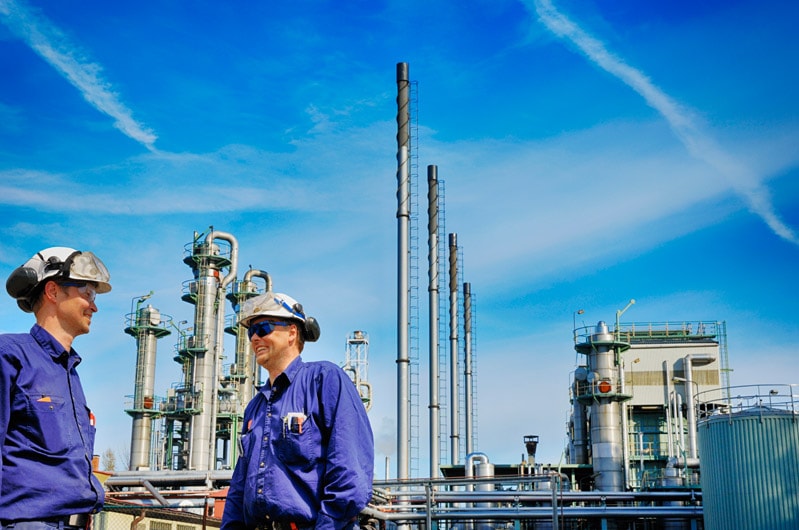
Process operator jobs attract a lot of attention for a simple reason.
They can offer good pay without requiring a four year engineering degree.
Operators are employed in refineries, natural gas processing plants, LNG facilities, petrochemical plants, terminals, and other industrial facilities. Many work rotating shifts and receive overtime and shift premiums on top of their regular wages.
The difficult part is getting hired.
A posting for an operator position can attract a large number of applicants, including people who already have industrial experience.
So how do you become a process operator if you have never worked in a refinery or gas plant before?
The first step is understanding what the job actually involves.
What Does a Process Operator Do?
A process operator helps operate the equipment used to process oil, natural gas, chemicals, or other industrial products.
Depending on the facility, that equipment can include pumps, compressors, furnaces, heat exchangers, pressure vessels, distillation columns, reactors, tanks, boilers, and cooling systems.
Operators monitor the process and make adjustments to keep it within safe operating limits.
This sounds simple until you consider the scale of the equipment.
A refinery process unit may contain hundreds of valves and instruments connected through kilometres of piping.
Changing one operating condition can affect several other parts of the process.
Operators gradually learn how all of those systems interact.
Outside Operator Versus Control Room Operator
One source of confusion is that process operators do not all spend their shifts doing the same thing.
Many facilities divide operating responsibilities between outside operators and control room operators.
Outside Operator
An outside operator physically works around the process equipment.
Typical duties can include inspecting pumps, checking equipment, operating manual valves, taking samples, preparing equipment for maintenance, monitoring for leaks, and responding to abnormal conditions.
You may walk several kilometres during a shift.
You may climb stairs and ladders repeatedly.
And yes, you will be outside when it is hot, cold, raining, or snowing.
Control Room Operator
A control room operator monitors the process through a distributed control system, commonly called a DCS.
Instead of physically turning most valves, the operator monitors temperatures, pressures, flows, levels, alarms, and equipment status from computer displays.
The control room operator can make many process adjustments remotely.
This does not necessarily make the job easier.
A control room operator may be responsible for monitoring an enormous amount of equipment simultaneously.
During an upset, alarms can arrive quickly and the operator has to determine what is happening before the situation becomes worse.
Do New Operators Start in the Control Room?
Usually, you should not assume that you will walk into a refinery on your first day and immediately operate a major process unit from the control room.
New employees typically need substantial training.
They must learn the physical equipment, process flow, procedures, safety systems, and normal operating conditions.
Understanding what is actually happening outside makes someone much more effective when eventually operating from a control room.
The exact progression varies by facility.
Do You Need a Degree to Become a Process Operator?
Not necessarily.
Many operator positions do not require a bachelor’s degree.
However, that does not mean companies will hire anyone with a high school diploma.
Operator jobs can be competitive.
Employers may prefer applicants with industrial experience, technical education, military experience, skilled trades backgrounds, or process technology training.
Requirements vary significantly between companies and locations.
Always look at actual job postings in the area where you want to work.
What Is a Process Technology Degree?
Some colleges offer two year process technology programs specifically designed for industrial operating careers.
You may see names such as:
Process Technology
Process Operations
Power Engineering
Chemical Process Technology
Plant Operations
The exact program depends on the region.
Students may study pumps, compressors, instrumentation, process equipment, industrial safety, basic chemistry, heat transfer, fluid flow, and process control.
These programs can help someone with no industrial background understand how plants operate.
But there is an important warning.
Completing a process technology program does not guarantee an operator job.
Before enrolling, investigate whether local employers actually recruit from that program.
Do Refineries Hire People With No Experience?
They can.
The problem is competition.
Imagine a refinery has twenty operator openings.
Hundreds or even thousands of people may apply.
Some applicants have process technology education.
Some have military experience.
Some already work in chemical plants.
Some have years of experience operating industrial equipment.
The company can afford to be selective.
This is why repeatedly submitting the same resume without improving your qualifications may not produce different results.
Industrial Experience Can Be Your Way In
If you cannot immediately get a refinery operator job, working in another industrial environment can make you a stronger candidate later.
Useful experience can come from industries such as manufacturing, mining, power generation, chemical production, terminals, pulp and paper, water treatment, food processing, and other large facilities.
The industry name on your previous employer’s building matters less than the experience you gained.
Did you work rotating shifts?
Did you operate equipment?
Did you follow written procedures?
Did you use permits?
Did you work around pumps and valves?
Did you perform equipment inspections?
Did you work under strict safety requirements?
Those are transferable skills.
Maintenance Experience Can Help Too
Operators work closely with maintenance personnel.
A background as a mechanic, millwright, electrician, instrumentation technician, or other industrial trade can provide valuable equipment knowledge.
A mechanic who understands pumps, seals, bearings, compressors, and rotating equipment already has knowledge that is useful in plant operations.
Not every tradesperson wants to become an operator, but the transition is possible.
Military Experience Can Transfer Well
Certain military backgrounds can also translate effectively into process operations.
Experience operating mechanical systems, power generation equipment, propulsion systems, utilities, or other technical equipment can be particularly relevant.
The key is translating military terminology into language a civilian hiring manager understands.
Do not assume the recruiter knows what every military job title means.
Explain the equipment you operated and the responsibilities you had.
What Do Process Operators Need to Know About Pumps?
Pumps are everywhere in refineries and processing plants.
An operator does not necessarily rebuild pumps, but they need to recognize when something is wrong.
You may need to understand conditions such as unusual vibration, low discharge pressure, loss of flow, seal leakage, cavitation, overheating, and abnormal noise.
You also need to understand the valves and process conditions required before starting or stopping equipment.
Starting a pump is not simply pressing a green button.
The process has to be correctly lined up first.
What Is “Lining Up” Equipment?
You will hear this phrase frequently in operating environments.
Lining up equipment means placing valves and related systems in the correct configuration for the intended operation.
Suppose you need to transfer product from one tank to another.
Before starting the pump, you need to ensure the correct suction path is open and the correct discharge path is available.
Opening the wrong valve could send material to the wrong destination.
This is why operators use procedures and carefully verify equipment positions.
Operators Do a Lot of Walking
People sometimes imagine process operators sitting in a chair watching computer screens for twelve hours.
That may eventually describe part of some control room positions.
Outside operation is very different.
Large industrial facilities are enormous.
Operators make rounds through their assigned areas, inspecting equipment and checking conditions.
You may climb towers.
You may walk pipe racks.
You may inspect pumps located far apart.
A shift can involve a surprising amount of physical activity.
Operators Also Do a Lot of Waiting
This is another side of the job that is rarely discussed.
Plant operations can alternate between long periods of routine monitoring and sudden periods of intense activity.
When everything is operating normally, your job may involve rounds, documentation, routine sampling, and preparation for maintenance.
Then a compressor trips.
Suddenly several process conditions begin changing at once.
The next thirty minutes can become extremely busy.
Good operators do not become careless during quiet periods.
They remain ready for the moment something changes.
What Happens When an Alarm Comes In?
An alarm tells the operator that a process condition has reached a point requiring attention.
Maybe pressure is rising.
A tank level is too high.
A pump has stopped.
A temperature is moving outside its normal range.
The alarm itself is not the diagnosis.
The operator needs to determine why it happened.
A high level alarm could mean increased incoming flow.
Or the outlet valve could be restricted.
Or the level transmitter could be malfunctioning.
Or a downstream pump could have stopped.
Operators learn to think about the entire process rather than reacting blindly to one number.
Safety Questions Are Important in Operator Interviews
Expect safety to be a major part of the hiring process.
You may be asked about:
Hazard recognition
Lockout procedures
Confined spaces
Working at heights
Hot work
Stop work authority
Permit systems
Personal protective equipment
Emergency response
Reporting incidents
You are not expected to know every company specific procedure before being hired.
But the interviewer wants to know whether you take procedures seriously.
What Is Lockout?
Before certain equipment can be safely maintained, hazardous energy must be isolated.
That energy may involve electricity, pressure, heat, chemicals, hydraulic systems, or mechanical movement.
Lockout procedures are used to prevent equipment from unexpectedly operating or releasing hazardous energy while people are working on it.
Operators often play an important role in preparing process equipment for maintenance.
The exact isolation procedure depends on the facility and task.
Operators and Maintenance Have Different Jobs
A useful distinction for beginners is that operators generally operate the process while maintenance personnel repair equipment.
If a pump fails, the operator may identify the problem, safely shut down the equipment, isolate it according to procedure, and prepare it for maintenance.
A mechanic may then repair the pump.
After the work is complete, operations verifies that the equipment is ready and returns it to service according to procedure.
The two groups work closely together.
What Is a Turnaround?
If you are researching refinery or plant jobs, you will eventually hear people talking about a turnaround.
A turnaround is a planned shutdown during which equipment is inspected, cleaned, repaired, modified, and replaced.
Turnarounds can be extremely busy periods.
Large numbers of contractors may arrive at the facility.
Operators help shut down equipment, isolate systems, prepare vessels and piping for maintenance, and eventually return the plant to operation.
Overtime can increase significantly during these periods.
The workload can increase significantly too.
Shift Work Is One of the Biggest Tradeoffs
Many processing facilities operate twenty four hours a day.
That means operators are needed twenty four hours a day.
Rotating shift schedules are common.
You may work days for part of the rotation and nights for another part.
Some people love this.
Others discover that their bodies never adjust well to switching between daytime and nighttime sleep.
Do not accept a rotating shift position without seriously considering what that schedule means.
Why Operators Often Get Blocks of Days Off
Long shifts can create unusual schedules.
Instead of working five eight hour days, an operator may work fewer but longer shifts.
Depending on the rotation, this can result in several consecutive days off.
That is one of the major attractions of operator work.
You may work nights, weekends, and holidays, but you may also receive weekdays off while most other people are at work.
Whether that is a good trade depends on your lifestyle.
How Much Do Process Operators Make?
Compensation varies widely by industry, facility, region, union status, experience, shift schedule, and overtime.
Large refineries and petrochemical facilities can offer strong compensation.
But be careful when reading annual salary claims online.
An operator who worked a large amount of overtime during a turnaround can earn much more than another operator at the same base wage.
Always separate base compensation from overtime when evaluating the career.
Overtime Can Be Both Good and Bad
Overtime is one reason process operator jobs can pay well.
It can also become exhausting.
Someone calls in sick.
Another operator is on vacation.
A turnaround begins.
Training has reduced available staffing.
Suddenly you are working additional shifts.
The money looks excellent.
After several weeks, the fatigue may not.
Do not build your entire financial life around assuming maximum overtime will always be available.
Operators Work Holidays
Christmas morning does not shut down a refinery.
Neither does New Year’s Eve.
If your shift falls on a holiday, you may be working.
This is simply part of operating a continuous facility.
Some companies provide additional holiday compensation, but the exact policy varies.
If spending every holiday with family is extremely important to you, continuous operations deserve careful consideration.
What Makes a Good Process Operator?
Good operators are observant.
They notice small changes.
They communicate clearly.
They follow procedures.
They understand why equipment is operating rather than simply memorizing which button to press.
They remain calm when something goes wrong.
They also admit when they do not know something.
That last quality matters.
Pretending to understand an unfamiliar system can be dangerous in an industrial plant.
Learn the Process, Not Just the Equipment
A beginner may look at a pump and think only about the pump.
An experienced operator thinks about where the fluid is coming from and where it is going.
What happens upstream if the pump stops?
What happens downstream?
Will a vessel level increase?
Will pressure rise?
Is another pump available?
Can flow be redirected?
That ability to see the entire process is what separates equipment familiarity from operating knowledge.
How Long Does Operator Training Take?
Becoming fully qualified can take a considerable amount of time.
Large facilities contain complicated processes.
New operators may spend months learning equipment, procedures, process flow, safety systems, and emergency response.
Qualification may involve written tests, practical demonstrations, field observations, and sign offs from experienced personnel.
Even after qualification, learning continues.
Operators with decades of experience can still encounter situations they have never seen before.
Should You Apply Even If You Do Not Meet Every Requirement?
Read the wording carefully.
There is a difference between “required” and “preferred.”
If a posting says two years of experience is preferred and you have strong related industrial experience, applying may still make sense.
If the position legally requires a particular certification that you do not have, that is different.
Do not automatically reject yourself because you fail to match every preferred qualification.
Let the employer decide.
Your Resume Needs to Show Relevant Experience
If you are trying to move into process operations, rewrite your resume around the skills the job actually requires.
Instead of:
“Worked at manufacturing plant.”
Explain what you actually did.
For example:
“Operated production equipment during twelve hour rotating shifts, completed equipment inspections, documented operating conditions, followed lockout procedures, and reported abnormal equipment conditions to supervision.”
That description gives the hiring manager something useful.
Do not add experience you do not have.
Simply describe your real experience in terms relevant to industrial operations.
How to Prepare for a Process Operator Interview
Start with the job posting.
If it mentions pumps, understand basic pump operation.
If it mentions compressors, learn what compressors do.
If the facility processes natural gas, understand the basic gas processing sequence.
If it is a refinery, understand at a high level what happens to crude oil after it enters the facility.
Be ready for behavioral questions involving safety, teamwork, mistakes, troubleshooting, and following procedures.
You may also encounter aptitude testing involving mechanical reasoning, mathematics, reading comprehension, or process information.
Getting Rejected Does Not Mean You Chose the Wrong Career
Operator positions can attract many qualified applicants.
You may apply several times before getting an interview.
You may interview and still not receive an offer.
Do not take one rejection as proof that you cannot become an operator.
Look at the people who are getting the jobs.
What experience do they have that you do not?
If they have industrial experience, find a way to build industrial experience.
If local employers recruit from a particular technical program, investigate it.
If your resume is weak, improve it.
Treat the hiring process like troubleshooting.
Find the missing piece instead of repeatedly doing exactly the same thing.
Frequently Asked Questions
Do you need a college degree to become a process operator?
Not always. Requirements vary by employer. Some companies hire candidates with high school education and relevant industrial experience, while others prefer technical education such as process technology or a related program.
Can you become a process operator with no experience?
Yes, but entry level positions can be competitive. Technical education, industrial experience, mechanical aptitude, military technical experience, or related operating experience can improve your chances.
Do process operators work in control rooms?
Some do. Many facilities have both outside operating responsibilities and control room positions. New operators may need to gain field knowledge and complete extensive training before becoming qualified for certain control room duties.
Do process operators work twelve hour shifts?
Twelve hour shifts are common at many continuous processing facilities, although schedules vary by employer.
Is process operator work physically demanding?
Outside operators may spend significant time walking, climbing stairs, operating valves, inspecting equipment, and working in outdoor conditions. The physical demands vary by facility and position.
What should I study before a process operator interview?
Study the company and facility, basic process equipment, pumps, valves, pressure and level concepts, industrial safety, and the process relevant to the employer. Also prepare real examples involving safety, troubleshooting, teamwork, and following procedures.
Is process operator a good career?
For someone comfortable with industrial environments and shift work, it can provide a strong long term career without necessarily requiring a four year engineering degree. The major tradeoffs are rotating shifts, nights, holidays, industrial working conditions, and the responsibility that comes with operating hazardous processes.