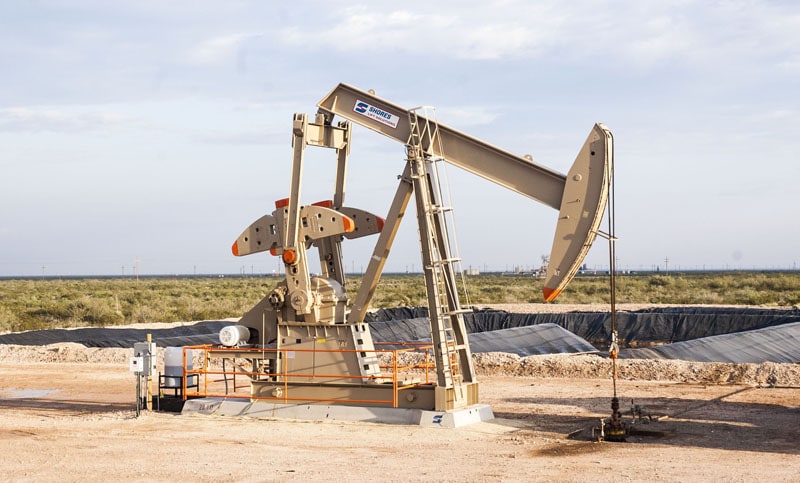
When most people think about oil production, they picture crude oil flowing from a well.
What many don’t realize is that water is often the largest product coming out of an oil well.
In fact, many mature oil fields produce significantly more water than oil. For every barrel of oil, a well may produce several barrels of water, and in older fields that number can exceed ten barrels of water for every barrel of oil.
This water isn’t clean groundwater that can simply be discharged into a river.
It’s known as produced water, and it’s one of the biggest operational and environmental challenges facing the oil and gas industry.
So why is produced water so difficult to treat?
The answer lies in what happens to water after spending millions of years underground.
What Is Produced Water?
Produced water is water that naturally exists in underground oil and gas reservoirs and is brought to the surface during production.
It can also include water that operators inject into reservoirs to help maintain pressure and improve oil recovery.
Unlike drinking water, produced water has been in contact with crude oil, natural gas, rocks, minerals, bacteria, and dissolved salts for geological timescales.
By the time it reaches the surface, it can contain hundreds of different substances.
Every reservoir is different, which means no two produced water samples are exactly alike.
What’s Actually in Produced Water?
People are often surprised to learn just how complex produced water can be.
Depending on the field, it may contain:
- Oil droplets
- Sand
- Clay particles
- Dissolved salts
- Iron
- Calcium
- Magnesium
- Barium
- Naturally occurring radioactive materials (NORM)
- Hydrogen sulfide
- Carbon dioxide
- Bacteria
- Treatment chemicals
- Heavy metals
- Organic compounds
Some produced water looks almost clear.
Other samples appear black, brown, or milky.
The appearance depends on what the water contains and where it came from.
Salt Is the Biggest Challenge
One of the main reasons produced water is difficult to treat is its salt content.
Formation water can contain several times more dissolved salt than seawater.
In some reservoirs, the water is so salty that it would quickly damage equipment designed for freshwater service.
Removing dissolved salts requires much more than simple filtration.
That’s one reason why large-scale desalination of produced water is often expensive.
Oil and Water Don’t Mix Very Well
Even after the oil has been separated at the production facility, tiny oil droplets remain suspended in the water.
These microscopic droplets are difficult to remove because they don’t always float to the surface quickly.
Some droplets are so small they remain suspended for long periods.
To remove them, operators may use equipment such as:
- Hydrocyclones
- Induced gas flotation units
- Coalescers
- Walnut shell filters
- Membrane systems
Each technology removes different types and sizes of oil droplets.
Tiny Particles Cause Big Problems
Produced water also contains extremely small solid particles.
These may include:
- Sand
- Corrosion products
- Scale
- Clay
- Iron sulfide
Even small amounts of solids can plug filters, damage pumps, and reduce the effectiveness of treatment equipment.
Keeping these particles under control is a constant challenge.
Bacteria Are Another Concern
Many people don’t associate bacteria with oil production, but microorganisms exist naturally underground.
Certain bacteria can cause serious problems.
For example, sulfate-reducing bacteria produce hydrogen sulfide, a toxic and corrosive gas.
Other bacteria form biofilms inside pipelines and equipment, reducing flow and increasing corrosion.
To control microbial growth, operators often inject biocides into water systems.
Scale Can Form Inside Equipment
Produced water often contains dissolved minerals that remain harmless underground.
Once pressure and temperature change at the surface, those minerals can come out of solution.
They form hard deposits known as scale.
Common types include:
- Calcium carbonate
- Barium sulfate
- Calcium sulfate
Scale builds up inside:
- Pipelines
- Pumps
- Valves
- Heat exchangers
- Injection wells
Removing severe scale can require mechanical cleaning or specialized chemicals.
Preventing it is usually much easier than removing it.
Corrosion Never Stops
Water, oxygen, carbon dioxide, hydrogen sulfide, and dissolved salts all contribute to corrosion.
Left untreated, corrosion can weaken:
- Pipelines
- Storage tanks
- Pressure vessels
- Pumps
- Process equipment
Operators continuously monitor corrosion using probes, coupons, inspections, and chemical treatment programs.
Preventing corrosion is often one of the largest ongoing costs in produced water management.
What Happens to Produced Water?
Not all produced water is treated the same way.
The final destination depends on local regulations, water quality, and available infrastructure.
Reinjection
The most common solution is to inject produced water back underground.
Reinjection can:
- Dispose of unwanted water
- Maintain reservoir pressure
- Improve oil recovery
In many fields, nearly all produced water is eventually reinjected.
Recycling
As water becomes more valuable, many operators now recycle produced water for future hydraulic fracturing operations.
Reusing water reduces freshwater consumption and lowers disposal costs.
Surface Discharge
In some regions, treated produced water may be discharged if it meets strict environmental standards.
Before this happens, the water must satisfy regulatory limits for contaminants such as oil, suspended solids, and certain dissolved substances.
Can Produced Water Become Drinking Water?
Technically, yes.
Practically, it’s much more complicated.
Modern treatment technologies can remove many contaminants.
However, producing drinking water from highly contaminated produced water often requires multiple treatment stages, significant energy, and substantial operating costs.
For most oil fields, reinjection or industrial reuse is currently more economical than producing potable water.
Why Produced Water Matters More Than Ever
As oil fields mature, the amount of water produced generally increases.
Some mature fields produce more than 90 percent water.
That means operators may spend more time handling water than handling oil.
Managing produced water efficiently has become one of the biggest factors affecting production costs, environmental performance, and long-term field economics.
For many companies, water management is now as important as oil production itself.
Common Misconceptions
“Produced water is just dirty water.”
Not even close.
Produced water is a complex mixture containing dissolved salts, hydrocarbons, minerals, gases, microorganisms, and treatment chemicals.
“Oil separators remove everything.”
Separators remove most free oil.
Many contaminants remain dissolved or suspended and require additional treatment.
“All produced water is disposed of.”
Increasingly, operators recycle and reuse produced water instead of treating it as waste.
Water reuse has become an important part of many modern oil and gas operations.
Interesting Facts
- Water is often the largest volume of fluid produced from an oil field.
- Some mature wells produce more than ten barrels of water for every barrel of oil.
- Produced water management can account for a significant portion of a field’s operating costs.
- Many modern oil fields are designed with dedicated water treatment and reinjection facilities.
- Advances in filtration, membranes, and water recycling continue to improve how produced water is managed.
Final Thoughts
Produced water may not receive as much attention as crude oil or natural gas, but it plays a critical role in modern petroleum production.
Every barrel of water brought to the surface must be handled safely and responsibly.
That requires a combination of engineering, chemistry, environmental science, and careful planning.
As oil fields continue to mature and environmental expectations increase, produced water management will remain one of the industry’s most important technical challenges.
The next time you hear someone talk about an oil well, remember that producing oil is only part of the story.
Managing the water that comes with it is often just as important.
Frequently Asked Questions
Is produced water hazardous?
Produced water can contain hydrocarbons, dissolved salts, naturally occurring minerals, and other substances that require careful handling. The level of hazard depends on the reservoir and the water’s composition.
Why is produced water so salty?
The water has been trapped underground for millions of years, where it dissolves minerals from surrounding rock formations. This often results in salt concentrations much higher than seawater.
Can produced water be reused?
Yes. Many operators treat and recycle produced water for hydraulic fracturing, reservoir pressure maintenance, or other industrial applications.
Why don’t companies simply dump produced water?
Environmental regulations require produced water to be treated or managed appropriately before disposal or reuse. Direct discharge without treatment is generally not permitted because of the contaminants it may contain.