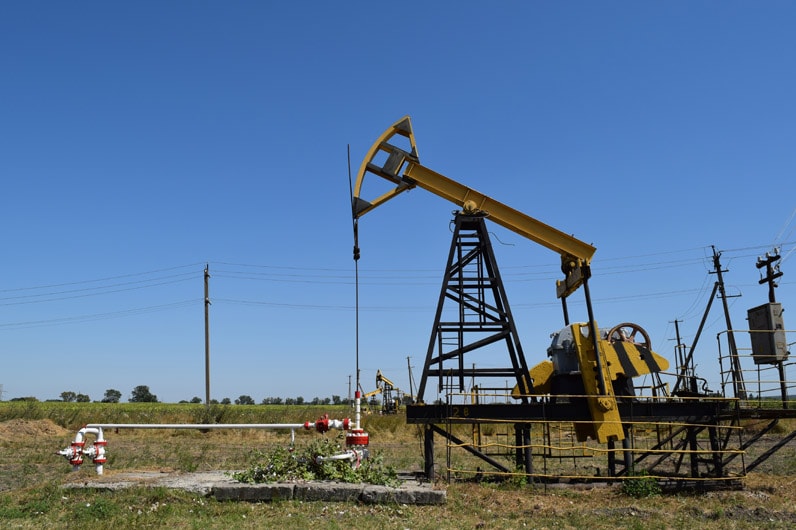
An oil well can produce 100 barrels of oil per day and still bring 900 barrels of water to the surface.
That means 90 percent of the liquid coming out of the well is water.
At first, this sounds like something has gone badly wrong.
Why would an oil company operate a well that mostly produces water?
Because this is completely normal in many mature oil fields.
Oil reservoirs are not underground tanks filled with pure crude oil. They are porous rock formations containing combinations of oil, natural gas, and water.
As a field ages, the amount of water reaching producing wells often increases.
Eventually, an oil company can find itself operating what looks almost like a water production and disposal business that happens to recover some oil along the way.
Understanding why this happens explains a surprising amount about how mature oil fields actually operate.
Where Does the Water Come From?
The water usually comes from underground.
Many hydrocarbon reservoirs contain formation water.
This water may have been trapped in the rock for millions of years.
It is often extremely salty and can contain dissolved minerals and other substances picked up during its long contact with the formation.
Oil does not necessarily occupy every pore in the reservoir.
Different portions of the rock can contain different proportions of oil, gas, and water.
When a well begins producing, some of that water can eventually move toward the well along with the hydrocarbons.
What Is Produced Water?
Once formation water reaches the surface with oil or natural gas, it is generally called produced water.
Produced water is not the same thing as clean groundwater.
Its composition varies dramatically between reservoirs.
It can contain:
Dissolved salts
Small quantities of oil
Suspended solids
Minerals
Production chemicals
Dissolved gases
Naturally occurring substances from the formation
Because of that composition, produced water normally requires treatment or controlled disposal.
A company cannot simply assume that water from an oil well can be released onto the ground because it happens to be called water.
What Is Water Cut?
Water cut is one of the most common measurements used to describe liquid production from an oil well.
It tells you what percentage of the produced liquid is water.
Suppose a well produces:
800 barrels of water per day
200 barrels of oil per day
Total liquid production is 1,000 barrels per day.
The water cut is 80 percent.
The oil cut is 20 percent.
Now imagine the same well several years later.
It produces:
950 barrels of water
50 barrels of oil
The water cut is now 95 percent.
The well still produces oil.
It simply has to move nineteen barrels of water for every barrel of oil it produces.
Is 90 Percent Water Cut Bad?
Not automatically.
A 90 percent water cut sounds terrible until you know the rest of the economics.
Suppose a well produces 2,000 barrels of liquid per day at 90 percent water cut.
That still gives you 200 barrels of oil per day.
Depending on oil price and operating costs, that could be a valuable well.
Now consider another well producing 100 barrels of total liquid at the same 90 percent water cut.
That produces only 10 barrels of oil per day.
The economics are completely different.
Water cut alone does not determine whether a well is profitable.
You need the actual oil rate and the cost of handling everything else.
Why Does Water Cut Usually Increase as a Field Gets Older?
Oil production changes reservoir conditions.
Fluids move.
Pressure changes.
Water that was initially farther from a producing well can gradually move toward it.
Eventually water reaches the well.
This is called water breakthrough.
After breakthrough, the water rate may continue increasing.
The exact behavior depends on reservoir geology, completion design, production rate, pressure support, and how fluids move through the rock.
A well can therefore begin its life producing almost entirely oil and finish its life producing mostly water.
What Is an Aquifer?
In petroleum engineering, an aquifer is a water bearing formation that can communicate with a hydrocarbon reservoir.
As oil is produced and reservoir pressure falls, water from the aquifer may move into the space being created.
This can be extremely useful.
The incoming water can help support reservoir pressure.
That pressure support can help push oil toward producing wells.
A strong aquifer can therefore improve oil recovery.
The downside appears later.
Eventually some of that water may reach the producing wells.
The same water that helped maintain reservoir pressure now has to be separated and handled at the surface.
Water Drive Can Be Very Effective
Imagine an oil reservoir sitting above or beside a large body of formation water.
As oil is removed, the water expands and moves into the reservoir.
That movement helps displace oil toward the producing wells.
This is called a water drive mechanism.
Reservoirs with strong water drive can maintain pressure relatively well compared with reservoirs that have little natural pressure support.
But strong water drive can also lead to substantial water production later in field life.
This creates an interesting contradiction.
Water can be one of the mechanisms helping you recover oil while simultaneously becoming one of your largest operating problems.
What Is Waterflooding?
Sometimes natural water movement is not enough.
Operators can intentionally inject water into the reservoir.
This is called waterflooding.
Injection wells pump water into selected parts of the field.
Producing wells remove fluids elsewhere.
The injected water helps maintain pressure and displace oil through the reservoir toward the producers.
Waterflooding has been used for decades because large quantities of oil can remain after primary production.
Adding pressure support and displacement can increase recovery.
But the injected water does not remain permanently at the injector.
Eventually some of it can reach producing wells.
Why Inject Water Just to Pump It Back Out?
Because the water is doing useful work underground.
Think about pushing oil through a porous sponge.
If you inject water from one side, the water can help move oil toward the other side.
The real reservoir is enormously more complicated, but the principle is similar.
If injecting one barrel of water eventually helps recover additional oil that otherwise would remain underground, the process can make economic sense.
Later, the water may arrive at the producing well and have to be handled again.
That is part of the cost of recovering the additional oil.
What Is Water Breakthrough?
Water breakthrough occurs when injected water or formation water reaches a producing well.
Before breakthrough, the producer may have relatively low water production.
After breakthrough, water cut begins increasing.
The timing matters.
If water reaches a producer much earlier than expected, engineers want to know why.
Perhaps there is a highly permeable layer connecting the injector and producer.
Perhaps a fracture is providing a preferential path.
Perhaps the reservoir model did not represent the geology correctly.
Early water breakthrough can significantly affect field economics.
Water Does Not Move Uniformly Through Reservoir Rock
This is one reason waterflooding becomes complicated.
Reservoir rock is not perfectly uniform.
One layer may have high permeability.
Another may have low permeability.
Water naturally prefers the easier path.
Imagine injecting water into several connected layers.
The high permeability layer may accept most of the water.
The water then travels quickly toward a producing well through that layer while oil remains trapped in less permeable portions of the reservoir.
The producer starts making large quantities of water even though significant oil remains nearby.
This is one of the reasons high water cut does not mean the reservoir has been completely swept clean of oil.
What Is Water Coning?
Water can also approach a well vertically.
Suppose an oil producing interval has water beneath it.
The producing well creates a low pressure region.
If the well is produced aggressively enough, water below the oil can be drawn upward toward the completion.
The water oil contact becomes distorted into a cone shaped region near the well.
This is called water coning.
If the cone reaches the producing interval, water production can increase substantially.
Reducing production rate can sometimes help manage coning, depending on the reservoir.
Once again, maximum short term production is not always optimum production.
Gas Wells Produce Water Too
Produced water is not exclusively an oil well problem.
Natural gas wells can produce formation water.
Water can also condense as gas cools and pressure changes.
In some gas wells, liquid accumulation becomes a major production problem.
The gas must have enough velocity to carry liquids upward.
If gas production declines too far, water can begin accumulating in the well.
Eventually the liquid column can create enough hydrostatic pressure to restrict gas production.
This is commonly called liquid loading.
Why Is Produced Water Expensive?
Because every barrel has to go somewhere.
Imagine an oil field producing:
10,000 barrels of oil per day
90,000 barrels of water per day
The facility is handling 100,000 barrels of liquid every day.
Only 10 percent of that liquid generates the main oil revenue.
The other 90 percent still needs equipment.
Pumps need to move it.
Separators need to handle it.
Pipelines need capacity.
Tanks or treatment vessels need volume.
Chemicals may be required.
Disposal or reinjection wells need capacity.
Energy is consumed throughout the process.
Water can therefore become one of the major operating costs in a mature field.
The Separator Has to Remove the Water
Oil, gas, and water often arrive at the production facility together.
The first job is separating them.
Gas separates relatively easily because of the large density difference.
Separating oil and water can be more difficult.
Given enough quiet residence time, many oil and water mixtures naturally separate because water is denser.
But real produced fluids are rarely perfectly cooperative.
Small oil droplets can remain suspended in water.
Small water droplets can remain suspended in oil.
Chemicals and solids can make separation more difficult.
That is why production facilities use specialized separation equipment rather than simply allowing everything to sit in one enormous tank.
What Is a Three Phase Separator?
A three phase separator is designed to separate:
Gas
Oil
Water
The gas rises and leaves through the gas outlet.
Oil and water settle into different liquid layers.
The vessel uses level and interface controls to maintain the correct liquid inventory.
The separated oil continues toward treatment or storage.
The produced water goes toward water treatment, disposal, or reinjection.
A separator sounds simple until you try to maintain three different phases inside one pressurized vessel while production rates are constantly changing.
Why Doesn’t Oil and Water Separate Instantly?
Pour oil and water into a glass and they eventually form separate layers.
Produced fluids can be more difficult because the liquids have been violently mixed.
They pass through reservoir rock.
They travel through tubing.
They pass through chokes and valves.
They may pass through pumps.
All of that mixing can break one liquid into tiny droplets dispersed throughout the other.
The smaller the droplets, the longer they can take to separate.
Natural surfactants in crude oil can make the situation even worse.
The result is an emulsion.
What Is an Oilfield Emulsion?
An emulsion occurs when droplets of one liquid remain dispersed within another liquid.
A common oilfield problem is water dispersed inside crude oil.
The oil can appear thick and difficult to treat.
Stable emulsions can prevent produced crude from meeting sales specifications.
Operators may use heat, chemicals, residence time, electrostatic treatment, or combinations of these methods to break the emulsion.
The objective is to allow the water droplets to combine into larger drops that can settle out more easily.
What Is a Demulsifier?
A demulsifier is a chemical used to help break oil and water emulsions.
The correct chemical depends on the crude oil and operating conditions.
More chemical is not automatically better.
Too little may provide poor separation.
Too much can waste money and sometimes create other treatment problems.
Chemical programs are therefore optimized based on actual fluid behavior.
For a large field, small changes in chemical dosage can have substantial annual economic consequences.
Why Is Salt in Produced Water a Problem?
Formation water can be extremely salty.
If too much water remains in crude oil, the dissolved salts travel with it.
That can create problems during transportation and refining.
Refineries generally do not want large amounts of salt entering crude processing equipment.
Salt can contribute to corrosion and deposits.
Crude oil therefore has specifications for water and sediment content.
Some production facilities use additional dehydration or desalting steps when simple separation is not enough.
Produced Water Can Be Corrosive
Water is one of the key ingredients required for many internal corrosion mechanisms.
Produced water may also contain dissolved carbon dioxide or hydrogen sulfide.
Those gases can contribute to corrosive environments.
High salt content can further affect corrosion behavior.
This means increasing water production can change the integrity risk of a production system.
A flowline that spent its early life carrying mostly oil may behave very differently when the same well reaches very high water cut.
Corrosion monitoring and chemical treatment can become increasingly important as fields mature.
What Is a Corrosion Inhibitor?
A corrosion inhibitor is a chemical injected into a production system to reduce corrosion.
Different chemicals work in different ways, but many are designed to create or maintain a protective film on metal surfaces.
The effectiveness depends on fluid composition, flow conditions, temperature, water chemistry, chemical concentration, and whether the inhibitor actually reaches the surfaces requiring protection.
Simply having a chemical pump running does not guarantee corrosion is controlled.
The entire treatment program has to work.
Produced Water Can Create Scale
Water contains dissolved minerals.
When pressure, temperature, or composition changes, some minerals can precipitate.
This creates scale.
Scale can form in:
Tubing
Pumps
Valves
Chokes
Flowlines
Separators
Water injection equipment
Disposal wells
The deposits can restrict flow and damage equipment.
Some water systems therefore require scale inhibitors.
Again, the irony is obvious.
The water was brought to the surface with the oil.
Now the operator may have to spend money treating it before putting it back underground.
Where Does Produced Water Go?
Several options exist depending on the field and local requirements.
Produced water may be:
Reinjected for reservoir pressure support
Injected into a dedicated disposal formation
Treated for permitted discharge in suitable offshore operations
Reused in other field operations
Further treated for another approved purpose
The correct option depends on water chemistry, geology, facility design, regulations, location, and economics.
For many onshore operations, underground injection is a major part of produced water management.
What Is a Disposal Well?
A disposal well injects produced water into an approved underground formation.
The objective is not necessarily to improve oil recovery.
It is to place the water into a suitable subsurface zone.
The disposal formation needs sufficient injectivity and capacity.
Well integrity matters.
Injection pressure matters.
Water quality matters.
Regulatory requirements matter.
A disposal well is therefore not simply a hole where unwanted water disappears.
It is an engineered part of the production system.
Disposal Wells Can Plug
Produced water can contain solids.
Scale can form.
Oil can remain in the water.
Bacteria can create problems in certain systems.
If unsuitable material enters the disposal formation, permeability near the well can decline.
Injection pressure rises.
The amount of water that can be disposed of decreases.
Eventually the operator may need to clean, stimulate, repair, or replace the disposal well.
This is one reason treating produced water before injection can be economically worthwhile.
Protecting disposal capacity can protect oil production.
How Can a Water Disposal Problem Shut Down Oil Wells?
Imagine a field producing 5,000 barrels of oil and 45,000 barrels of water per day.
The disposal system can handle 50,000 barrels of water.
Everything is fine.
Now a disposal pump fails and available capacity drops to 25,000 barrels per day.
The field still produces 45,000 barrels of water.
Where does the extra water go?
If there is insufficient storage or alternative capacity, some producing wells may have to be restricted or shut down.
Nothing is wrong with those oil wells.
They cannot produce because the field has nowhere to put the associated water.
This is a perfect example of why production optimization involves the entire system.
Why Not Truck All the Water Away?
Small operations sometimes use trucks.
At large scale, the numbers become difficult.
One standard oilfield tank truck carries only a limited volume.
A field producing tens of thousands of barrels of water per day would require an enormous number of truck movements.
That costs money.
It creates traffic.
It requires drivers.
It increases loading and unloading operations.
Pipeline transportation and centralized disposal are generally much more practical for large continuous volumes.
Can Produced Water Be Cleaned and Used as Drinking Water?
Technically, water can be treated to very high standards using sufficiently advanced processes.
The better question is whether doing so makes economic and practical sense.
Produced water can have extremely high salinity and complex chemistry.
Removing dissolved salts requires much more than simply filtering visible particles.
Treatment also creates concentrated waste streams that still require management.
In some locations, beneficial reuse is being investigated or implemented where water scarcity and economics justify it.
But there is no universal treatment process that turns every barrel of produced water into inexpensive drinking water.
Why Do Offshore Platforms Sometimes Discharge Produced Water?
Offshore operations face different logistics from onshore fields.
Transporting enormous volumes of water back to shore may be impractical.
In jurisdictions where discharge is permitted, produced water can be treated offshore to reduce oil content and meet applicable requirements before discharge.
Treatment equipment may include hydrocyclones, flotation systems, separators, and other technologies.
The important distinction is that produced water is treated before permitted discharge.
It is not simply raw well fluid being pumped overboard.
What Is a Hydrocyclone?
A hydrocyclone uses fluid motion and centrifugal effects to help separate materials of different densities.
In produced water service, hydrocyclones can help remove dispersed oil droplets from water.
They contain no large rotating centrifuge bowl.
The geometry of the device causes the fluid itself to rotate rapidly.
The density difference between oil and water helps drive separation.
Hydrocyclones are attractive offshore because they can handle significant flow in relatively compact equipment.
Space and weight are valuable on offshore facilities.
Why Does Water Handling Limit Oil Production?
Facility equipment has finite capacity.
A separator can process only so much liquid.
A produced water pump can move only so much water.
A treatment package has a maximum throughput.
A disposal well has an injection limit.
Imagine a facility designed for 100,000 barrels of total liquid per day.
Early in field life it receives:
80,000 barrels of oil
20,000 barrels of water
Years later it receives:
20,000 barrels of oil
80,000 barrels of water
The total liquid rate has not changed.
But most of the facility capacity is now being used to process water.
If engineers could reduce unwanted water production, capacity could potentially be freed for additional oil.
Why Not Simply Shut Off the Water Underground?
Sometimes that is possible.
The difficulty is determining exactly where the water is entering.
A well may be completed across multiple reservoir layers.
Some layers may still produce valuable oil.
Another may produce mostly water.
If engineers can identify the water producing interval, they may be able to isolate it.
Mechanical plugs, cement, chemical treatments, completion changes, or other water shutoff techniques may be considered.
But the intervention must avoid damaging the productive oil zones.
Turning off water is easy if you are willing to turn off the entire well.
Selective water control is much harder.
Production Logging Can Help Find the Water
A production logging tool can be run into a producing well to collect measurements at different depths.
Depending on the tool and application, engineers can use the data to understand where fluids are entering the well.
Perhaps one interval contributes most of the oil.
Another contributes most of the water.
That information can change the economics of a water shutoff treatment.
Instead of guessing where the water comes from, the operator has evidence.
Diagnostics are often cheaper than performing the wrong intervention.
Why Doesn’t High Water Cut Mean the Well Is Finished?
Because the oil rate may still be economic.
Consider a well producing 2,500 barrels of liquid per day at 96 percent water cut.
Only 4 percent is oil.
That sounds terrible.
But 4 percent of 2,500 is still 100 barrels of oil per day.
If the facility already exists and water handling costs are reasonable, that well might continue generating positive cash flow for years.
This is why mature fields can operate at water cuts that sound absurd to someone unfamiliar with the industry.
The question is not:
How much water does the well make?
The question is:
Does the remaining oil pay for everything required to produce it?
Eventually Water Can Kill the Economics
There is still a limit.
As oil production declines and water production remains high, revenue falls while operating costs remain.
Electricity is still required.
Chemical treatment continues.
Water still needs to be separated.
Pumps still need maintenance.
Disposal still costs money.
Corrosion still needs to be managed.
Personnel still operate the facility.
Eventually the revenue from the remaining oil may no longer justify those costs.
That is the economic limit of the well.
At that point, shutting it in or abandoning it may make more sense than continuing to produce enormous quantities of water for a small amount of oil.
Water Production Can Determine the Life of an Oil Field
People naturally think oil fields stop operating because they run out of oil.
In reality, many reservoirs still contain substantial oil when production ends.
The remaining oil may simply be too difficult or expensive to recover.
Produced water is often part of that calculation.
As the field matures, more equipment and energy are devoted to moving water.
Oil production declines.
Maintenance requirements increase.
Eventually the economics cross a line.
The reservoir did not become empty.
The business case disappeared.
Frequently Asked Questions
Why is there water in an oil well?
Oil reservoirs commonly contain formation water in addition to hydrocarbons. Water can also enter producing areas from connected aquifers or through intentional water injection.
What is produced water?
Produced water is water brought to the surface during oil or natural gas production. It can contain salts, hydrocarbons, minerals, solids, dissolved gases, and production chemicals.
What does 90 percent water cut mean?
It means 90 percent of the produced liquid volume is water and 10 percent is oil. A well producing 1,000 barrels of liquid per day at 90 percent water cut would produce approximately 900 barrels of water and 100 barrels of oil.
Is high water cut normal in old oil wells?
Yes. Water cut often increases as fields mature because formation water or injected water eventually reaches producing wells.
Why do oil companies inject water underground?
Water injection can help maintain reservoir pressure and displace additional oil toward producing wells, increasing recovery from the reservoir.
What is water breakthrough?
Water breakthrough occurs when formation water or injected water reaches a producing well and begins increasing its water production.
What is water coning?
Water coning occurs when pressure drawdown around a producing well pulls underlying water upward toward the producing interval.
What happens to produced water at the surface?
It is separated from the hydrocarbons and then treated as necessary before reinjection, disposal, permitted discharge, reuse, or another approved handling method.
Why can’t produced water simply be dumped?
Produced water can contain high concentrations of dissolved salts, residual hydrocarbons, solids, chemicals, and naturally occurring substances. Its handling and disposal therefore have environmental and regulatory requirements.
Can an oil well make more water than oil?
Yes. Mature oil wells can produce several times more water than oil and may still remain economic if the remaining oil production is valuable enough to cover operating costs.
Can too much produced water shut down an oil field?
Yes. Water treatment, pumping, separation, and disposal systems have capacity limits. If those limits are reached, oil production may have to be restricted even when the wells themselves could produce more.
Why would an oil company keep a well producing at 95 percent water cut?
Because 5 percent of a large total liquid rate can still represent significant oil production. The decision depends on oil revenue compared with the cost of lifting, treating, transporting, and disposing of the associated water.