Crude oil rarely comes out of a well by itself.
What reaches the surface is usually a mixture of oil, natural gas, produced water, and sometimes sand or other solids.
Before the oil can be stored, transported, or sold, those fluids need to be separated.
One of the first pieces of equipment to handle that job is the oil and gas separator.
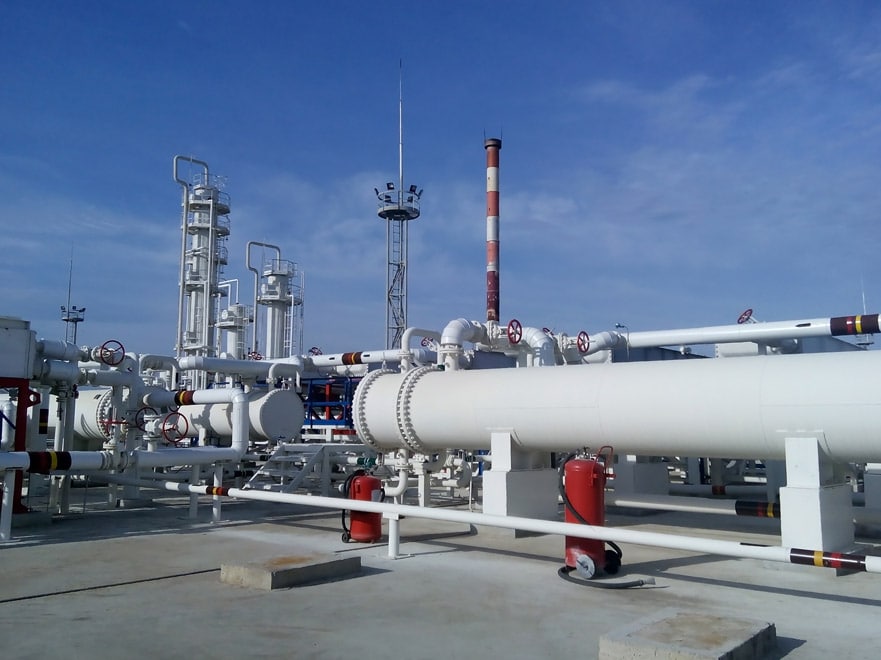
From the outside, a separator doesn’t look particularly complicated. It is essentially a large steel pressure vessel with pipes, valves, instruments, and controls attached to it.
Inside, however, several things are happening at once.
Gas is being released from the oil. Water is settling to the bottom. Oil is collecting in the middle. Tiny liquid droplets are being removed from the gas stream.
Understanding how this works explains a surprisingly large part of what happens at an oil production facility.
What Comes Out of an Oil Well?
Imagine opening a valve on a producing well.
The fluid entering the production facility might contain:
Oil
Natural gas
Produced water
Sand
Sediment
The proportions vary enormously from one well to another.
A new oil well might produce mostly oil with relatively little water.
An older well might produce 90 percent water and only 10 percent oil.
Another well may produce significant quantities of associated natural gas.
The production facility has to handle all of these fluids.
Why Does Gas Come Out of Crude Oil?
Some natural gas exists as free gas in the reservoir.
But additional gas can also be dissolved inside the crude oil.
Deep underground, reservoir pressure can be extremely high. Under those conditions, crude oil can hold substantial quantities of gas in solution.
As the fluids travel up the well and pressure decreases, some of that gas comes out of solution.
It is similar to opening a bottle of soda.
Before you open the bottle, carbon dioxide is dissolved in the liquid under pressure.
Open the cap and the pressure falls.
Bubbles immediately begin appearing.
Something similar happens when oil travels from a high pressure reservoir toward the surface.
By the time the fluids reach the separator, oil and gas may already be mixed together in a turbulent stream.
The Fluids Enter the Separator
The wellstream enters through an inlet nozzle.
Simply allowing that high velocity mixture to blast directly into the vessel would create turbulence and make separation difficult.
For that reason, separators usually contain some form of inlet device.
Its purpose is to reduce the momentum of the incoming fluid and begin separating the gas from the liquids.
As velocity decreases, the fluids have a chance to separate naturally.
And the main force doing the work is something very familiar.
Gravity.
Gas Rises
Natural gas is much less dense than oil or water.
Once the incoming mixture slows down, gas moves toward the upper section of the separator.
But the gas isn’t necessarily dry.
Tiny droplets of oil and water can remain suspended in the gas stream.
Allowing those droplets to leave with the gas would create problems downstream.
This is why many separators include a device near the gas outlet commonly called a mist extractor or demister.
The gas passes through the mist extractor before leaving the vessel.
Small liquid droplets collide with its surface, combine into larger droplets, and fall back into the liquid section.
The cleaner gas can then leave through the gas outlet.
Water Sinks
Water is generally denser than crude oil.
Given enough time and reasonably calm conditions, it settles toward the bottom of the separator.
Oil remains above it.
This creates an interface between the oil and water layers.
Instrumentation can monitor the position of that interface so the separator doesn’t accumulate too much water or accidentally send excessive oil into the water system.
Oil Collects Between the Gas and Water
In a three phase separator, the vessel eventually contains three main zones.
Gas occupies the upper section.
Oil forms a liquid layer below the gas.
Water settles beneath the oil.
Each fluid leaves through a different outlet.
It sounds simple, but maintaining stable separation while thousands of barrels of fluid pass through the vessel every day requires careful control.
Two Phase Versus Three Phase Separators
Not every separator performs the same job.
Two Phase Separator
A two phase separator divides the incoming stream into:
Gas
Liquid
The liquid may still contain both oil and water, which are separated later.
Three Phase Separator
A three phase separator separates:
Gas
Oil
Water
Three phase separators are common where operators need to remove produced water early in the production process.
Why Doesn’t Oil and Water Separate Instantly?
Pour oil and water into a glass and they eventually form two layers.
So why does an oilfield need a large pressure vessel to accomplish the same thing?
Because produced fluids aren’t sitting quietly on a kitchen counter.
They may enter the facility under substantial pressure and at high velocity.
Valves, pumps, and piping create turbulence.
The crude may also contain chemicals and naturally occurring compounds that encourage tiny water droplets to remain suspended in the oil.
This mixture is called an emulsion.
Some emulsions are surprisingly difficult to break.
What Is an Oil Emulsion?
An oilfield emulsion commonly consists of tiny water droplets dispersed throughout crude oil.
Instead of quickly settling to the bottom, the droplets remain suspended.
The result can look like thick brown fluid rather than clearly separated oil and water.
Stable emulsions can be encouraged by several factors, including agitation, temperature, crude oil composition, and fine solids.
Operators may use heat and specialized chemicals called demulsifiers to help the droplets combine.
Larger water droplets settle much more easily than microscopic ones.
Why Temperature Matters
Warm oil generally flows more easily than cold oil.
Heating crude reduces its viscosity, allowing water droplets to move and combine more readily.
This is why some production facilities heat the wellstream before or during separation.
Equipment known as a heater treater combines heating and separation to improve oil and water separation.
This can become particularly important when handling heavy crude.
The Separator Needs Time
Separation doesn’t happen instantaneously.
The fluids need sufficient time inside the vessel.
This is called retention time or residence time.
If fluids pass through too quickly, oil may leave with the water and water may leave with the oil.
Separator sizing therefore depends partly on expected production rates.
A separator designed for 5,000 barrels per day may not perform properly if operators suddenly try to push 15,000 barrels per day through it.
Bigger production isn’t always better if the equipment cannot handle it.
Pressure Has to Be Controlled
A separator is a pressure vessel.
Its internal pressure must remain within the intended operating range.
A pressure controller typically regulates how much gas leaves the vessel.
If pressure begins rising, the control system can increase gas flow through the outlet.
If pressure falls, gas flow can be reduced.
Stable pressure is important not only for safety but also for efficient separation.
Liquid Level Has to Be Controlled Too
Imagine continuously pouring liquid into a container without controlling how quickly it leaves.
Eventually it either empties or overflows.
A separator faces the same problem.
Level instruments measure the liquid inside the vessel.
Control valves adjust the outgoing flow to maintain the desired level.
In a three phase separator, operators may need to control both the overall liquid level and the oil and water interface.
Poor level control can quickly affect downstream equipment.
What Happens If the Separator Gets Too Full?
If the liquid level rises excessively, liquid can enter the gas outlet.
This is known as liquid carryover.
Carryover can damage downstream compressors and contaminate gas processing equipment.
It is one of the conditions operators work hard to prevent.
High level alarms and shutdown systems provide additional protection if normal level control fails.
What Happens If the Level Gets Too Low?
Low liquid level can also create problems.
Gas may escape through the liquid outlet, a condition sometimes called gas blowby.
This can send high pressure gas into equipment that wasn’t designed to handle it.
Again, instrumentation and shutdown systems are used to prevent the situation from becoming dangerous.
Horizontal Versus Vertical Separators
Separators come in several shapes.
Horizontal Separators
Horizontal vessels provide a large surface area for gas and liquid separation and can offer good liquid handling capacity.
They are common at many oil production facilities.
Vertical Separators
Vertical vessels require less ground space and can work well where the gas to liquid ratio is high.
They can also be useful where solids are present because solids can collect at the bottom.
The best design depends on fluid properties, production rates, available space, and operating requirements.
What Happens to the Gas?
After leaving the separator, the gas can take several different paths.
It may be:
Compressed
Processed
Used as fuel
Sent into a gathering pipeline
Reinjected
The exact destination depends on the facility and whether the gas meets required specifications.
Gas that cannot be safely handled during certain operating conditions may be routed to a flare system.
What Happens to the Oil?
Separated crude usually isn’t ready for a refinery yet.
It may require additional treatment to remove more water, gas, and impurities.
Once it meets the required specifications, the oil can be measured and sent to storage tanks or directly into a pipeline.
Accurate measurement is particularly important because this is often where ownership and sales quantities are determined.
What Happens to the Produced Water?
Produced water requires its own treatment system.
Even after leaving the separator, it can contain small quantities of oil and suspended solids.
Additional equipment may be used to clean the water before it is reinjected underground, reused, or managed using another approved disposal method.
For mature oil fields, the water handling system can become larger than the oil handling system.
Why Use More Than One Separator?
Large production facilities frequently use several stages of separation rather than relying on one vessel.
For example, fluids might pass through:
A high pressure separator
A medium pressure separator
A low pressure separator
Each reduction in pressure allows additional dissolved gas to leave the oil.
This staged approach allows operators to recover gas while preparing the crude for storage or further processing.
Separators Can Handle Sand Too, But Only to a Point
Some wells produce sand along with oil, gas, and water.
Sand can settle inside separators and gradually reduce their usable volume.
It can also erode valves and piping.
Facilities handling significant solids may use specialized sand removal equipment upstream or periodically remove accumulated material from the separator.
Sand production can turn what appears to be a simple separation problem into a significant maintenance challenge.
Why Separator Problems Affect the Entire Facility
A separator is usually located near the beginning of the production process.
That means poor separator performance creates problems downstream.
Too much liquid in the gas can affect compressors.
Too much oil in the produced water increases water treatment requirements.
Too much water in the crude can create problems with transportation and sales specifications.
Unstable pressure can affect upstream wells.
A separator may look like an ordinary steel vessel, but its performance can influence almost every part of a production facility.
What Do Operators Watch?
Operators don’t simply start a separator and forget about it.
They monitor conditions such as:
Pressure
Temperature
Oil level
Water interface
Gas flow
Oil flow
Water flow
Unexpected changes can provide early warning of problems.
For example, a sudden increase in water production might indicate a change at one of the wells feeding the facility.
An unstable liquid level could indicate a control valve problem.
High separator pressure might point to a restriction in the gas system.
Understanding these trends is a major part of operating a production facility.
Frequently Asked Questions
What is the main purpose of an oil and gas separator?
Its purpose is to separate the mixed fluids arriving from producing wells into gas and liquid, or into separate gas, oil, and water streams.
Does a separator remove all water from crude oil?
Usually not. A separator removes bulk water, but additional treatment may be required before the crude meets transportation or sales specifications.
Why are oil separators pressurized?
The fluids arrive from producing wells under pressure, and maintaining controlled pressure helps manage gas separation and downstream flow.
What is a three phase separator?
A three phase separator divides the incoming wellstream into three separate streams: natural gas, crude oil, and produced water.
What causes liquid carryover from a separator?
Possible causes include excessive production rate, high liquid level, foaming, damaged internal components, poor control, or sudden changes in the incoming wellstream.
Why are some separators horizontal and others vertical?
The choice depends on gas and liquid production rates, fluid properties, solids handling requirements, available space, and the operating conditions of the facility.