If you are looking for your first job in the oil and gas industry, you have probably come across two types of job advertisements.
Drilling rig jobs and service rig jobs.
Both offer opportunities to enter the oilfield without a university degree or years of previous experience.
Both involve working with heavy equipment, handling tubulars, and performing physically demanding tasks in challenging weather conditions.
And both can provide opportunities to earn good money through hourly wages, overtime, and advancement into more senior positions.
But the jobs are not the same.
A drilling rig crew might spend weeks working on the construction of a new well.
A service rig crew might work on several different wells during the same week, repairing equipment, performing well interventions, or preparing wells for production.
Their schedules can be different.
The equipment is different.
The career progression is different.
Even the type of worker who enjoys one job may not necessarily enjoy the other.
If you are choosing between drilling and service rig employment, understanding these differences can help you avoid accepting a job that does not match your expectations.
This guide explains what drilling and service rigs do, what entry level workers can expect, how much they can earn, and which option may offer better opportunities for your career.
What Is the Difference Between a Drilling Rig and a Service Rig?
The most important difference is the purpose of the equipment.
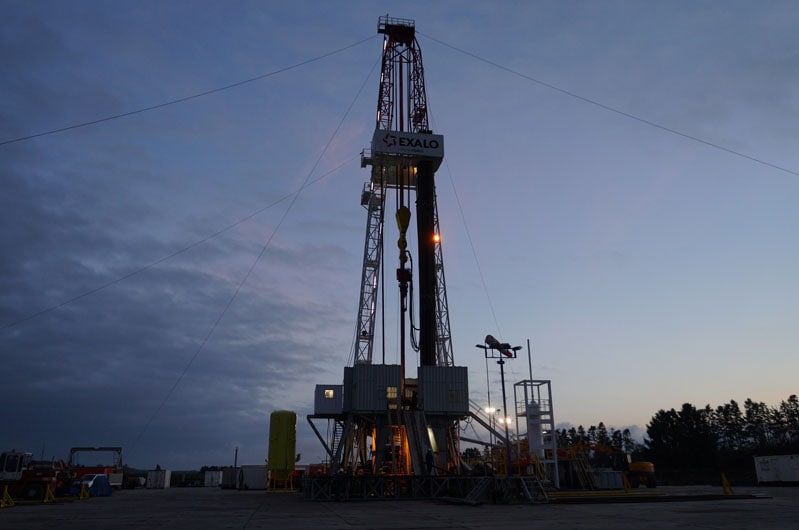
A drilling rig is primarily used to construct a well by drilling a borehole into underground formations.
A service rig is primarily used to perform work inside wells that have already been drilled.
That distinction sounds simple, but it affects almost everything about the job.
A drilling rig may work on a new horizontal oil well that requires drilling thousands of metres through underground formations.
The operation involves a drilling system, drill string, drilling fluid circulation, well control equipment, and personnel responsible for operating and maintaining the rig.
Once the well reaches its planned depth and the required drilling operations are completed, the drilling rig moves on to another well.
A service rig has a different purpose.
Imagine an existing producing well develops an artificial lift problem.
The producer may need to remove and replace downhole equipment.
A service rig can be brought to the location to perform the required work.
The same type of rig may be used for tubing replacements, pump repairs, certain completion activities, and well abandonment operations.
Service rigs can also work on newly drilled wells during the completion process, so they are not limited to repairing older wells.
The simplest way to understand the difference is that drilling rigs are primarily involved in constructing wells, while service rigs are primarily involved in completing, maintaining, repairing, and eventually abandoning them.
What Does a Drilling Rig Actually Do?
A drilling rig creates the wellbore that allows a producer to access oil or natural gas underground.
The operation begins with a drilling program prepared for the specific well.
The program establishes important technical requirements such as the planned well trajectory, drilling depth, casing design, and other operating considerations.
The rig crew operates and maintains the equipment needed to carry out the drilling operation.
A drilling rig includes several major systems.
The hoisting system raises and lowers equipment in the well.
The rotary system turns the drill string and bit.
The drilling fluid circulation system moves drilling fluid through the well to help transport cuttings, manage pressure, and support other drilling functions.
Well control equipment provides barriers and equipment for controlling well pressure.
Depending on the rig, additional systems may include automated pipe handling, advanced drilling controls, and equipment monitoring technology.
A drilling operation involves much more than simply rotating a drill bit.
The crew may need to handle drill pipe, assist with casing operations, maintain equipment, monitor drilling fluid systems, and prepare the rig for different stages of the drilling program.
Some modern drilling rigs operate on multiwell pads.
These rigs may be capable of moving between well slots on the same pad without completing a traditional move to another location.
This can reduce some relocation requirements, although the rig still needs to be transported when moving between projects.
For an entry level employee, the work is mainly about supporting the safe operation of this complex equipment.
What Does a Service Rig Actually Do?
A service rig is designed for work on wells that have already been drilled.
Its responsibilities can vary significantly depending on the well and the reason for the intervention.
Consider an oil well that produces using a rod pump.
Over time, components may wear out or fail.
The producer might need to remove the rod string, replace the pump, inspect equipment, and reinstall the necessary components.
A service rig may be used to perform this operation.
Another well might require tubing replacement.
A different well may need equipment installed as part of its initial completion.
An older well might be permanently abandoned because continued production is no longer economical or appropriate.
Service rigs are commonly involved in work such as:
- Pulling and running production tubing.
- Removing and installing sucker rods and downhole pumps.
- Supporting artificial lift repairs and replacements.
- Performing certain well completion activities.
- Supporting workover and well intervention operations.
- Fishing or retrieving suitable downhole equipment.
- Assisting with well suspension and abandonment operations.
- Supporting other specialized well servicing activities.
Not every service rig is capable of performing every operation.
The equipment, well conditions, and planned program determine which rig and additional services are required.
For example, some well interventions require coiled tubing, wireline, snubbing, pressure pumping, or other specialized equipment.
A service rig may work alongside these service providers rather than performing every operation itself.
The important point is that service rig employees work with existing wellbores and the equipment installed inside them.
Why Are Service Rigs Usually Smaller Than Drilling Rigs?
Service rigs are generally smaller and more mobile than drilling rigs.
A drilling rig must support the equipment required to construct a well.
Depending on its size and design, it can require numerous truckloads to move between locations.
A service rig is often mounted on a truck or trailer and designed to relocate more frequently.
This mobility is necessary because service rig jobs may be relatively short.
A service rig might spend a day on one well before moving to another location.
More complicated workovers can take several days or longer.
The Canadian Association of Energy Contractors explains that service rigs may move between locations frequently, sometimes daily, while drilling rigs often remain at a location for considerably longer periods.
However, size alone does not determine capability.
Some service rigs are substantial pieces of equipment capable of handling significant loads.
And not every drilling rig is larger than every service rig.
The equipment must be selected according to the technical requirements of the job.
What Does a Drilling Rig Floorhand Do?
A floorhand is one of the main entry level positions on a drilling rig.
Some companies also employ leasehands who perform general labour and maintenance activities.
On crews without leasehands, floorhand may be the first position available to a new employee.
A floorhand works under the direction of more experienced rig personnel.
Their responsibilities may include handling drill pipe, assisting with rig floor operations, cleaning and maintaining equipment, preparing tools, and supporting rig moves.
They also participate in safety meetings and follow the procedures required for the operation.
A new floorhand should expect to spend considerable time learning the equipment and understanding the hazards associated with the rig.
There is a lot to learn.
Different pieces of equipment have specific functions.
Pipe handling requires coordination and attention.
Rig operations involve moving equipment, suspended loads, rotating machinery, and pressure hazards.
A beginner needs to understand where they are permitted to work, which tasks require additional training, and how to communicate with experienced crew members.
Drilling rig floorhand work can be physically demanding.
But it is also an opportunity to develop the practical knowledge required for more senior drilling positions.
What Does a Service Rig Floorhand Do?
A service rig floorhand also performs physically demanding work, but the equipment and activities are different.
Instead of primarily handling drill pipe during well construction, they may assist with tubing, rods, well servicing tools, and other equipment used during interventions.
A typical job might involve preparing the rig at a producing well, assisting with approved well servicing operations, and helping dismantle the equipment when the operation is complete.
The floorhand may work with elevators, tongs, tubulars, and other tools under the direction of qualified crew members.
They also help inspect and maintain equipment.
Service rig floorhands need to become familiar with the different components installed inside producing wells.
For example, tubing and sucker rods serve different functions.
Tubing provides a flow path for produced fluids and may also house artificial lift equipment.
Sucker rods can transmit mechanical motion to a downhole reciprocating pump.
Understanding these differences helps workers recognize why certain equipment is being removed or installed.
A service rig floorhand may also experience frequent rig moves.
That means learning how to safely prepare equipment for transportation and assist with setting up at new locations.
On some crews, relocation is a major part of the daily workload.
Which Job Is More Physically Demanding?
Both jobs can be extremely demanding.
However, the physical workload is not identical.
On drilling rigs, floorhands may spend much of their shifts assisting with pipe handling, equipment maintenance, and other activities required to keep drilling operations moving.
The work can involve repetitive movement, standing for long periods, handling tools, climbing, and working in difficult weather.
On service rigs, workers may spend considerable time handling tubing and rods, preparing equipment, and moving between locations.
Some service jobs involve repetitive tubular handling.
Other jobs involve extensive setup, dismantling, and equipment preparation.
The workload also depends heavily on the rig’s equipment.
Modern mechanized and automated systems can reduce certain manual handling requirements.
Older equipment may require more physical effort.
For example, a drilling rig with automated pipe handling may have a different physical workload from a more conventional rig.
Similarly, a service rig equipped with mechanized tubular handling systems may operate differently from one with more manual tasks.
It is therefore misleading to say that drilling rigs are always harder or that service rigs are always harder.
Both can be physically exhausting.
If you have never worked in the oilfield, expect a significant adjustment period.
Long shifts, heavy protective clothing, exposure to weather, and physically repetitive work can be challenging even for someone who is otherwise in good physical condition.
Drilling Rig Schedules: What Hours Can You Expect?
One of the biggest differences between drilling and service rig employment is the working schedule.
Drilling rigs commonly operate around the clock.
A drilling program can be expensive, and companies generally want to use the equipment efficiently while maintaining safe operations.
According to the Canadian Association of Energy Contractors, drilling rigs commonly operate 24 hours per day with crews working 12 hour shifts.
A common schedule in Western Canada is 14 days working followed by 7 days off.
However, this is not the only schedule.
Some contractors use different rotations based on the rig, project, and location.
Employees may alternate between day shifts and night shifts.
For example, you could spend part of a rotation working from early morning until evening.
On another rotation, you may work overnight.
The exact arrangement depends on the employer.
A drilling schedule can provide relatively predictable blocks of time off when the rig remains active.
But it also means spending extended periods away from home.
You might miss weekends, holidays, birthdays, and other family activities.
A scheduled rotation also does not guarantee that work will continue throughout the year.
Rig shutdowns, project delays, seasonal restrictions, and changes in drilling activity can interrupt employment.
Service Rig Schedules: Do You Go Home Every Night?
Service rig schedules can be different.
Many service rigs operate during daytime hours, although some work nights or extended operating schedules.
A crew may meet at the rig yard, travel to the job location, perform the planned operation, and return after the shift.
According to the Canadian Association of Energy Contractors, many service rig crews live near their rig yard and travel together to the worksite.
This can make service rig employment attractive to someone who wants to remain based in a particular community.
However, do not assume you will always return home every night.
Some service rigs operate in remote areas.
Employees may need to stay in hotels, camps, or other temporary accommodations.
Work schedules can also change depending on the job.
A relatively short intervention may be completed within the planned shift.
Another operation could take considerably longer than expected.
Equipment problems, well conditions, weather, transportation, and other operational factors can affect the schedule.
Some service rig employees work regular rotations.
Others have more variable schedules.
Before accepting a job, ask whether the position involves local work, rotational work, or a combination of both.
This can make a major difference to your lifestyle.
Which Job Offers Better Work and Life Balance?
Neither option guarantees a better work and life balance.
The answer depends on the employer and schedule.
Drilling rig employment may be preferable if you like having defined blocks of days off.
For example, a 14 day working rotation followed by 7 days off can provide time for personal activities when the schedule is maintained.
But you may be away from home for the entire working period.
Service rig employment may be preferable if you can find a company operating near your home.
Some workers can return home after most shifts.
However, service rig work may involve changing schedules, long days, and short notice assignments.
For someone with a family, the difference can be significant.
A drilling position may provide more predictable rotations.
A local service rig position may allow more evenings at home.
Neither arrangement is automatically better.
The important question is what the specific employer actually offers.
Drilling Rig vs Service Rig Pay: Which Pays More?
Money is one of the main reasons people consider oilfield employment.
Both drilling and service rig companies can offer attractive compensation, particularly when overtime is available.
But deciding which pays more requires looking beyond the advertised hourly wage.
The Government of Canada’s Job Bank reports the following wage information for oil and gas drilling, servicing, and related labourers in Alberta.
The published hourly wage figures, updated in November 2025 using earlier survey data, were:
Low wage: $23.00 per hour.
Median wage: $31.86 per hour.
High wage: $39.50 per hour.
These figures are in Canadian dollars and cover a broader occupational category that includes both drilling and servicing labourers.
They are not separate wage estimates for drilling rig floorhands and service rig floorhands.
Therefore, these figures do not prove that one type of rig consistently pays more than the other.
Actual compensation depends on the company, position, experience, location, and working arrangements.
Why Annual Income Can Be Very Different
Imagine two hypothetical workers.
The first works on a drilling rig earning $35 per hour.
The second works on a service rig earning $33 per hour.
At first glance, the drilling worker earns more.
But annual earnings depend on the number of paid hours.
If the drilling worker receives consistent shifts throughout the year, their annual income could be substantial.
If the rig shuts down for an extended period, their earnings may be much lower than expected.
The service rig worker might earn a slightly lower hourly rate but work more days during certain periods.
Alternatively, the service rig worker might experience inconsistent hours between jobs.
Overtime rules, premiums, and employment arrangements also matter.
The worker with the higher hourly wage does not always earn the higher annual income.
What About Overtime?
Both drilling and service rig workers may receive overtime.
However, overtime eligibility, thresholds, and calculations depend on applicable employment standards and employment arrangements.
Do not assume that every hour after eight hours is automatically paid at the same overtime rate.
Always review the company’s compensation policy and the rules applicable to your position.
Also investigate whether the employer provides travel allowances, subsistence payments, camp accommodation, bonuses, or other benefits.
These can affect total compensation.
How Much Can You Earn as a Driller or Service Rig Operator?
There is a major difference between entry level wages and senior operating compensation.
On a drilling rig, experienced workers may progress toward driller and rig manager positions.
On a service rig, experienced personnel may progress toward operator and rig manager roles.
These positions involve additional responsibility for equipment, personnel, and operating safety.
Job Bank reports a median wage of approximately $48.50 per hour in Alberta for the occupational category that includes oil and gas well drillers and well servicers.
However, this figure represents a broader occupational group rather than the precise compensation of every driller or service rig operator.
Actual wages can be higher or lower.
Senior personnel may also have different overtime arrangements, bonuses, and other compensation.
When comparing these positions, it is important to understand that a drilling rig driller and a service rig operator perform different work even though both may supervise important rig activities.
They are not interchangeable jobs.
Drilling Rig Career Progression
Drilling rig employment offers a relatively recognizable career structure.
A typical progression may involve the following positions.
Leasehand
This is a general entry level labour position on rigs that employ leasehands.
The worker supports site maintenance, cleaning, equipment preparation, and other assigned activities.
Floorhand
The floorhand assists with drill pipe handling, equipment maintenance, rig floor activities, and other operational tasks.
Motorhand
The motorhand has additional responsibilities involving engines, mechanical equipment, and maintenance.
The exact duties vary by rig.
Derrickhand
The derrickhand has significant responsibilities involving drilling fluid systems, equipment, and pipe handling activities.
The position may involve working at height.
Driller
The driller operates drilling equipment, directs crew activities, monitors operations, and works closely with the rig manager and other personnel.
This position requires substantial technical competency and sound operating judgment.
Rig Manager
The rig manager, sometimes called a toolpush in drilling, is responsible for overseeing the rig crew, equipment, and contractor operations.
Advancement between these positions depends on training, demonstrated competence, experience, and available vacancies.
You should not expect to progress simply because you have spent a certain number of years on a rig.
Service Rig Career Progression
Service rigs also offer advancement opportunities.
However, the progression is different.
A typical Canadian service rig crew includes floorhands, a derrickhand, an operator, and a rig manager.
Floorhand
The floorhand assists with tubular handling, rig operations, equipment maintenance, and rig moves.
This is a common starting position.
Derrickhand
The derrickhand works with tubing and other equipment being raised or lowered into the well.
This position requires additional competency and may involve working at height.
Operator
The service rig operator is responsible for operating the rig equipment and directing the crew during assigned servicing activities.
The role requires knowledge of equipment limitations, operating procedures, well control, and the planned work.
Rig Manager
The rig manager oversees the crew, equipment, job execution, and contractor responsibilities.
They coordinate with the producer’s representatives and other personnel involved in the operation.
Service rig workers may also pursue other well intervention occupations after developing relevant experience and obtaining the necessary qualifications.
These opportunities may include specialized pressure control, coiled tubing, snubbing, or well servicing support roles.
However, moving into another service does not happen automatically.
Each occupation has its own equipment, training, and competency requirements.
Which Offers Better Career Opportunities?
Both can lead to successful careers, but they provide different types of experience.
Drilling rig workers develop knowledge of well construction, drilling equipment, drilling fluids, mechanical systems, and drilling operations.
Experienced workers may pursue drilling supervision, rig management, equipment maintenance, drilling contractor operations, or specialized drilling support.
Service rig workers develop knowledge of well intervention, production tubing, downhole equipment, artificial lift systems, and workover operations.
Experienced employees may pursue service rig management, well intervention support, specialized servicing, or other technical roles.
If your long term goal is drilling supervision, starting on a drilling rig generally makes more sense.
If you are interested in working on producing wells and understanding how downhole production equipment is maintained, service rig work may be more relevant.
However, neither job guarantees a transition into an engineering or producer position.
Additional education, qualifications, and experience may be required.
The most important factor is whether the skills you develop align with your long term career goals.
Which Job Is More Dangerous?
Both drilling and service rig work involve significant hazards.
It would be misleading to describe either one as automatically safe or more dangerous without reliable incident data for comparable operations.
The risk depends on the equipment, job conditions, procedures, training, and safety management.
On a drilling rig, hazards can include suspended loads, moving machinery, rotating equipment, pressure, hazardous substances, working at height, and vehicle movements.
Service rig employees face many similar hazards.
They also work with well intervention equipment and may encounter conditions associated with pressure, produced fluids, tubular handling, and existing well equipment.
For example, opening a producing well for servicing requires appropriate well control planning and barriers.
The fact that a well has already been drilled does not mean it is free of pressure or other hazards.
A major danger in either occupation is becoming comfortable enough with familiar tasks that workers stop recognizing changing conditions.
A reliable employer should provide appropriate training, procedures, supervision, and properly maintained equipment.
As a new worker, you must follow those procedures, communicate hazards, and never perform work for which you are not trained or authorized.
Do You Need Experience to Get Hired?
Not necessarily.
Both drilling and service rig contractors hire workers with no previous oilfield experience.
However, companies still expect applicants to meet their hiring requirements.
The Government of Alberta’s ALIS occupational information indicates that entry level drilling and service rig personnel generally learn through workplace training.
Employers may require safety certificates, valid driving qualifications, and the ability to perform physically demanding work.
Relevant entry level training in Western Canada often includes H2S Alive and First Aid.
Depending on the company and worksite, other training such as Common Safety Orientation, WHMIS, TDG, and Fall Protection may be required.
Some employers provide part of the training after hiring.
You should check the job advertisement before paying for courses.
A worker who is reliable, follows instructions, communicates well, and takes safety seriously may be a stronger candidate than someone who has collected numerous certificates but does not understand the job.
Do You Need a Driver’s Licence or CDL?
Transportation is an important consideration for both jobs.
In Canada, drilling rig and service rig employers commonly expect workers to have reliable transportation and a valid driver’s licence.
Some crews meet at a designated yard before travelling to the site.
Other workers are expected to travel to a pickup location, hotel, camp, or rig site.
A standard passenger vehicle licence may be sufficient for certain entry level floorhand positions.
However, a higher class of licence may be necessary for employees who operate commercial vehicles or transport particular equipment.
On service rigs, some employees may eventually be required to drive the rig or supporting commercial vehicles.
The appropriate licence depends on the vehicle and provincial requirements.
In the United States, certain driving responsibilities may require a Commercial Driver’s License, commonly called a CDL.
But not every drilling or service rig floorhand position requires a CDL.
If you do not have one, focus on vacancies where commercial driving is not part of the job.
Do not assume that the licence requirement is the same across all contractors.
Which Job Is Better if You Want to Stay Close to Home?
Service rig work may offer an advantage in some regions.
Because service rigs frequently move between existing wells, some contractors operate from yards near producing areas.
Employees may live in nearby communities and travel to different locations during the workweek.
For example, someone living in an established producing region of Alberta or Saskatchewan may find service rig opportunities based relatively close to home.
Drilling rigs may travel farther between projects.
Depending on where the employer is operating, you may need to stay in a camp or hotel during your rotation.
However, drilling rig employment can also be local when the rig operates near your home.
And service rig work can involve extended periods away.
Ask the employer where the crew is currently operating and what travel arrangements are expected.
More importantly, ask whether the schedule and operating region are likely to change.
A job advertised as local today may involve travelling to another area later.
Which Job Has More Consistent Work?
This is another important consideration.
Drilling rig activity is strongly influenced by producer investment in new wells.
When companies increase drilling budgets, demand for drilling rigs and crews can rise.
When drilling programs are reduced, rigs may become inactive.
Service rig activity is also affected by producer spending, but the demand has a different structure.
Producing wells still require maintenance, repairs, interventions, and eventually abandonment.
Some of this work continues even when producers reduce new drilling programs.
However, service rig employment is not recession proof.
Producers may defer certain workovers, shut in uneconomic wells, reduce maintenance spending where appropriate, or change abandonment schedules.
Seasonal conditions also influence activity.
In Western Canada, spring breakup can restrict access to certain locations and temporarily reduce field activity.
Winter may be a busier period for some operations because frozen ground allows access to locations that are difficult to reach during warmer months.
The Canadian Association of Energy Contractors forecast approximately 59,943 drilling rig operating days and 1,037,301 service rig operating hours for 2026.
These are industry activity forecasts, not guaranteed employment hours for individual workers.
Both sectors can provide substantial employment, but neither guarantees continuous work throughout the year.
Can You Switch From a Service Rig to a Drilling Rig?
Yes.
Some of the skills are transferable.
A service rig worker may already understand rig floor hazards, tubular handling, equipment inspections, communication, and general rig procedures.
That experience can be valuable when applying to a drilling contractor.
However, the worker still needs to learn drilling specific equipment and procedures.
For example, handling production tubing is not identical to handling drill pipe during drilling operations.
Drilling fluids, drilling equipment, and well construction activities also require additional knowledge.
An experienced service rig employee should not assume they are automatically qualified for an equivalent senior drilling position.
The reverse is also true.
A drilling floorhand may have useful rig experience, but they still need to learn service rig equipment and well intervention operations.
When changing sectors, be prepared for company competency assessments and additional training.
Is Drilling or Service Rig Work Better for Someone Without Experience?
Both are realistic entry points.
The better choice depends on the type of work and schedule you prefer.
Drilling may be more attractive if you want to learn about constructing wells, working with drilling systems, and following a structured drilling crew progression.
Service rigs may be more attractive if you want exposure to well servicing, downhole production equipment, artificial lift, and workovers.
There is also a practical consideration.
Which company is actually hiring?
If you have no experience, it may be more productive to accept a suitable entry level opportunity with a reputable contractor than to wait indefinitely for one specific type of rig.
Your first oilfield job does not have to determine your entire career.
But you should still understand what you are accepting.
A good employer with effective training and competent supervision can make a significant difference to your first experience in the industry.
How to Choose Between Two Job Offers
Suppose you receive two offers.
One is for a drilling rig floorhand position.
The other is for a service rig floorhand position.
Before accepting either job, ask about the actual working conditions.
Ask About the Schedule
Does the crew work a regular rotation?
Are the shifts primarily during the day or at night?
How many hours are employees typically scheduled?
Does the schedule change between projects?
Ask About Compensation
What is the base hourly wage?
How is overtime calculated?
Are there additional allowances?
Is travel time compensated?
Are accommodations and meals provided?
When do benefits begin?
Ask About Location
Where is the rig currently operating?
Will you be expected to relocate?
Do crews meet at a company yard?
Will you need your own vehicle?
Ask About Training
What qualifications are required before your first shift?
Which certificates does the employer provide?
How are new employees trained and evaluated?
What opportunities exist to learn additional equipment?
Ask About Career Progression
What is the next position after floorhand?
What competencies are required for promotion?
How does the company train employees for more senior roles?
Is advancement based on demonstrated competency and available positions?
These questions provide a much better picture than simply comparing hourly wages.
Common Mistakes Beginners Make When Choosing Rig Jobs
One common mistake is choosing the position with the highest hourly wage without understanding the number of hours available.
Another is assuming that all drilling and service rig contractors provide the same schedules.
Some workers also underestimate the physical demands.
They imagine operating heavy equipment but do not realize how much time entry level employees can spend cleaning, handling equipment, and assisting with physically repetitive tasks.
Others underestimate the importance of reliable transportation.
A job may require travelling to a remote pickup location before the workday begins.
Another mistake is assuming that service rigs are easier because they are generally smaller.
Equipment size does not determine how demanding or hazardous the work will be.
Similarly, some applicants assume drilling work always provides continuous employment because the rigs operate around the clock when active.
A rig can operate continuously during a project and still experience periods of inactivity between contracts.
The best way to avoid these mistakes is to investigate the actual job rather than relying on assumptions about the occupation.
Drilling Rig vs Service Rig: Which One Should You Choose?
If you enjoy working with large drilling systems, learning the technical aspects of well construction, and following a drilling crew career path, drilling may be the better choice.
You may also prefer drilling if you like defined rotations with extended periods away from home followed by scheduled time off.
If you are interested in production wells, downhole equipment, well repairs, and intervention activities, a service rig may offer a more suitable direction.
Service rig employment may also be attractive if you find a contractor operating locally and want the possibility of returning home after work.
But neither option is automatically better paid, safer, easier, or more stable.
These factors depend heavily on the particular employer and operating conditions.
For beginners, it is often more useful to compare specific job offers than to make a general decision that all drilling jobs are better than all service rig jobs.
Final Thoughts: Is a Drilling Rig or Service Rig the Better Place to Start?
Drilling rigs and service rigs are both important parts of the oil and gas industry.
Without drilling rigs, new wells cannot be constructed using conventional drilling operations.
Without well servicing equipment and crews, many wells could not be efficiently completed, maintained, repaired, or safely abandoned.
Both types of work can provide a pathway into the industry for people without previous oilfield experience.
Both can offer attractive earnings.
And both provide opportunities to progress from an entry level position into more responsible technical and supervisory roles.
But the experience you gain will be different.
Drilling rigs introduce you to well construction, drilling equipment, drilling fluids, and the operational requirements of constructing oil and gas wells.
Service rigs introduce you to well intervention, production tubing, downhole equipment, workovers, and the maintenance of existing wells.
The schedules and lifestyles can also be significantly different.
If you are deciding between the two, do not focus exclusively on which one pays more per hour.
Consider the training, working hours, travel requirements, company reputation, and long term career opportunities.
A slightly lower paying job with better training and reliable employment may ultimately be more valuable than a higher hourly rate with inconsistent work and limited opportunities to advance.
And remember that your first oilfield job does not have to be your final career choice.
You can begin on a drilling rig and later move into another area of the industry.
You can start on a service rig and develop experience that supports a career in well intervention or technical services.
What matters most is using your first position to develop useful skills, demonstrate safe working habits, and build experience that creates additional opportunities.
The best place to start is not necessarily the biggest rig, the highest hourly wage, or the company with the most impressive equipment.
It is the job that gives you a realistic opportunity to learn, earn, and build the career you want in oil and gas.