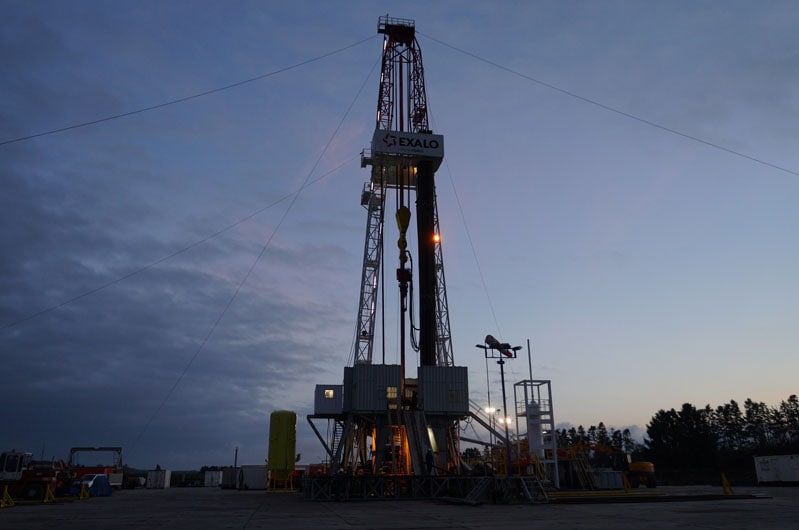
Drive through a heavy oil producing area in Alberta or Saskatchewan and you will notice that not every oil well has a traditional pumpjack.
Some wells have a relatively small motor and drive assembly installed above the wellhead.
There is no walking beam moving up and down.
Instead, a motor continuously rotates a rod string that extends thousands of feet into the well.
At the bottom of that rod string is a specialized pump designed to move oil, water, and sometimes substantial amounts of sand.
This is a progressive cavity pump, commonly called a PCP.
You may also hear it called a progressing cavity pump.
Both names refer to the same general pumping technology.
PCPs are particularly useful in heavy oil production because they can move viscous fluids that are difficult for some other artificial lift systems to handle efficiently.
However, they have their own operating problems.
A PCP can fail because of sand accumulation, excessive torque, gas interference, damaged elastomers, improper pump speed, or inadequate fluid supply.
Some failures develop gradually.
Others happen suddenly.
Understanding how a PCP works and what its operating measurements mean can help lease operators, production technicians, and engineers identify problems before they become expensive workovers.
What Is a Progressive Cavity Pump?
A progressive cavity pump is a positive displacement pump that moves fluid through a series of cavities created between a rotating rotor and a stationary stator.
In a conventional oil well installation, the pump is located downhole.
A motor at the surface rotates a rod string.
The rod string turns the rotor inside the pump.
As the rotor turns, cavities move continuously from the pump intake toward the discharge.
Fluid trapped inside those cavities moves upward through the pump.
The fluid then travels through the production tubing to the surface.
Unlike a conventional pumpjack, the pumping action is rotational rather than reciprocating.
This creates relatively smooth, continuous fluid movement.
Why Do Oil Wells Need Progressive Cavity Pumps?
Oil wells frequently lose the ability to flow naturally as reservoir pressure declines.
Some wells also produce heavy crude that is difficult to lift because of its high viscosity.
Other wells produce sand or large amounts of water.
These conditions can make artificial lift necessary.
A progressive cavity pump adds energy to the produced fluid and helps move it toward the surface.
The technology is particularly attractive when the produced liquid is thick or contains solids.
It can provide an efficient solution for certain heavy oil wells where a conventional reciprocating pump or centrifugal pump might experience difficulties.
However, a PCP still needs enough fluid entering the pump to operate properly.
It cannot create reservoir inflow that does not exist.
How Does a Progressive Cavity Pump Work?
The pumping mechanism is relatively simple to understand.
Inside the pump is a metal rotor with a helical shape.
The rotor turns inside a stator with a matching internal helical profile.
In many conventional designs, the stator contains an elastomer lining.
The rotor and stator form cavities that seal against one another.
When the rotor turns, these cavities progressively move along the length of the pump.
Fluid enters the cavity near the intake.
The cavity moves toward the discharge.
The fluid is then released into the production tubing.
This process continues as long as the rotor turns and the pump receives fluid.
The pump transfers fluid by displacement rather than relying primarily on the high rotational speeds and centrifugal forces used in an ESP.
What Are the Main Components of a PCP System?
A typical surface driven PCP installation includes several components.
- Surface electric motor or other drive system.
- Drivehead and associated drive equipment.
- Speed control equipment.
- Polished rod.
- Rotating rod string.
- Production tubing.
- Downhole rotor.
- Downhole stator.
- Tubing torque anchor where required.
- Wellhead and production flow equipment.
- Monitoring and protection equipment.
Each component performs an important function.
The motor provides power.
The drivehead transfers rotation.
The rod string carries torque downhole.
The rotor and stator move fluid.
The tubing carries production toward the surface.
The monitoring system helps protect the equipment and identify abnormal operating conditions.
What Is the PCP Rotor?
The rotor is the rotating metal component inside the downhole pump.
It normally has a precisely manufactured helical shape.
The rotor may have a specialized surface coating to improve corrosion resistance and reduce wear.
As it rotates inside the stator, the geometry creates moving cavities that transport fluid.
Rotor dimensions and surface condition are important.
If the rotor becomes worn, the seal between the rotor and stator can deteriorate.
Fluid may begin slipping backward through the pump.
The pump continues rotating but moves less liquid than expected.
In severe cases, rotor damage can contribute to mechanical failure.
What Is the PCP Stator?
The stator is the stationary component surrounding the rotor.
In many conventional PCP designs, it consists of an elastomer lining bonded inside a steel housing.
The elastomer forms the internal helical profile that works with the metal rotor.
It helps create the sealing contact needed to move fluid through the pump.
This component is one of the most important factors affecting PCP reliability.
Elastomers can be damaged by excessive temperature, incompatible chemicals, abrasion, and unsuitable operating conditions.
The stator needs to maintain appropriate contact with the rotor.
Too much clearance can reduce pumping efficiency.
Excessive interference can increase friction, heat, and torque.
Why Are PCPs Good for Heavy Oil?
Heavy oil has higher viscosity than lighter crude.
Viscosity describes a fluid’s resistance to flow.
A thick fluid requires more energy to move through tubing and equipment than a less viscous fluid under similar conditions.
Progressive cavity pumps are well suited to many viscous fluid applications because of their positive displacement mechanism.
The pump moves fluid through cavities rather than relying on the same hydraulic mechanism as a centrifugal pump.
PCPs can therefore be attractive in heavy oil producing areas such as Lloydminster and other parts of Western Canada.
However, extremely high viscosity still creates challenges.
Torque requirements can increase.
Tubing friction losses can become substantial.
Motor loading and pump selection must account for the actual crude properties.
Why Can PCPs Handle Sand?
Some heavy oil reservoirs produce significant amounts of sand along with the oil.
Sand can damage pumps.
A conventional rod pump contains valves and sealing surfaces that can be affected by abrasive particles.
An ESP contains multiple centrifugal stages that can experience erosion.
A PCP has a different mechanical arrangement.
Its moving cavities can transport fluid containing solids, and it does not require the same standing and traveling valve arrangement as a reciprocating rod pump.
This can make PCPs more tolerant of sand in suitable applications.
However, sand tolerance is not the same as immunity to sand damage.
A PCP can still wear out, become restricted, or seize because of solids.
How Does a Surface PCP Drive Work?
The surface drive provides the rotation needed to operate the pump.
Many systems use an electric motor connected to a drivehead.
The drivehead transfers torque to the polished rod and rotating rod string.
Depending on the system, speed reduction may be provided through a gearbox, belts, or another approved drive arrangement.
The drivehead also supports the mechanical loads associated with the rod string.
A PCP typically rotates continuously during normal pumping.
The rotational speed determines how quickly the downhole rotor moves fluid through the pump.
Changing speed is therefore one of the main ways to control production.
What Is the Difference Between a PCP and a Pumpjack?
A pumpjack usually drives a reciprocating sucker rod pump.
The rod string moves up and down.
The downhole plunger and valves work together to lift fluid through repeated strokes.
A conventional PCP rotates the rod string instead.
The downhole rotor turns continuously inside the stator.
The PCP moves fluid through progressing cavities without using the same reciprocating valve system.
This gives the PCP certain advantages for viscous fluids and solids handling.
However, PCP systems introduce different mechanical challenges.
Continuous rod rotation creates torque.
Rod and tubing contact can produce wear.
The rotor and stator need suitable fluid conditions.
Both systems can work very well when correctly selected.
What Is the Difference Between a PCP and an ESP?
An ESP uses a downhole electric motor to drive a multistage centrifugal pump.
A conventional surface driven PCP uses a surface motor to rotate a rod string connected to the downhole pump.
The actual pumping mechanisms are also different.
An ESP develops pressure through centrifugal pump stages.
A PCP displaces fluid through moving cavities.
ESPs can be attractive for very large liquid volumes.
PCPs can be especially useful for high viscosity fluids and certain sand producing wells.
There are also systems that use downhole electric motors to drive progressive cavity pumps.
Artificial lift selection depends on the actual well, not simply which pump technology is newest.
What Is PCP Pump Speed?
Pump speed is the rotational speed of the rotor.
It is commonly measured in revolutions per minute, or RPM.
When pump speed increases, theoretical displacement generally increases proportionally.
For example, increasing rotor speed from 100 RPM to 150 RPM raises theoretical displacement by 50 percent, assuming the same pump geometry.
But actual production may not increase by the same amount.
The reservoir may not supply enough additional fluid.
Pump leakage may change.
Gas interference may increase.
Torque and temperature may also rise.
A pump’s recommended operating speed should therefore be based on its design and actual well conditions.
How Do You Calculate PCP Production?
A progressive cavity pump has a nominal displacement per revolution.
This is the volume the pump can theoretically move during one complete rotation.
The basic calculation is:
Theoretical flow rate = Pump displacement per revolution × RPM
For daily production, the flow must then be converted to the appropriate daily volume units.
Imagine a hypothetical PCP with a displacement of 0.25 litres per revolution.
The rotor operates at 200 RPM.
The theoretical flow rate is:
0.25 × 200 = 50 litres per minute.
There are 1,440 minutes in a day.
50 × 1,440 = 72,000 litres per day.
That equals 72 cubic metres per day.
Using approximately 6.29 barrels per cubic metre, theoretical displacement is about 453 barrels per day.
But that is not guaranteed actual production.
If effective volumetric efficiency is 75 percent, liquid delivery would be approximately 340 barrels per day.
The important point is that pump speed and nominal displacement only provide a starting estimate.
Actual production needs to be measured.
What Is PCP Volumetric Efficiency?
Volumetric efficiency compares actual fluid delivery with theoretical displacement.
A PCP may not deliver its full theoretical volume because fluid can slip backward through the pump.
Efficiency can be influenced by the rotor and stator fit, fluid viscosity, pressure difference, gas content, wear, and operating conditions.
Suppose a pump has a theoretical displacement of 400 barrels per day.
Actual measured production is 300 barrels per day.
The simplified volumetric efficiency is:
300 ÷ 400 × 100 = 75 percent.
That does not automatically mean the pump is damaged.
The interpretation depends on gas handling, inflow, pump design, and the accuracy of the measurements.
The most useful approach is comparing efficiency with the expected operating performance of that specific system.
What Is Slip in a Progressive Cavity Pump?
Slip is fluid leaking backward through the internal sealing areas of the pump.
Instead of all displaced fluid reaching the discharge, some returns toward the intake through available clearances.
A certain amount of slip may occur during normal operation.
Excessive slip reduces actual fluid production.
As the rotor or stator wears, sealing performance can deteriorate.
Changes in fluid viscosity and differential pressure can also affect leakage.
A pump experiencing excessive slip may continue rotating at normal speed while producing less liquid.
This can sometimes be mistaken for declining reservoir productivity.
What Is PCP Torque?
Torque is the twisting force needed to rotate the pump.
It is one of the most useful operating measurements for a PCP.
Torque is required to overcome hydraulic loading, mechanical friction, and resistance within the pumping system.
Heavy oil can increase torque requirements.
High pump differential pressure can increase loading.
Sand accumulation can create additional resistance.
Changes in rotor and stator contact can also influence torque.
Torque is transmitted through the rod string from the surface drive to the downhole pump.
The drive equipment and rods must remain within their allowable operating limits.
What Does High PCP Torque Mean?
High torque can indicate increased resistance to pump rotation.
Possible causes include:
- Higher fluid viscosity.
- Sand accumulation.
- Increased differential pressure.
- Rotor and stator interference.
- Elastomer swelling.
- Mechanical friction.
- Rod contact with tubing.
- Pump restriction.
- A developing mechanical failure.
The correct interpretation depends on what else is happening.
If torque rises gradually while fluid temperature falls, viscosity may be contributing.
If torque suddenly increases and the unit trips, a restriction or mechanical problem may be more concerning.
One torque reading rarely provides a complete diagnosis.
The trend matters.
What Does Low PCP Torque Mean?
Low torque can occur when the pump experiences reduced hydraulic load.
For example, the well may not be supplying enough liquid.
Gas may be entering the pump.
The pump may be worn and experiencing excessive slip.
A rod string failure may also reduce the load transmitted from the surface drive.
However, low torque does not automatically mean the well is pumped off.
An operator should review production rate, speed, motor current, fluid level information, and pressure data.
The reason for reduced torque is more important than the number itself.
Why Does PCP Torque Increase After a Shutdown?
Some heavy oil wells become more difficult to restart after sitting idle.
One reason is temperature.
Heavy crude may become more viscous as it cools.
Sand may also settle during the shutdown.
The rotor and stator can experience changing contact conditions.
These factors may increase the torque required to restart the pump.
A well that ran normally before shutdown may therefore show higher loading when operation resumes.
This does not automatically prove that the pump has failed.
But repeated high torque restarts deserve investigation.
Operators should follow approved startup procedures and equipment limits rather than forcing the pump to rotate.
What Is PCP Backspin?
Backspin is one of the most important safety hazards associated with conventional surface driven PCP systems.
When the pump is operating, the rod string carries torque.
Because the rod string is long and elastic, it can store substantial torsional energy.
There may also be a column of liquid in the production tubing that creates a pressure difference across the pump.
When the drive stops, stored energy can cause the rod string and pump to rotate backward.
Fluid falling back through the pump may add to that reverse rotation.
In some conditions, reverse rotation can become fast and dangerous.
A system that appears electrically stopped may still contain significant stored mechanical energy.
Why Is PCP Backspin Dangerous?
Uncontrolled backspin can damage drive equipment and create serious hazards for workers.
The rod string may release stored torsional energy.
Surface components can rotate unexpectedly.
Equipment may experience damaging mechanical loads.
This is why PCP drive systems can include backspin brakes and other protective arrangements.
Workers should never assume a stopped motor means the rotating equipment is safe to touch or service.
Before maintenance, the system must be isolated and stored energy controlled according to the equipment manufacturer’s instructions and approved company procedures.
Backspin protection is a critical part of PCP safety.
What Is a PCP Torque Anchor?
A torque anchor is used to help resist rotation of the tubing and downhole pump assembly.
When the rotor turns, reaction torque acts on the stator and tubing.
Without adequate restraint, that torque can create unwanted tubing movement and potential connection problems.
A properly selected and installed torque anchor helps keep the stator assembly from rotating.
It is an important part of many surface driven PCP completions.
The design must account for expected torque, well configuration, and equipment requirements.
Why Do PCP Rods Wear Against the Tubing?
A PCP rod string rotates continuously.
In a deviated well, the rods may contact the inside of the production tubing.
That contact creates friction and wear.
Over time, excessive contact can damage the rods or tubing.
Higher torque and more severe well deviation can increase the challenge.
Specialized rod designs, guides, and continuous rod systems may help reduce wear in suitable applications.
However, the best solution depends on the well geometry and operating conditions.
Rod and tubing wear can become an important economic limitation in certain PCP installations.
Why Do PCP Stators Fail?
Stator failure is one of the most common reasons a PCP loses performance.
The elastomer lining is exposed to produced fluids, mechanical contact, pressure, and temperature.
It may experience chemical swelling.
It may become damaged by excessive heat.
Sand can create abrasion.
Operating without enough fluid can increase frictional heating.
High differential pressure can create additional stress.
As the stator deteriorates, sealing effectiveness may decrease.
Production falls because more fluid slips through the pump.
In severe cases, the elastomer can fail to the point that the pump can no longer operate properly.
Why Is Dry Running Bad for a PCP?
A conventional elastomer stator depends on suitable operating conditions, including fluid to support lubrication and heat removal.
When fluid supply becomes inadequate, the rotor may continue turning while the pump receives little liquid.
Friction generates heat.
Without sufficient fluid to carry away that heat, local temperatures can rise.
The elastomer may become damaged.
This can happen when a pump continues running after the well has been pumped down.
It is one reason PCP controllers may use load, fluid level, and other measurements to prevent damaging operation.
Running a PCP faster when it already lacks fluid can make the problem worse.
Can High Temperature Damage a PCP?
Yes.
Different elastomer materials have different temperature limits.
Some stator compounds are formulated for more demanding conditions than others.
But conventional elastomer based PCPs still have temperature and chemical compatibility limitations.
Excessive heat can change material properties and damage sealing surfaces.
Thermal recovery operations require particularly careful equipment selection.
Specialized high temperature designs and metal stator technologies are available for certain applications.
They are not interchangeable with every conventional PCP.
The pump must be selected for the actual temperature conditions.
What Is Elastomer Swelling?
Elastomer swelling occurs when the stator material changes dimensions after exposure to fluids or other conditions.
Certain crude oil components and chemicals can interact with elastomer materials.
The stator may expand.
This changes the contact pressure between the rotor and stator.
Excessive contact can increase friction and torque.
It may also generate additional heat.
In severe cases, the rotor can become difficult to turn or seize.
This is why proper elastomer selection is so important.
The right material must be compatible with the expected crude oil, produced water, chemicals, temperature, and pressure conditions.
Can Gas Interfere With a PCP?
Yes, although PCPs can handle certain gas and liquid mixtures better than some alternative pumping systems.
Free gas can occupy part of the pump displacement volume.
That reduces the amount of liquid delivered.
High gas fractions can also change pressure behavior and operating stability.
The actual effect depends on intake conditions and pump design.
Gas handling should be evaluated during equipment selection.
A well producing increasing amounts of free gas may require changes to its operating strategy.
Low liquid production caused by gas should not automatically be blamed on rotor or stator wear.
What Happens When a PCP Is Pumped Off?
Pump off occurs when the pumping system removes fluid faster than the reservoir can supply it.
The fluid available at the pump intake decreases.
Liquid production may fall below expected displacement.
The pump may begin receiving more gas or inadequate liquid.
Torque and motor loading can change.
If insufficient fluid remains in the pump, stator heating and damage can become concerns.
The operator may need to evaluate reducing RPM or changing the pumping schedule.
The objective is to match pumping capacity with reservoir inflow while protecting the equipment.
What Is a PCP Pump Controller?
A PCP controller monitors operating conditions and controls pump speed or shutdown behavior.
Depending on the equipment, it may use information such as motor current, torque, RPM, pressure, and other measurements.
Modern systems can transmit operating data to a remote monitoring platform.
Controllers can help identify abnormal conditions.
They may also reduce speed or stop the pump when specified protection limits are reached.
However, a controller cannot automatically distinguish every possible problem.
An operator still needs to understand why the system is showing abnormal behavior.
Protection settings should be established according to the equipment and well conditions.
Why Does a PCP Trip on High Torque?
A high torque trip occurs when loading reaches the system’s configured protective limit.
Possible reasons include sand restriction, increased fluid viscosity, mechanical friction, stator swelling, high differential pressure, or another mechanical problem.
The first step is reviewing the available operating information.
Was torque increasing slowly?
Did it rise suddenly?
Was the well recently shut down?
Did fluid temperature change?
Has the well produced sand?
Was pump speed recently increased?
Repeatedly resetting the trip without understanding the cause can damage the equipment.
A protective trip is a signal that something needs attention.
Why Does a PCP Trip on Low Load?
Low load protection may activate when the drive detects less mechanical loading than expected.
Possible explanations include inadequate fluid supply, gas interference, reduced hydraulic load, or mechanical disconnection.
Incorrect settings can also create unnecessary trips.
The operating team should compare load with pump speed, production, fluid level, and pressure conditions.
A genuine pump off condition may require a change in operating speed or control strategy.
A mechanical failure may require a completely different response.
The same alarm can have several possible causes.
Why Would a PCP Stop Producing Oil While Still Running?
This is a common troubleshooting question.
A rotating drivehead does not prove the pump is delivering liquid.
Possible causes include:
- Insufficient reservoir inflow.
- Excessive gas entering the pump.
- Worn rotor or stator.
- Excessive internal slip.
- Pump intake restriction.
- Tubing leakage.
- Rod string failure.
- Incorrect operating speed.
- Surface production restrictions.
- Incorrect production measurement.
The operator should determine whether the pump is actually developing the required pressure and moving liquid.
A functioning surface drive is only one part of the system.
Can a Tubing Leak Affect PCP Production?
Yes.
If the tubing develops a leak, some fluid may escape into the annulus rather than reaching the surface production line.
The PCP may continue rotating normally.
But measured surface production can decline.
The pressure conditions and drive loading may change depending on the severity and location of the leak.
A tubing leak can sometimes be confused with pump wear or reduced reservoir inflow.
Additional testing may be necessary to identify the actual problem.
This is why production rates should be compared with pressure and operating trends rather than evaluated alone.
How Do You Know if a PCP Is Worn Out?
A worn pump may show reduced liquid delivery at the same operating speed and comparable well conditions.
For example, a PCP may have previously produced 250 barrels per day at a particular RPM.
Months later, production has fallen significantly.
If fluid availability and surface conditions remain similar, pump wear becomes one possible explanation.
But the comparison must account for changes in reservoir pressure, viscosity, gas content, and well restrictions.
A falling production rate alone does not prove that the rotor and stator are worn out.
Production engineers may evaluate pump efficiency, pressure information, and other diagnostics before deciding whether a workover is justified.
How Long Does a PCP Last?
There is no universal pump life.
Some systems operate successfully for years.
Others fail much sooner.
Run life depends on the well conditions, equipment selection, installation quality, and operating practices.
Important factors include sand concentration, fluid viscosity, chemical compatibility, temperature, differential pressure, speed, and rod loading.
Repeated dry running or uncontrolled mechanical loading can reduce service life.
The most useful approach is reviewing why previous pumps failed and incorporating those lessons into future equipment selection and operation.
A replacement pump of exactly the same design may fail again if the underlying problem is never corrected.
What Happens When a PCP Needs Replacement?
In a conventional installation, replacing major downhole components usually requires a well intervention.
The equipment must be retrieved using the appropriate servicing method.
Depending on the pump design, rotor, stator, rods, tubing, or associated components may require removal and inspection.
The failed parts can then be examined.
For example, damaged elastomer may suggest a material compatibility or operating temperature problem.
Severe abrasion may indicate solids related wear.
A damaged rotor can provide clues about mechanical loading.
A failure investigation is valuable because the company wants the next pump to last longer than the previous one.
Why Can a PCP Workover Be Expensive?
The pump itself is only part of the cost.
The operator may also pay for service equipment, crews, transportation, replacement rods, tubing work, equipment inspection, and testing.
The well may stop producing during the intervention.
For a high production well, lost production can be significant.
Even a relatively inexpensive pump becomes costly when it fails repeatedly.
This is why operating reliability can matter more than maximizing RPM.
A small reduction in pumping speed may sometimes be economically worthwhile if it materially improves pump life without losing much production.
The correct decision requires comparing production and intervention costs.
A Practical Example of High PCP Torque
Imagine a heavy oil well producing normally at 180 RPM.
The operator notices that torque has gradually increased during the last several days.
Production has also decreased.
The well experienced colder fluid conditions, and there is a history of sand production.
Several explanations are possible.
The crude may have become more viscous.
Sand may be accumulating.
The rotor and stator may be experiencing increased contact or mechanical resistance.
A restriction may be developing.
The operator should review pressure, temperature, speed, production, and trip history.
The correct response is not automatically increasing motor power or raising torque limits.
Those changes could make a mechanical problem worse.
A Practical Example of PCP Pump Off
Consider a well that normally produces 120 barrels per day.
The installed PCP has a theoretical capacity of 220 barrels per day at its current speed.
The reservoir cannot consistently supply that volume.
The fluid level begins to decline.
Liquid production becomes unstable.
Drive load decreases.
The controller eventually trips on a low load condition.
If diagnostics support inadequate inflow as the cause, the team may evaluate reducing RPM or modifying the pumping schedule.
The objective is not to make the pump move more fluid than the well can deliver.
It is to produce the available fluid efficiently without damaging the stator.
A Practical Example of Stator Wear
Imagine a PCP that has operated successfully for more than a year.
The well’s fluid level remains reasonably stable.
The drive continues operating at the same RPM.
But measured liquid production gradually decreases.
The well has a history of abrasive solids.
A possible explanation is wear inside the rotor and stator assembly.
Excessive slip could be reducing liquid delivery.
However, tubing integrity, gas conditions, and other production restrictions should also be evaluated.
If the pump is eventually retrieved, inspection may confirm the cause.
That information can help the production team choose a more suitable design for the next run.
What Should a New Lease Operator Monitor on a PCP Well?
A lease operator should understand the normal operating conditions for each well.
Important information can include:
- Normal operating RPM.
- Normal torque or motor loading.
- Expected liquid production.
- Tubing pressure.
- Casing pressure.
- Available fluid level or intake information.
- Motor and drive condition.
- Trip and alarm history.
- Recent sand or solids problems.
- Changes in operating temperature.
A single unusual measurement does not always mean failure.
But changes from established normal conditions deserve attention.
A well that gradually develops higher torque while producing less fluid is providing valuable information.
Recognizing those trends early can reduce expensive breakdowns.
What Are the Biggest Mistakes When Operating a PCP?
One mistake is assuming higher RPM always produces more oil.
Another is allowing the pump to operate without enough liquid.
Repeatedly restarting after high torque trips can also be damaging.
Some operators ignore gradual changes in torque until the pump seizes.
Others do not recognize the importance of chemical compatibility and stator temperature.
Another serious mistake is underestimating backspin and stored rod string energy during shutdown or maintenance.
A PCP may look mechanically simple from the surface.
But it contains a long rotating drive system connected to equipment operating under substantial downhole loads.
Safe operation requires more than knowing how to start and stop the motor.
Frequently Asked Questions
What does PCP stand for in oil and gas?
PCP stands for progressive cavity pump or progressing cavity pump.
What is a PCP used for in an oil well?
A PCP is used to lift produced fluid to the surface when the well cannot flow efficiently on its own.
How does a PCP work?
A helical rotor turns inside a stator, creating cavities that move fluid continuously from the pump intake to the discharge.
Is a PCP the same as a pumpjack?
No. A conventional pumpjack uses reciprocating rod motion, while a surface driven PCP uses continuous rod rotation.
Is a PCP the same as an ESP?
No. An ESP uses a centrifugal pump driven by a downhole motor. A PCP uses a positive displacement pumping mechanism.
Why are PCPs used in heavy oil?
Their positive displacement mechanism is well suited to pumping many viscous fluids.
Can a PCP handle sand?
Yes. PCPs can tolerate certain sand producing conditions better than some alternative pump types, but excessive sand can still damage the pump.
What is a PCP rotor?
The rotor is the helical metal component that turns inside the stator and moves fluid through the pump.
What is a PCP stator?
The stator is the stationary component surrounding the rotor. In many designs, it contains an elastomer lining.
What is PCP torque?
Torque is the twisting force required to rotate the rod string and downhole pump.
What causes high PCP torque?
Possible causes include high viscosity, sand accumulation, excessive pump differential pressure, elastomer swelling, mechanical friction, and equipment restrictions.
What causes low PCP torque?
Possible causes include inadequate fluid, gas interference, reduced hydraulic loading, pump wear, or mechanical failure.
What is PCP backspin?
Backspin is reverse rotation caused by stored torsional energy and potentially by fluid flowing backward through the pump after shutdown.
Is PCP backspin dangerous?
Yes. Uncontrolled reverse rotation can create serious mechanical hazards and equipment damage.
What is a PCP torque anchor?
A torque anchor helps prevent unwanted tubing and pump stator rotation caused by reaction torque.
Can a PCP run dry?
Operating with inadequate fluid can generate excessive heat and damage an elastomer stator.
Can high temperature damage a PCP?
Yes. Conventional elastomer stators have temperature limits, although specialized high temperature designs are available.
What causes a PCP stator to swell?
Certain fluid and chemical interactions, along with operating conditions, can cause changes in elastomer dimensions.
Can gas affect PCP production?
Yes. High free gas content can reduce liquid delivery and change pump operating conditions.
Why does a PCP trip on high torque?
The controller may stop the drive when mechanical loading exceeds the configured protection limit.
Why does a PCP trip on low load?
The system may be experiencing inadequate fluid supply, gas interference, reduced hydraulic load, or another problem.
What happens if you increase PCP RPM?
Theoretical displacement increases, but actual production depends on available fluid, pump efficiency, and operating limits.
Does increasing RPM always increase oil production?
No. If the reservoir cannot supply additional fluid, increasing speed may only create more wear and heat.
What is PCP volumetric efficiency?
It is the relationship between actual liquid delivery and theoretical pump displacement.
What is slip in a PCP?
Slip is fluid leaking backward through the pump’s internal sealing areas instead of reaching the discharge.
Can a PCP operate in a horizontal well?
PCPs can be used in certain deviated and horizontal wells, but rod wear, torque, well geometry, and equipment selection become important.
How long does a PCP last?
Run life varies widely depending on sand, temperature, fluid chemistry, pressure, pump design, and operating conditions.
Why would a PCP stop producing while still rotating?
Possible causes include poor inflow, gas interference, excessive slip, pump wear, intake restrictions, tubing leaks, or rod string problems.
Are PCPs used in Alberta?
Yes. Progressive cavity pumps are widely used in suitable heavy oil and conventional production applications across Western Canada.
What is the most important thing to remember about PCP operation?
A PCP is a positive displacement pump that needs adequate fluid supply, acceptable mechanical loading, and suitable rotor and stator conditions.
The goal is not to operate the pump at the highest possible RPM. It is to match the pump to the well, produce the available fluid efficiently, and avoid operating conditions that cause unnecessary equipment failures.
A reliable PCP can be an excellent artificial lift system for heavy oil and sand producing wells.
But its reliability depends on understanding what is happening both at the surface and thousands of feet underground.