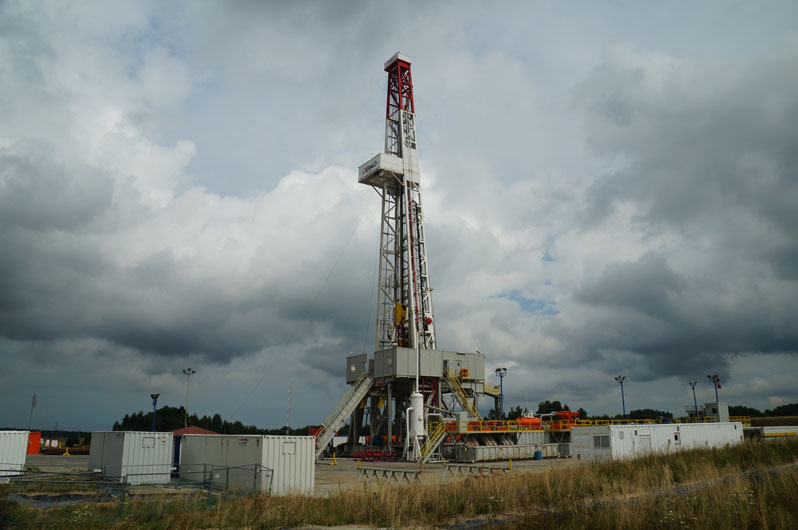
A drilling crew pumps 500 gallons of drilling fluid into a well.
Only 300 gallons come back.
Then returns fall even further.
Eventually, nothing comes back to the surface.
The pumps are still running.
Drilling fluid is still going down the drill pipe.
But somewhere underground, the fluid is disappearing into the formation.
This is called lost circulation.
It is one of the most common drilling problems and can range from a small manageable loss to a situation serious enough to stop drilling completely.
Lost circulation costs money because drilling fluid itself can be expensive.
But the larger concern is what happens to the well when the fluid level falls.
Drilling mud controls formation pressure, carries cuttings to the surface, cools the bit, and helps stabilize the wellbore.
If enough fluid is lost, several other drilling problems can quickly follow.
What Is Lost Circulation?
Lost circulation occurs when drilling fluid flows from the wellbore into the surrounding formation instead of returning normally to the surface.
During normal drilling, mud follows a circulation path.
It is pumped down the drill pipe.
It exits through the drilling bit.
It carries rock cuttings upward through the annulus.
The fluid eventually reaches the surface, where solids are removed and the mud is circulated again.
If the formation contains openings capable of accepting fluid, some of the mud can leave the normal circulation system.
The crew then sees less fluid returning than was pumped downhole.
Is Lost Circulation the Same as Fluid Loss?
The terms can sometimes be confused.
Lost circulation generally refers to drilling fluid disappearing from the wellbore into the formation in significant quantities.
Fluid loss can also describe the smaller scale movement of liquid from drilling mud into permeable rock while solids form a filter cake against the wellbore wall.
A properly designed drilling fluid can experience controlled filtration without losing the entire circulating system.
Lost circulation is a larger operational problem.
How Does the Drilling Crew Know Mud Is Being Lost?
The most obvious sign is a decrease in mud volume.
Mud tanks are monitored continuously.
If more fluid is being pumped into the well than is returning, the tank volume begins falling.
The crew may also notice reduced flow at the shale shakers.
In severe cases, returns can disappear completely.
This is called total loss of returns.
Drillers watch these changes closely because unexplained mud volume changes can indicate important downhole events.
What Are Partial Losses?
Partial losses occur when some drilling fluid still returns to the surface.
For example, the pumps may send 600 gallons per minute downhole while only 500 gallons per minute return.
The missing 100 gallons per minute is entering the formation.
Whether this can be tolerated depends on the amount of loss, mud cost, well control conditions, hole stability, and drilling program.
Small losses do not always require stopping immediately.
What Are Total Losses?
Total losses occur when essentially no drilling fluid returns to the surface.
The entire circulating volume being pumped may be entering the formation.
This is much more serious.
The crew loses normal circulation.
Rock cuttings may no longer be transported to the surface effectively.
The hydrostatic fluid column can change.
Well control can become more difficult.
Drilling usually cannot simply continue normally without addressing the situation.
Where Does the Lost Drilling Mud Go?
It enters openings in the surrounding rock.
Those openings can be extremely small or very large.
Possible loss zones include:
Natural fractures
Induced fractures
Highly permeable formations
Vugs
Cavernous rock
Weak formations
Depleted reservoirs
Fault zones
The drilling fluid follows the available pressure path.
If wellbore pressure is greater than the pressure needed to force fluid into an opening, losses can occur.
What Is a Natural Fracture?
Rock underground is not always solid and continuous.
Natural stresses can create cracks and fractures.
Some fractures are sealed by minerals.
Others remain open or partially open.
When the well intersects an open fracture, drilling fluid can enter it.
A single large fracture can sometimes accept enormous amounts of fluid.
This can cause sudden and severe losses.
What Is a Vuggy Formation?
Certain rocks contain cavities called vugs.
These openings are particularly common in some carbonate formations.
A well can drill into interconnected cavities capable of accepting large volumes of drilling fluid.
Losses in these formations can be difficult to control because the openings may be much larger than the pores found in ordinary sandstone.
Can Highly Permeable Rock Cause Lost Circulation?
Yes.
A formation does not always need a large visible fracture.
Rock with very high permeability can accept drilling fluid if the pressure conditions allow it.
The severity depends on the pore structure, fluid properties, pressure difference, and condition of the wellbore.
Some formations begin losing fluid gradually rather than suddenly.
Can the Drilling Crew Cause a Formation to Fracture?
Yes.
This is an important cause of lost circulation.
The drilling fluid creates pressure against the formation.
If the pressure becomes too high, the rock can fracture.
Drilling fluid then enters the newly created fracture.
This means lost circulation can occur even when the formation did not originally contain a large open loss path.
The well itself can create one.
Why Would Wellbore Pressure Become Too High?
Several factors contribute to bottomhole pressure.
Mud density is one.
Circulating friction is another.
Surge pressure can occur when pipe is moved downward.
Cuttings loading can increase effective fluid density.
Pressure changes can also occur during other drilling operations.
The formation responds to the total pressure it experiences, not just the mud weight listed on the mud report.
What Is Equivalent Circulating Density?
Equivalent circulating density describes the effective density represented by hydrostatic pressure plus additional pressure created while the drilling fluid is circulating.
Imagine the static mud density is 12 pounds per gallon.
While the pumps are running, friction in the annulus adds pressure.
The formation may experience pressure equivalent to a fluid heavier than 12 pounds per gallon.
That effective value is the equivalent circulating density.
This matters because a well can remain stable while the pumps are off but begin losing fluid once circulation starts.
Why Does Pump Rate Affect Lost Circulation?
Higher circulation rates generally create more friction.
More friction increases pressure in the annulus.
That increases bottomhole circulating pressure.
If formation fracture pressure is close to the existing wellbore pressure, increasing pump rate can be enough to initiate losses.
This is why a drilling crew may reduce circulation rate after observing losses.
The goal is sometimes to remain below the pressure the weak formation can tolerate.
What Is Formation Fracture Pressure?
Formation fracture pressure is the pressure at which the surrounding rock begins to fracture or existing fractures begin opening sufficiently to accept fluid.
Different formations have different strengths.
A strong formation may tolerate relatively high wellbore pressure.
A weak formation may begin taking fluid at much lower pressure.
Drilling engineers need to understand this limit when selecting mud weight and planning casing depths.
What Is the Drilling Window?
The drilling window is the pressure range in which the well can be drilled safely.
At the lower end is the pressure required to control formation fluids and maintain well stability.
At the upper end is the pressure the formation can tolerate before significant losses or fracturing occur.
The drilling team needs to stay between these limits.
Too little pressure can allow a kick.
Too much pressure can cause lost circulation.
Some wells have a comfortable drilling window.
Others have an extremely narrow one.
Why Are Depleted Reservoirs Prone to Losses?
A depleted reservoir has lost some of its original pressure through previous production.
Suppose the surrounding formations still require relatively heavy mud for well control.
The depleted reservoir may now have much lower pressure.
When the well enters that zone, the pressure of the drilling fluid can be significantly higher than reservoir pressure.
Fluid may then enter the depleted formation.
This can create a difficult drilling problem because reducing mud weight might create well control problems in another formation.
Can Lost Circulation Cause a Kick?
Yes.
This may seem contradictory.
Lost circulation means fluid is leaving the well.
A kick means formation fluid is entering it.
But one can lead to the other.
If enough drilling fluid is lost, the fluid level in the well can fall.
When the fluid column becomes shorter, hydrostatic pressure decreases.
A different formation may then have enough pressure to flow into the well.
The crew could be losing mud into one zone while taking a kick from another.
This is one reason severe lost circulation is a well control concern.
Why Is Hydrostatic Pressure Important?
A column of drilling fluid has weight.
That weight creates pressure at the bottom of the well.
The deeper the fluid column and the denser the fluid, the greater the hydrostatic pressure.
Now imagine the fluid level falls hundreds of feet because mud is disappearing underground.
There is less fluid column above the bottom of the well.
Hydrostatic pressure decreases.
If it falls below formation pressure, reservoir fluids can enter.
Can Lost Circulation Cause a Blowout?
Severe losses can contribute to conditions that lead to loss of well control.
Lost circulation itself is not a blowout.
But if the resulting decrease in hydrostatic pressure allows gas or another formation fluid to enter the well and that influx is not controlled, the situation can escalate.
Drilling crews therefore treat significant unexplained losses seriously.
The challenge becomes controlling both the loss zone and any formations capable of flowing.
Why Does Lost Circulation Cause Stuck Pipe?
Drilling mud carries rock cuttings upward.
When circulation is lost, cuttings transport can become less effective.
Cuttings may accumulate around the drill string.
Formation material can also become unstable.
The pipe can become packed off or mechanically trapped.
In some cases, loss of fluid can contribute to changes in wellbore pressure that destabilize the hole.
Lost circulation therefore increases the risk of other expensive drilling problems.
What Is a Pack Off?
A pack off occurs when material accumulates around the drill string and restricts the annular flow path.
Cuttings are a common cause.
If drilling continues without adequate hole cleaning, solids can build up.
Pump pressure may rise.
Pipe movement may become more difficult.
Eventually, the drill string can become stuck.
Loss of normal circulation makes effective hole cleaning harder.
Can Lost Circulation Cause the Wellbore to Collapse?
It can contribute.
Drilling fluid pressure helps support some formations.
If the fluid level drops significantly, the pressure supporting the wellbore can decrease.
Certain weak or unstable formations may begin falling into the hole.
Pieces of rock can accumulate around the drill string.
Severe instability can create stuck pipe and make the well difficult to recover.
Why Is Lost Circulation Expensive?
The first obvious cost is drilling fluid.
Specialized drilling mud can contain expensive chemicals and weighting materials.
Losing hundreds or thousands of barrels of fluid underground can be costly.
But mud cost may be small compared with the time lost.
A drilling rig can cost a large amount of money every day.
If drilling stops for several days while the crew attempts to cure losses, the total cost can escalate quickly.
What Is Lost Circulation Material?
Lost circulation material is added to drilling fluid in an attempt to plug or bridge openings that are accepting fluid.
It is commonly abbreviated as LCM.
The idea is similar to plugging holes in a filter.
Particles enter the loss pathway.
Larger particles bridge across openings.
Smaller particles fill the spaces between them.
A seal develops and reduces further fluid loss.
What Is Lost Circulation Material Made Of?
Many materials can be used depending on the situation.
Examples can include:
Fibrous materials
Flakes
Granular particles
Calcium carbonate
Cellulose based materials
Graphite based materials
Special blends
Engineered particles
Different particle sizes are often combined.
One uniform particle size may not seal a complex fracture effectively.
Why Are Different Particle Sizes Used?
Imagine trying to block a large opening using only fine sand.
The grains may simply flow through.
Now imagine using only large particles.
They may bridge the opening but leave gaps between them.
Combining large, medium, and fine particles can create a better seal.
Large particles help create the bridge.
Smaller particles fill the remaining spaces.
This particle size distribution is important when designing a lost circulation treatment.
What Is a Lost Circulation Pill?
A pill is a relatively small volume of specially prepared drilling fluid designed for a specific treatment.
A lost circulation pill contains a concentrated blend of materials intended to seal the loss zone.
The pill is pumped to the suspected location.
It may then be positioned or squeezed according to the treatment procedure.
The crew observes whether losses decrease afterward.
How Does the Crew Know Where the Loss Zone Is?
Sometimes the timing makes it obvious.
The well begins losing fluid immediately after drilling into a particular depth.
The latest formation drilled becomes the main suspect.
In other cases, the location is less certain.
Losses can occur higher in the open hole.
Changes in pressure and circulation may reopen an older weak zone.
Engineers use drilling history, formation information, pressure behavior, and other data to estimate where fluid is being lost.
What Does It Mean to Spot an LCM Pill?
Spotting means placing the treatment fluid at a selected location in the well.
The crew pumps the pill down the drill string and displaces it until it reaches the suspected loss interval.
The treatment then has a better chance of entering and sealing the relevant openings.
Simply mixing lost circulation material into the entire active mud system may not always be the most efficient approach.
Can LCM Plug the Drilling Equipment?
Yes.
This is one of the challenges.
Material large enough to plug formation fractures can also plug small openings in drilling equipment.
The drilling bit contains nozzles.
Downhole tools can contain restricted passages.
Mud pulse telemetry systems can be sensitive to solids.
The lost circulation treatment therefore needs to consider what equipment is currently in the hole.
Can Lost Circulation Material Damage the Reservoir?
It can be a concern when treatment material enters a productive formation.
Particles may plug pore spaces or fractures that would otherwise contribute to production.
This is particularly important in reservoir sections intended for later completion.
Material selection may consider whether the treatment can later dissolve or be removed.
Sometimes controlling the immediate drilling problem takes priority, but formation damage remains part of the engineering decision.
Why Is Calcium Carbonate Used in Some Lost Circulation Treatments?
Calcium carbonate can be useful because particles are available in different sizes and can help bridge openings.
It also has the advantage that it can be dissolved with acid in suitable applications.
That can make it attractive when temporary plugging is desired near a productive formation.
Whether it is appropriate depends on the well and drilling fluid system.
What Is a Cement Plug for Lost Circulation?
When conventional lost circulation materials cannot stop severe losses, cement may be used.
A volume of cement is placed across the loss interval and allowed to set.
The hardened material can seal fractures or weak zones.
The well may then be drilled through the cement and drilling resumes.
This is a more significant intervention than adding ordinary lost circulation material.
It also requires additional rig time.
Does Pumping Cement Always Stop Losses?
No.
A severe loss zone can sometimes accept cement before it sets where intended.
Placement can be difficult.
The formation may contain large fractures or cavities.
The treatment may need to be repeated.
Specialized cement systems can be designed for lost circulation conditions, but there is no guarantee that one treatment will solve every problem.
What Is a Gunk Squeeze?
In some drilling operations, specialized reactive mixtures have historically been used to create a rapidly forming plug in or near a loss zone.
Different systems and terminology exist.
The basic concept is to place materials that react or thicken when they contact one another or the drilling fluid.
These treatments require careful planning because premature reaction can create serious problems inside the drill string or surface equipment.
What Is Wellbore Strengthening?
Instead of waiting until severe losses occur, engineers can sometimes treat the wellbore to increase the pressure it can tolerate.
This approach is known as wellbore strengthening.
Specially selected particles are circulated with the intention of sealing small fractures near the wellbore.
The objective is to increase the effective pressure limit before major fluid losses develop.
This can be particularly useful where the drilling window is narrow.
How Can Reducing Mud Weight Help?
Lower mud density reduces hydrostatic pressure.
If the formation is losing fluid because wellbore pressure is too high, reducing mud weight can decrease the pressure driving the loss.
But this cannot be done casually.
The mud still needs to provide enough pressure for well control and stability.
Reducing density too far can create a kick.
The entire pressure window has to be considered.
How Can Reducing Pump Rate Help?
Lower pump rate generally reduces annular friction pressure.
That lowers equivalent circulating density.
If the losses only occur while circulating, reducing the rate may bring bottomhole pressure below the formation loss limit.
The disadvantage is that lower flow can reduce hole cleaning.
The drilling team therefore has to balance pressure control with the need to transport cuttings.
Why Can Pipe Movement Make Losses Worse?
Moving pipe affects pressure.
Running pipe downward can create a surge.
The pipe acts somewhat like a piston, forcing fluid to move.
If it is moved too quickly, bottomhole pressure can temporarily increase.
In a weak formation, that extra pressure may initiate or worsen losses.
Pulling pipe can create the opposite pressure effect.
These transient pressures matter in narrow drilling windows.
What Is a Leak Off Test?
After casing is cemented and drilling resumes below the casing shoe, engineers may perform a test to evaluate the pressure the exposed formation can tolerate.
Fluid is pumped carefully while pressure is monitored.
The response provides information related to formation integrity.
This helps engineers determine safe pressure limits for the next drilling section.
What Is a Formation Integrity Test?
A formation integrity test also evaluates whether the formation below the casing shoe can withstand a specified pressure.
The exact objective and procedure can differ from a leak off test.
In practical terms, both are used to gain confidence that the next section can be drilled within the planned pressure range.
This information becomes important when determining maximum allowable mud conditions.
Why Does the Casing Shoe Matter During Lost Circulation?
The formation immediately below the casing shoe may be one of the weaker exposed points in the well.
As the well becomes deeper, more mud may be required to control formation pressure.
Eventually the required pressure may approach what an earlier weak formation can tolerate.
Engineers may then need another casing string.
Casing isolates weaker formations so drilling can continue with a different pressure requirement below.
Why Is Casing Set in Multiple Stages?
One reason is that formation pressures and strengths change with depth.
Suppose a shallow formation can only tolerate relatively low pressure.
A deeper formation requires much heavier mud.
Trying to drill both with the same open hole could be impossible.
The shallow section may fracture before the mud becomes heavy enough to control the deeper section.
Casing isolates the shallow formation.
Drilling then continues below it.
Can Lost Circulation Happen While Cementing?
Yes.
Cement slurry also creates hydrostatic and friction pressure.
A weak formation may begin accepting cement or other fluids during a cement job.
This can result in lower cement placement than planned.
The cement program therefore considers formation strength and equivalent circulating density.
Lost circulation is not only a drilling mud problem.
Can Lost Circulation Happen During Well Completions?
Yes.
Any operation that places fluid pressure against a formation can potentially experience losses.
Completion brines can be lost.
Workover fluids can be lost.
Fluids pumped during intervention can disappear into fractures.
The consequences vary depending on the operation.
The same basic principle remains.
Fluid follows a pathway when wellbore pressure exceeds what that formation or pathway can contain.
What Is Lost Return Material Versus LCM?
In field conversation, terms can vary.
Lost circulation material and lost return material may both refer to substances added to reduce fluid losses.
LCM is the more widely recognized abbreviation in drilling.
Specific product names differ between service companies and regions.
The important thing is to understand what the treatment is expected to do.
It must bridge, seal, or otherwise reduce flow into the loss zone.
Why Do Some Wells Drill With Planned Losses?
In certain formations, completely preventing fluid loss may be impractical or uneconomic.
A drilling program can sometimes be designed to tolerate losses under controlled conditions.
This requires suitable well control planning and fluid supply.
The approach depends heavily on the formation and the risks involved.
Accepting planned losses is very different from unexpectedly losing circulation without a strategy.
What Is Blind Drilling?
Blind drilling generally refers to continuing drilling without normal returns to the surface.
Fluid is pumped downhole, but the returning circulation path is absent because the fluid is being lost into the formation.
This is not suitable for every situation.
Hole cleaning becomes difficult to evaluate.
Cuttings are not returning normally.
Well control requires careful consideration.
The decision to continue depends on the specific well and drilling program.
Where Do the Cuttings Go During Blind Drilling?
If there are no returns to surface, cuttings can enter the same loss zones accepting the drilling fluid.
Some may remain in the wellbore.
The effectiveness of cuttings removal becomes less certain.
This is one reason blind drilling requires careful planning.
Accumulating solids can contribute to stuck pipe and other problems.
Can Water Be Used Instead of Expensive Drilling Mud During Severe Losses?
Sometimes drilling programs use less expensive fluids when large losses are expected.
Whether this is possible depends on well control requirements, formation stability, equipment, environmental requirements, and the drilling objective.
A fluid that saves money but causes the hole to collapse is not actually cheaper.
The entire well system must be considered.
Why Are Lost Circulation Problems Hard to Predict?
Drilling data can provide clues about formation pressure and rock type.
Offset wells can reveal where losses occurred previously.
Seismic and geological information can identify faults or fractured formations.
But the subsurface is never known perfectly.
One well may encounter a major open fracture while another nearby well does not.
A small geological difference can produce a large operational difference.
Do Nearby Wells Help Predict Lost Circulation?
Yes.
Offset well information can be extremely valuable.
Drilling engineers review where previous wells experienced losses.
They examine mud weights.
Depths.
Formation types.
Treatment volumes.
Casing points.
Successful treatments.
If several nearby wells lost circulation in the same formation, the next drilling program can prepare for the problem before reaching it.
Why Do Some Lost Circulation Treatments Fail?
The treatment may use particles that are too small.
The opening may be too large.
The loss zone may not be where the crew thinks it is.
The material may be unable to reach the target.
The treatment can be diluted.
Wellbore pressure may immediately reopen the sealed fracture.
Or the formation may contain a complex network of pathways rather than one simple opening.
Lost circulation is often a geometry problem as much as a fluid problem.
Why Can Losses Return After They Seem to Be Fixed?
A treatment may temporarily seal the formation.
Then drilling resumes.
Circulating pressure increases.
Pipe movement creates additional pressure.
The well becomes deeper.
Mud properties change.
The seal can fail or a new fracture can open.
The crew then sees losses again.
This is why engineers monitor the well closely even after circulation has apparently been restored.
What Does the Driller Do When Returns Suddenly Drop?
The exact response follows the well program and operating procedures.
In general, the crew needs to recognize the change immediately and determine what is happening.
They monitor pit volume.
Check flow.
Observe pump pressure.
Communicate the event.
Consider well control implications.
The important point is that a sudden loss of returns is not treated as a minor inconvenience.
It can be the first indication of a changing downhole pressure condition.
What Does a Mud Engineer Do During Lost Circulation?
The mud engineer helps evaluate and prepare the drilling fluid treatment.
They may recommend or mix lost circulation materials according to the agreed program.
They monitor fluid properties.
They track volume losses.
They help ensure sufficient drilling fluid is available.
They also need to understand how treatment materials may affect the existing mud system.
A large lost circulation event can consume enormous amounts of fluid quickly.
What Does the Drilling Engineer Do?
The drilling engineer considers the larger well design and pressure problem.
Questions can include:
Where is the loss zone?
What pressure initiated the loss?
Can mud weight be changed safely?
Can pump rate be reduced?
What treatment should be attempted?
Is casing needed sooner than planned?
Can drilling continue with losses?
What are the well control consequences?
The answer may involve several disciplines rather than one simple field action.
What Should Someone New to Drilling Remember About Lost Circulation?
The easiest way to understand lost circulation is to picture the normal mud loop.
Mud leaves the tanks.
It travels down the drill pipe.
It exits the bit.
It comes back to the surface through the annulus.
Lost circulation means that loop has developed a leak underground.
The formation is taking some or all of the drilling fluid.
The immediate challenge is stopping the leak.
The larger challenge is maintaining a stable and controlled well while doing it.
Frequently Asked Questions
What is lost circulation in drilling?
Lost circulation occurs when drilling fluid flows from the wellbore into the surrounding formation instead of returning normally to the surface.
What causes lost circulation?
Common causes include natural fractures, weak formations, highly permeable rock, cavities, depleted reservoirs, and fractures created when wellbore pressure becomes too high.
How do drillers know they are losing circulation?
Common indications include falling mud pit volume, reduced returns at the surface, and in severe cases complete loss of returns.
What are partial losses?
Partial losses occur when some drilling fluid returns to the surface while another portion is lost into the formation.
What are total losses?
Total losses occur when essentially all of the pumped drilling fluid disappears into the formation and normal surface returns stop.
What is LCM in drilling?
LCM stands for lost circulation material. It includes particles and other materials added to drilling fluid to help bridge and seal openings that are accepting fluid.
What is an LCM pill?
An LCM pill is a concentrated volume of treatment fluid containing lost circulation material that is pumped and positioned near a suspected loss zone.
Can lost circulation cause a kick?
Yes. Severe losses can lower the fluid level and reduce hydrostatic pressure, potentially allowing another pressurized formation to flow into the well.
Can lost circulation cause stuck pipe?
Yes. Poor hole cleaning, unstable formations, accumulated cuttings, and other conditions associated with losses can increase stuck pipe risk.
Why does high mud weight cause lost circulation?
Higher mud density creates greater hydrostatic pressure. If wellbore pressure exceeds what a weak formation can tolerate, the formation can fracture and begin taking fluid.
Can high pump rate cause losses?
It can contribute because higher circulation rates generally increase friction pressure and equivalent circulating density.
What is equivalent circulating density?
Equivalent circulating density represents the effective pressure exerted on the formation while drilling fluid is circulating, including both hydrostatic pressure and annular friction effects.
How is lost circulation stopped?
Possible methods include reducing pressure where safe, pumping lost circulation material, placing specialized pills, using cement, strengthening the wellbore, or changing the drilling and casing plan.
Can cement be used to stop lost circulation?
Yes. Severe loss zones can sometimes be sealed by placing cement across the affected interval and allowing it to set before drilling resumes.
What is blind drilling?
Blind drilling is drilling without normal returns to the surface because the circulating fluid is being lost into the formation.
Why are depleted reservoirs prone to lost circulation?
Their pressure may have fallen because of previous production. Drilling fluid pressure can therefore be much higher than reservoir pressure, encouraging fluid to enter the formation.
Is lost circulation dangerous?
It can be. In addition to cost and drilling delays, severe losses can reduce hydrostatic pressure, create well control problems, worsen hole instability, and increase the risk of stuck pipe.
Does lost circulation always mean the formation is fractured?
No. Fluid can also enter naturally permeable formations, cavities, vugs, depleted reservoirs, or other openings.
What is the difference between lost circulation and a kick?
Lost circulation means drilling fluid is leaving the wellbore and entering the formation. A kick means formation fluid is entering the wellbore. Under some conditions, both can occur during the same event.