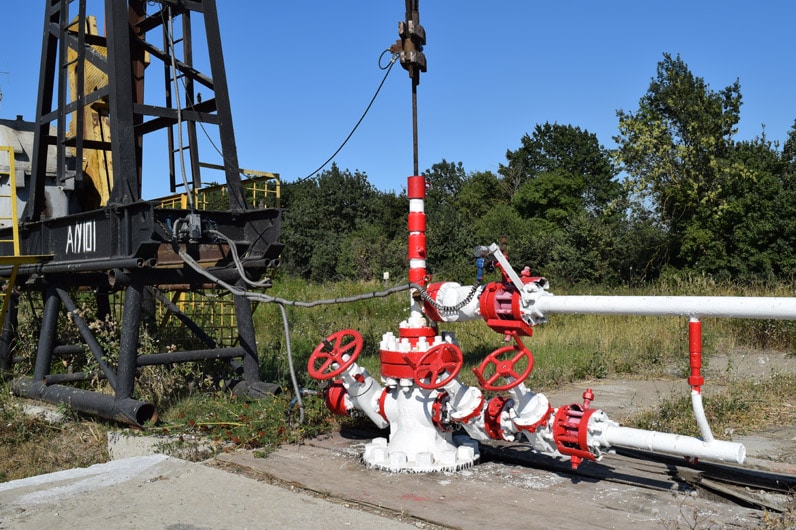
Wireline is one of the most frequently mentioned oilfield services and one of the least obvious to people outside the industry.
A job advertisement may ask for a wireline operator, wireline assistant, slickline operator, or wireline field engineer.
But what are these people actually doing?
In simple terms, wireline crews use specialized cable or wire to lower tools thousands of feet into oil and gas wells.
Those tools can measure the well.
Set or retrieve downhole equipment.
Open or close devices.
Collect information.
Locate problems.
And in some operations, perforate steel casing so the reservoir can communicate with the well.
The work combines heavy field equipment with surprisingly precise downhole operations.
For someone trying to enter oil and gas, wireline can also provide a useful introduction to wellheads, pressure control, downhole tools, depth measurement, completions, and well intervention.
What Is Wireline in Oil and Gas?
Wireline refers broadly to operations where tools are lowered into a well using a spool of cable or wire.
At the surface, the line is stored on a large powered drum.
The line travels from the drum through surface equipment and into the well.
The operator carefully controls how much line enters the well.
Because the depth of the line is measured, the crew can position tools at selected locations underground.
That sounds simple until you consider that the target may be several thousand feet below the surface.
The operator cannot see the tool.
Everything depends on measurements, procedures, tool response, and an understanding of the well.
Is Wireline the Same as Slickline?
Not exactly.
Slickline uses a single solid metal wire.
It is mechanically simple and is commonly used for operations such as setting and retrieving certain downhole devices.
Electric wireline uses a cable capable of transmitting electrical signals or power.
This allows sophisticated downhole instruments to communicate with equipment at the surface.
The distinction matters because the jobs that can be performed are different.
What Is Electric Wireline?
Electric wireline uses a cable containing electrical conductors.
Downhole tools can send measurements to the surface.
Surface equipment can also send commands or power to the tools.
This makes electric wireline suitable for many logging and completion operations.
The crew may be able to see measurements while the tool is moving through the well.
Instead of simply lowering a mechanical device, the crew is operating an underground measurement system.
What Is Slickline Used For?
Slickline is commonly used for mechanical well intervention.
Depending on the completion and equipment, slickline operations can include retrieving downhole devices, setting plugs, operating sliding sleeves, checking depths, removing deposits, and performing other relatively light intervention tasks.
The tool string is manipulated by moving the wire up and down.
The operator uses surface indications and experience to understand what the downhole tools are doing.
There may be no camera showing what is happening.
That is part of the skill.
What Does a Wireline Operator Actually Do?
The exact duties depend on the type of wireline company and operation.
A field operator may:
Drive equipment to the wellsite
Rig up the wireline unit
Prepare downhole tools
Connect pressure control equipment
Assist with pressure testing
Operate the wireline drum
Monitor line depth
Monitor line tension
Maintain equipment
Inspect the cable
Help assemble tool strings
Record operational information
Rig equipment down
Clean and service tools
The more experienced the operator becomes, the more responsibility they may have for the actual downhole operation.
What Is a Wireline Truck?
Many land based wireline units are mounted on trucks.
The unit contains the drum holding the wireline or cable.
It also contains controls used to operate the winch.
Electric wireline units can include computers and electronic systems for communicating with downhole tools.
The vehicle therefore acts as both transportation and a mobile operating station.
Other configurations are used offshore and in locations where a conventional truck cannot be positioned near the well.
What Is the Wireline Drum?
The drum stores thousands of feet of line.
A powered system turns the drum to lower or retrieve the tool string.
The operator controls speed carefully.
The line is not simply released into the well.
The weight of the tools, fluid conditions, well deviation, pressure, friction, and other factors affect line behavior.
Poor control can damage the cable or create downhole problems.
Why Is Depth Measurement So Important?
Suppose an engineer wants a tool positioned at 8,200 feet.
Being approximately close is not necessarily good enough.
A completion may contain several important components separated by relatively short distances.
Perforations may need to be placed at specific depths.
A plug may need to land in a specific profile.
A logging measurement needs an accurate depth reference.
Wireline systems therefore measure line movement carefully.
Depth control is one of the central skills of the service.
How Does the Crew Know Where the Tool Is?
Surface equipment measures how much line has moved into or out of the well.
The crew also uses known depth references and information about the completion.
Corrections may be needed because the line does not behave like a perfectly rigid measuring tape.
Cable stretch can matter.
Tool weight matters.
Well conditions matter.
Accurate depth correlation becomes especially important during operations where a small positioning error could place equipment in the wrong interval.
What Is Line Tension?
The wireline operator monitors the force on the line.
This provides useful information about what is happening underground.
If tension suddenly increases, the tool may be encountering resistance.
If tension decreases unexpectedly, something else may have changed.
The operator learns to recognize normal and abnormal patterns.
Pulling harder is not automatically the correct response.
Too much force can damage the line, tool, or downhole equipment.
Can Wireline Tools Get Stuck?
Yes.
A tool string can encounter restrictions.
Debris can be present.
Scale can narrow the tubing.
Well geometry can create difficulties.
Pressure differences can affect movement.
The tool can become mechanically caught.
Highly deviated wells can create additional challenges because gravity no longer pulls the tool directly toward the bottom as effectively.
A stuck tool can turn a routine operation into a significant fishing job.
What Is Fishing?
Fishing means retrieving equipment that has become stuck, broken, or lost in the well.
The unwanted object is commonly called a fish.
Specialized tools can be run to engage and retrieve it.
Fishing can become expensive because the well may be unavailable for normal operations until the obstruction is removed.
Preventing lost equipment is therefore much better than retrieving it afterward.
What Is a Tool String?
The downhole equipment connected to the end of the wireline is assembled into a tool string.
The exact configuration depends on the job.
A mechanical slickline string may contain devices that provide weight and allow the operator to deliver controlled impacts.
An electric wireline string may contain sophisticated sensors, electronics, telemetry components, and other specialized equipment.
The tool string is selected for the specific objective.
What Are Jars?
Jars are tools used to create an impact downhole.
Imagine trying to pull a mechanical device free thousands of feet below the surface using a thin wire.
Steady pulling force may not be enough.
A jar allows energy to be delivered as an impact.
This can help set, release, or retrieve certain downhole equipment.
Using jars effectively requires understanding the tool and the operation.
What Is a Wireline Lubricator?
A lubricator is a pressure containing section installed above the wellhead.
It provides space for the wireline tool string while the well remains under pressure.
This is extremely important.
Without appropriate pressure control equipment, opening a producing well to insert tools could allow well fluids to escape.
The lubricator allows the tools to be introduced and retrieved while maintaining control of well pressure.
Why Is the Lubricator So Tall?
The complete tool string has to fit inside it.
Suppose the downhole assembly is 20 feet long.
You need enough pressure containing space above the closed well barrier to accommodate that assembly.
Some tool strings are much longer.
This is why wireline rig ups can include tall vertical sections of pressure control equipment above the Christmas tree.
What Is a Stuffing Box?
In slickline operations, a stuffing box can provide a seal around the moving wire at the top of the pressure control equipment.
The wire needs to move into and out of the well while pressure remains contained.
Creating a seal around something that is continuously moving is more difficult than sealing a stationary connection.
The stuffing box is designed for this purpose.
What Is a Grease Injection Head?
Electric wireline cable can have a more complex external shape than slickline.
Certain pressure control systems use grease injection to create a pressure seal around the moving cable.
Grease is pumped through the control head under suitable conditions.
The arrangement allows the cable to move while helping contain well pressure.
This is another reason wireline work involves much more than simply lowering a cable into a hole.
What Is a Wireline BOP?
Wireline operations can use specialized blowout preventer equipment as part of the pressure control stack.
It provides a way to close around the line under specified conditions.
Different pressure control components provide different functions.
The equipment arrangement depends on the operation, pressure, line type, and well conditions.
Pressure control is one of the most important parts of wireline work.
Why Is Pressure Testing Required?
Before entering a live well, the pressure control equipment needs to be prepared and tested according to the required procedure.
Connections can look correct while still leaking under pressure.
Testing helps verify the integrity of the assembled system.
This is particularly important because workers may be positioned near the equipment during the operation.
A failure in pressure containing equipment can release substantial stored energy.
Does Wireline Work Require the Well to Be Shut Down?
Sometimes.
But one of the advantages of certain wireline operations is that tools can be run into a well that still has pressure.
Pressure control equipment makes this possible.
Whether the well is flowing, shut in, or otherwise configured depends on the operation.
The crew follows the approved program for that particular job.
You cannot assume every wireline operation uses the same well condition.
What Is Well Logging?
Well logging means collecting measurements about the well or surrounding formations as a tool travels through the borehole.
Different tools measure different physical properties.
Logging can help determine:
Rock characteristics
Fluid saturation
Porosity
Formation boundaries
Casing condition
Cement condition
Temperature
Pressure
Flow behavior
The term logging covers many different technologies.
A logging tool is essentially an instrument sent underground to collect information that cannot be obtained by looking at the surface.
What Is Open Hole Logging?
Open hole logging is performed before casing has been installed across the interval being evaluated.
The logging tools can measure properties of the exposed formations.
These measurements help geologists and engineers understand what was drilled.
They can contribute to decisions about whether the interval contains hydrocarbons and how the well should be completed.
What Is Cased Hole Logging?
Cased hole logging occurs after casing has been installed.
The objectives can be very different.
Tools may evaluate cement.
They may investigate fluid movement.
They may measure production behavior.
They may assess casing condition.
They may correlate depth.
A completed well can therefore receive wireline logging many times during its life.
What Is a Cement Bond Log?
A cement bond log helps evaluate cement behind casing.
Acoustic measurements provide information related to the connection between the casing, cement, and surrounding material.
Engineers use the results as part of an evaluation of well isolation.
This can be important before completion or when investigating possible well integrity problems.
What Is Production Logging?
Production logging is performed to understand where fluids are entering or leaving a well.
Suppose a well has several sets of perforations.
Total production at the surface tells you what the entire well produces.
It does not tell you what each interval contributes.
Production logging can help identify which zones are producing oil, gas, or water.
This information can be extremely useful when deciding whether part of a completion should be treated or isolated.
What Is Perforating?
Casing and cement separate the inside of a completed well from the reservoir.
For many completion designs, openings need to be created so reservoir fluids can enter the well.
Perforating creates those flow paths.
Special perforating guns containing shaped charges are positioned at the required depth and activated under controlled conditions.
The charges create holes through the casing and cement and into the formation.
Wireline is one method used to position perforating equipment.
Does a Wireline Operator Handle Explosives?
Some wireline operations involve perforating systems and therefore regulated energetic materials.
Personnel involved require the appropriate training, authorization, procedures, and controls.
Not every wireline operator performs perforating work.
Some crews specialize in mechanical slickline.
Others focus on logging.
Job duties vary substantially between service lines.
Anyone applying for a wireline position should find out exactly what type of operations that company performs.
Why Is Perforating Depth So Important?
Imagine two reservoir intervals separated by a water bearing zone.
The engineer wants the productive oil interval perforated.
If the gun is positioned incorrectly, the wrong formation could be opened.
Accurate depth control is therefore critical.
Wireline crews use depth correlation techniques to ensure the tool is positioned where the program requires.
This is one reason careful measurement matters more than speed.
What Happens After a Perforating Gun Fires?
The charges create flow paths through the casing and cement.
Depending on well pressure and operating conditions, reservoir fluids may then begin entering the well.
The gun has to be retrieved or managed according to the completion design.
The crew verifies the operation and follows the planned pressure control procedure.
Perforating is a short event surrounded by a much longer process of preparation, positioning, verification, and safe recovery.
What Is a Logging Engineer?
A wireline logging engineer has responsibility for the technical execution and interpretation of certain logging operations.
The engineer may prepare tools, operate acquisition systems, verify data quality, communicate with the customer, and produce field results.
The position usually requires more technical education than an entry level operator role.
The operator and engineer work closely together.
One cannot perform effectively without reliable surface equipment and field execution from the other.
What Is the Difference Between a Wireline Operator and a Wireline Engineer?
The distinction varies by company.
Generally, operators focus more heavily on field equipment, rigging, winch operation, maintenance, and physical execution.
Engineers or field specialists may carry greater responsibility for tool configuration, data acquisition, technical decisions, and customer reporting.
With experience, the boundaries can overlap.
A strong operator often develops considerable technical knowledge.
Is Wireline Physically Demanding?
It can be.
Rigging pressure control equipment can involve heavy components.
Tools have to be prepared and moved.
The crew works outdoors.
Weather can be severe.
Long shifts are common during active operations.
Equipment needs cleaning and maintenance.
There can also be significant driving between locations.
Some parts of the job are highly technical.
That does not eliminate the physical work required to get the equipment ready.
Is There a Lot of Waiting in Wireline?
Yes, depending on the operation.
Oilfield service companies frequently depend on other crews.
The drilling rig may not be ready.
Another completion operation may be delayed.
The well may need to be prepared.
The crew can spend hours waiting for its part of the operation.
Then the call comes and everyone needs to be ready.
This combination of waiting and sudden activity is common across many oilfield service jobs.
How Long Are Wireline Shifts?
Schedules vary widely.
Some crews work rotations.
Others work call based schedules.
A job can continue for many hours if the operation takes longer than expected.
Offshore schedules are different from many land operations.
Some specialized operations have relatively predictable planning while others respond to changing field requirements.
Candidates should ask employers directly about schedules rather than assuming all wireline jobs follow the same rotation.
Does Wireline Require a Commercial Driving Licence?
For some land based operator positions, commercial driving qualifications can be extremely useful or required.
Wireline trucks and support equipment need to reach the wellsite.
An employee who can operate the required vehicles may have more value to the crew.
Exact requirements depend on the region and employer.
Current job advertisements are the best guide to what employers in a particular area expect.
Can You Get a Wireline Job With No Oilfield Experience?
Yes, some companies hire entry level assistants or operators.
Mechanical ability can help.
Industrial experience can help.
Commercial driving qualifications can help.
A strong safety record matters.
Employers also want people who understand what the lifestyle involves.
Someone who says they want an oilfield job but cannot work nights, travel, or tolerate unpredictable schedules may not be suited to many field wireline positions.
What Should You Learn Before a Wireline Interview?
Understand the basic purpose of wireline.
Know the difference between slickline and electric wireline.
Understand what a wellhead is.
Know why pressure control equipment is required.
Understand line of fire.
Know that depth and line tension are important.
Understand that some wireline operations involve logging while others involve mechanical intervention or perforating.
You do not need to pretend you can operate the equipment.
Showing that you understand the basic operation demonstrates genuine interest.
What Questions Might You Be Asked?
An entry level interview may include questions such as:
Why do you want to work in wireline?
Are you comfortable working long hours?
Can you travel?
Can you work nights?
What does line of fire mean?
What would you do if you saw a leaking pressure connection?
What would you do if you did not understand an instruction?
Do you have mechanical experience?
Are you comfortable working around heavy equipment?
Can you follow detailed procedures?
The employer is often testing judgment and reliability more than advanced petroleum knowledge.
Why Is Attention to Detail Important?
A wireline operation may depend on relatively small measurements.
Depth must be correct.
Tool configuration must be correct.
Connections must be correct.
Pressure control equipment must be correct.
The correct tool needs to be run.
The correct well information needs to be used.
A careless mistake at the surface can become a very expensive problem several thousand feet underground.
Attention to detail is therefore not just a desirable personality trait.
It has direct operational value.
What Is Line of Fire in Wireline Work?
Pressure control equipment contains stored energy.
Wireline itself can also be under substantial tension.
Heavy equipment is moved during rig up.
Tools are lifted vertically.
Vehicles move around the location.
Workers need to think about where energy would travel if something failed.
Where would the line move if it broke?
Where would pressure escape if a connection failed?
Where would a suspended component fall?
That way of thinking is central to field safety.
Why Is a Tensioned Wire Dangerous?
A wire under tension stores energy.
If it breaks, that energy can be released rapidly.
Workers therefore avoid positioning themselves where a failed line could strike them.
The exact hazards depend on the equipment and operation.
The general principle is simple.
Something thin does not necessarily mean something harmless.
What Happens If the Line Breaks Downhole?
The tool string may remain in the well.
Part of the line may also remain.
The operation then becomes a recovery problem.
Fishing tools and specialized procedures may be needed.
The well can be unavailable for normal operations while recovery takes place.
This is why operators monitor line condition and tension carefully.
Preventing failure is far less expensive than recovering lost equipment.
Why Does Well Deviation Make Wireline Harder?
In a vertical well, gravity helps pull the tool downward.
As the well becomes more horizontal, gravity becomes less effective at moving the tool along the wellbore.
Friction becomes increasingly important.
At some point, conventional wireline may have difficulty reaching the required depth.
Alternative conveyance methods can then be considered.
How Is Wireline Used in Horizontal Wells?
Horizontal wells have created new challenges for downhole tool conveyance.
Gravity alone may not move a wireline tool far into a horizontal section.
Depending on the operation, tools can be conveyed using tractors, coiled tubing, pipe, or other specialized methods.
The correct solution depends on the tool, completion, well geometry, and objective.
Modern wireline work therefore extends far beyond lowering tools straight down a vertical hole.
What Is a Wireline Tractor?
A wireline tractor is a downhole device designed to help move a tool string through highly deviated or horizontal sections.
Instead of relying entirely on gravity, the tractor provides mechanical movement along the well.
This allows certain electric wireline operations to reach intervals that would otherwise be difficult to access.
The technology is especially useful as horizontal wells have become increasingly common.
Wireline Versus Coiled Tubing
Both can carry tools into wells, but they have different strengths.
Wireline uses cable or wire.
Coiled tubing uses continuous steel tubing.
Coiled tubing can pump fluids while it is in the well.
It can also apply different mechanical forces than wireline.
Wireline is generally lighter and can be extremely efficient for many measurement and intervention operations.
The best method depends on what needs to be accomplished downhole.
Wireline Versus MWD
These are very different services.
Measurement while drilling equipment collects information while the well is being drilled.
Wireline logging commonly collects information by running tools into the well after a drilling stage or during later well operations.
Both can provide valuable subsurface data.
The timing and method of acquisition are different.
Wireline Versus Flowback
Flowback crews manage fluids coming out of a newly completed well at the surface.
Wireline crews send tools into the well.
A flowback operator may spend much of the shift around chokes, separators, sand equipment, and tanks.
A wireline operator spends more time around winches, cables, pressure control equipment, and downhole tools.
Both work around wells.
The technical focus is very different.
Wireline Versus Cementing
Cementing crews pump engineered cement slurry into wells.
Wireline crews convey tools using cable or wire.
Cementing involves large pumping equipment, bulk materials, fluids, and casing operations.
Wireline involves depth control, downhole tools, logging, mechanical intervention, and sometimes perforating.
Someone researching entry level oilfield jobs should understand these differences before applying randomly to every service company.
What Can Wireline Experience Lead To?
Wireline can provide a strong foundation in well intervention and completions.
Possible career paths can include:
Senior operator
Crew supervisor
Wireline specialist
Logging engineer
Field service management
Completion operations
Well intervention
Technical sales
Equipment maintenance
Operations coordination
The actual path depends on education, experience, employer, and individual interests.
Is Wireline a Good Career?
It can be a good fit for someone who enjoys a combination of mechanical and technical work.
You are not only moving equipment.
You are learning what exists inside a completed well.
You see how downhole tools are positioned.
You learn pressure control.
You learn completion components.
You begin understanding how engineers diagnose underground problems without physically seeing them.
The disadvantages are familiar to many oilfield service jobs.
Long hours.
Travel.
Night work.
Waiting.
Weather.
Physical work.
Time away from home.
The technical work may be interesting while the lifestyle remains difficult.
What Makes Someone Good at Wireline?
Good operators tend to develop several habits.
They pay attention to detail.
They respect pressure.
They watch line tension.
They know the tool string.
They understand the flow path through the pressure control equipment.
They communicate clearly.
They maintain equipment.
They do not rush because another crew is waiting.
Most importantly, they try to understand what is happening underground.
Anyone can memorize which lever moves the drum.
A valuable operator understands what moving that lever is doing to a tool several thousand feet below the surface.
Frequently Asked Questions
What does a wireline operator do?
A wireline operator helps prepare and operate equipment used to lower specialized tools into oil and gas wells using cable or wire.
What is wireline used for?
Wireline can be used for well logging, depth correlation, perforating, setting and retrieving downhole equipment, production diagnostics, and other well intervention operations.
What is the difference between wireline and slickline?
Slickline normally uses a single solid metal wire for mechanical operations. Electric wireline contains conductors that allow downhole tools to communicate with or receive power from surface equipment.
Is wireline an entry level oilfield job?
Some companies hire entry level wireline assistants and operators. Requirements vary according to employer and type of operation.
Do you need a degree to become a wireline operator?
Usually not for basic operator positions. Technical and engineering roles can have different education requirements.
Is wireline hard work?
It can involve heavy equipment, long shifts, pressure control equipment, outdoor conditions, travel, maintenance, and physical rigging work.
What is a wireline lubricator?
A lubricator is pressure containing equipment installed above the wellhead that provides space for a wireline tool string while allowing well pressure to remain controlled.
Can wireline be run into a live well?
Certain wireline operations can be performed on wells containing pressure when appropriate pressure control equipment and procedures are used.
What happens if a wireline tool gets stuck?
The crew may attempt controlled recovery. If the equipment cannot be retrieved normally, specialized fishing operations may be required.
Why is line tension important?
Line tension helps operators understand what the tool is experiencing downhole and helps prevent excessive pulling forces that could damage equipment.
Does wireline involve explosives?
Some wireline crews perform perforating operations involving regulated energetic materials. Other wireline and slickline operations do not involve perforating.
Can wireline be used in horizontal wells?
Yes, although highly deviated and horizontal sections can require specialized conveyance methods because gravity alone may not move the tool to the required depth.
Is wireline better than flowback for starting an oilfield career?
They provide different experience. Wireline focuses more on downhole tools, pressure control, and well intervention. Flowback focuses more on surface production equipment and handling fluids from completed wells.
What should I know before a wireline interview?
Understand basic wireline purpose, slickline versus electric wireline, pressure control, depth measurement, line tension, wellheads, and line of fire safety. Entry level employers generally value safe judgment and willingness to learn more than advanced technical knowledge.
Can wireline experience lead to other oil and gas jobs?
Yes. The experience can be relevant to completions, well intervention, field supervision, technical services, operations, and other roles involving downhole equipment.