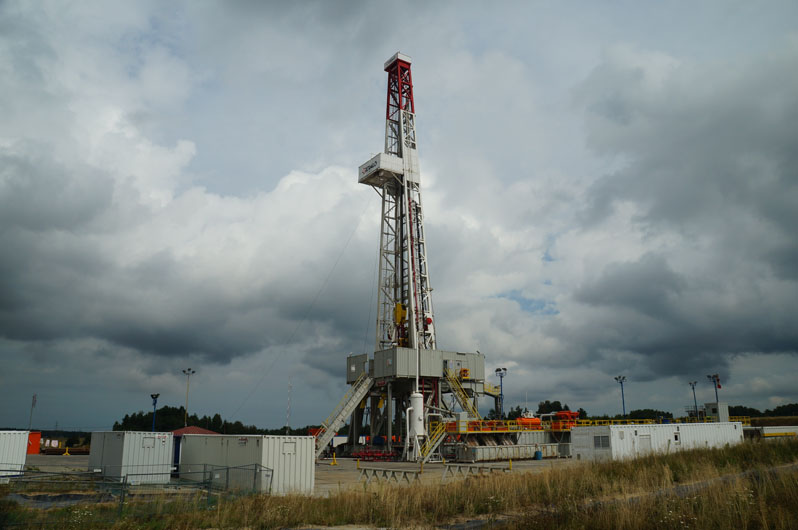
Artificial intelligence is changing the oil and gas industry.
Drilling rigs are becoming more automated.
Oil producers can monitor thousands of wells from centralized control rooms.
Advanced software can identify unusual equipment behavior, analyze production trends, and help engineers make operating decisions.
Some companies are using machine learning to predict equipment failures.
Others are developing systems that automate parts of drilling, production optimization, and maintenance planning.
For oilfield workers, this creates an important question.
Will artificial intelligence eventually replace their jobs?
If you currently work as a lease operator, drilling floorhand, hydraulic fracturing operator, maintenance technician, or field engineer, should you be concerned about automation?
And if you are just entering oil and gas, which careers are worth pursuing over the next ten or twenty years?
The answer is more complicated than simply saying that robots will replace oilfield workers.
AI and automation are likely to change many oil and gas occupations. Certain routine tasks may require fewer employees, while new technical responsibilities will emerge.
Understanding which skills remain valuable is essential for protecting your career.
Is AI Already Replacing Oilfield Workers?
Automation has been part of oil and gas operations for decades.
Processing facilities use computerized control systems.
Pipelines are monitored remotely.
Drilling rigs use electronic controls.
Producing wells may have automated pumps and remote monitoring systems.
What is changing is the ability of software to analyze large amounts of operating information and support increasingly complicated decisions.
According to the U.S. Bureau of Labor Statistics, employment of oil and gas workers is projected to grow approximately 2 percent between 2025 and 2035.
The agency identifies automated drilling technologies, robotics, remote monitoring, and productivity improvements as factors expected to limit employment growth in certain occupations.
This does not mean oilfield employment will disappear.
It suggests that companies may produce more oil and gas without increasing the number of workers at the same rate.
For example, an operator may be able to monitor more wells using remote sensors than was possible with manual inspections alone.
The company may still need experienced employees to investigate problems and perform physical work, but the number and nature of routine assignments can change.
1. Lease Operators and Routine Field Monitoring
Production operations are one area where automation can significantly change daily responsibilities.
Traditionally, lease operators travel between wellsites to inspect equipment, record tank levels, check pressures, and collect operating information.
Modern systems can transmit many of these measurements automatically.
A company may use remote sensors to monitor tank levels, well pressures, pump conditions, and production rates.
Software can identify measurements outside expected limits and direct attention toward wells needing investigation.
This may reduce some routine site visits.
However, it does not eliminate every reason to visit a well.
Equipment still fails.
Instruments can provide inaccurate readings.
Leaks, mechanical problems, maintenance activities, and other conditions may require qualified personnel at the location.
The likely change is a greater emphasis on troubleshooting, maintenance coordination, and managing exceptions rather than manually collecting every measurement.
How to Stay Competitive
Develop knowledge of artificial lift, process equipment, instrumentation, and SCADA systems.
Learn to interpret production trends and recognize when measurements may be unreliable.
An operator who understands both physical equipment and remote monitoring technology may be better positioned for increasingly automated operations.
2. Drilling Rig Jobs
Modern drilling rigs use sophisticated control systems.
Automated pipe handling, drilling parameter control, and other technologies can reduce certain repetitive manual tasks.
Some systems assist with maintaining drilling parameters and improving consistency.
However, drilling is a complicated industrial operation.
Equipment can malfunction.
Unexpected downhole conditions can develop.
Well control events require trained personnel and appropriate responses.
The drilling crew still performs important equipment, inspection, maintenance, and operational responsibilities.
The greatest risk is not necessarily that every driller will disappear.
It is that improved productivity and automation may allow certain operations to be performed with fewer people or fewer active rigs.
How to Stay Competitive
Learn the automated systems installed on your rig.
Understand the fundamentals of drilling mechanics, drilling fluids, and well control.
Develop troubleshooting and maintenance skills.
A worker who understands why equipment behaves abnormally has a stronger technical foundation than someone who knows only how to follow routine commands.
3. Hydraulic Fracturing Operators
Hydraulic fracturing involves substantial equipment monitoring and control.
Software can help manage pumping rates, pressures, equipment performance, and treatment data.
Automated systems may reduce some manual adjustments and improve consistency.
However, fracturing crews also handle equipment preparation, maintenance, pressure testing, troubleshooting, and field coordination.
These activities involve physical machinery and changing operating conditions.
Automation may alter crew responsibilities rather than eliminate the entire occupation.
Workers who only understand one routine operating task may face greater pressure as equipment becomes more automated.
Those who develop mechanical, electrical, instrumentation, or technical support skills may have broader opportunities.
4. Routine Reporting and Office Administration
Not all automation risk is concentrated in field work.
Some office activities may be easier to automate than physical oilfield operations.
AI tools can help summarize operating reports, organize documents, identify data inconsistencies, and prepare draft communications.
This may reduce the time required for certain administrative tasks.
However, operating reports still require accurate information and appropriate review.
A generated summary cannot independently establish that a measurement is correct or that a recommended action is safe.
Employees who understand the underlying operation remain important.
The strongest administrative and technical professionals will increasingly need to combine software skills with industry knowledge and sound judgment.
5. Production Engineering and Technical Analysis
AI may also change engineering work.
Machine learning can help identify production patterns, evaluate operating data, and support equipment performance analysis.
Engineers may use advanced software to compare development scenarios or identify wells needing attention.
But generating an analysis is not the same as taking professional responsibility for an engineering decision.
Reservoir behavior is uncertain.
Equipment has operating limitations.
Engineering decisions must account for safety, economics, regulations, and the quality of available information.
AI tools can support these activities, but their outputs require appropriate verification.
Engineering professionals who understand the physical systems and can critically evaluate analytical results will remain important.
Which Oil and Gas Jobs May Be More Resistant to Automation?
No occupation is completely protected, but certain responsibilities are more difficult to automate.
Industrial Instrumentation Technicians
Automated facilities depend on sensors, control valves, transmitters, and control systems.
These devices require installation, calibration, troubleshooting, and maintenance.
As automation becomes more sophisticated, qualified instrumentation personnel may take on increasingly technical responsibilities.
Industrial Electricians
Electrical systems must be installed and maintained by appropriately qualified personnel.
Motors, power systems, variable frequency drives, and related equipment can develop faults requiring physical investigation.
Mechanical Maintenance Technicians
Compressors, pumps, engines, turbines, and other machinery still experience physical wear and mechanical failures.
AI may help identify problems earlier, but equipment often requires inspection and repair.
Automation and Control Systems Specialists
Facilities need people who understand programmable logic controllers, industrial networks, process control, and SCADA systems.
These roles can also provide opportunities outside oil and gas.
Equipment Reliability Specialists
Advanced monitoring creates more operating information.
Qualified reliability personnel can use that information to investigate failure mechanisms and improve maintenance strategies.
These occupations are not guaranteed to grow continuously.
However, they involve technical skills that remain important in highly automated facilities.
Will AI Create New Oilfield Jobs?
It may create or expand opportunities in automation support, industrial data analysis, equipment reliability, control systems, and operational technology security.
For example, a company installing more remote monitoring equipment needs personnel capable of maintaining communication networks and field instruments.
An advanced drilling system requires people who understand its operation and limitations.
A production optimization program may require specialists who can interpret equipment behavior and validate analytical recommendations.
However, new technical positions may not replace every traditional role that becomes less necessary.
Employees may need additional training to qualify for them.
That is why preparing before your current responsibilities change is valuable.
What Skills Should Oilfield Workers Learn?
If you want to remain competitive, begin with skills related to your current occupation.
For a production operator, instrumentation and production data analysis may be useful.
For a drilling worker, automated drilling equipment, well control, and mechanical troubleshooting are relevant.
For a frac operator, equipment diagnostics, electrical systems, and control technology may be valuable.
For a maintenance technician, condition monitoring and reliability analysis can provide additional opportunities.
For an engineer, data analysis, programming, and evaluating the limitations of AI models may become increasingly useful.
Excel remains a practical starting point.
Python, Power BI, industrial software, and specialized control systems may be useful depending on the role.
Do not purchase expensive AI courses merely because they mention oil and gas.
Focus on understanding the equipment, software, and problems employers actually need people to manage.
Should You Avoid Entering Oil and Gas Because of AI?
Not necessarily.
AI is one factor affecting employment.
Commodity prices, investment decisions, operating costs, and new technology also influence how many workers companies need.
An occupation can face automation pressure while still providing employment opportunities.
And an advanced technical occupation can be affected by layoffs for reasons unrelated to AI.
If you are beginning your career, consider pathways that develop transferable skills.
Industrial electrical work, instrumentation, mechanical maintenance, process operations, and control systems can provide experience useful in multiple industries.
Field work can also provide a strong foundation if you continue developing beyond routine tasks.
Final Thoughts: Will AI Take Your Oilfield Job?
AI will likely change many oil and gas jobs over the coming decade.
Some routine monitoring, reporting, and operating tasks may require less manual work.
But drilling rigs, production facilities, compressors, pipelines, and other equipment still operate in the physical world.
They require qualified people to maintain machinery, troubleshoot failures, manage risks, and make appropriate decisions.
The greatest career risk is not necessarily working in a traditional oilfield position.
It is spending years performing the same narrow tasks without developing the skills needed as technology changes.
Learn the equipment.
Understand automation.
Improve your technical knowledge.
Develop skills other employers recognize.
AI may change how oilfield work is performed, but workers who can combine practical experience with modern technical skills will have more ways to adapt.