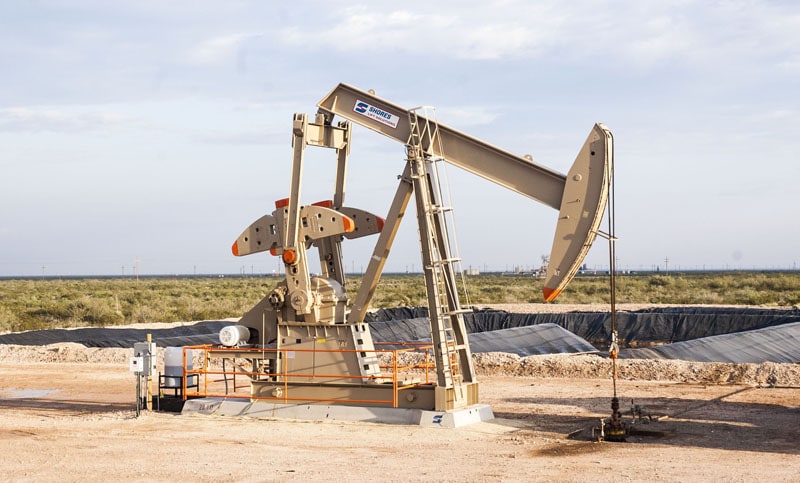
An oil well rarely produces only oil.
Gas usually comes to the surface with it.
Some wells produce relatively little gas for every barrel of oil. Others produce thousands of standard cubic feet of gas for every barrel.
Gas oil ratio gives that relationship a number.
The basic calculation is simple:
GOR = gas production ÷ oil production
But interpreting the answer requires more thought.
A rising GOR can indicate changing reservoir conditions.
It can result from lower bottomhole pressure.
It can show gas breakthrough.
It can suggest gas coning.
It can change after a choke adjustment.
It can also appear to change because the oil or gas measurement is wrong.
This makes GOR useful for more than reporting production.
It can become a troubleshooting tool.
What Does GOR Mean in Oil and Gas?
GOR means gas oil ratio.
It compares the volume of gas produced with the volume of oil produced during the same period.
A common unit is:
SCF per STB
Where:
SCF = standard cubic feet of gas
STB = stock tank barrel of oil
Suppose a well produces:
500,000 SCF of gas per day
and:
500 barrels of oil per day
The GOR is:
500,000 ÷ 500 = 1,000 SCF per STB
For every stock tank barrel of oil produced, the well produces approximately 1,000 standard cubic feet of gas.
What Is the GOR Formula?
The basic equation is:
GOR = gas production ÷ oil production
If daily production is being used:
GOR = SCF of gas per day ÷ stock tank barrels of oil per day
The time units cancel as long as both measurements cover the same period.
For example:
Gas = 900,000 SCF per day
Oil = 600 barrels per day
GOR:
900,000 ÷ 600 = 1,500 SCF per STB
Can You Calculate GOR Using MCF?
Yes.
Just remember that:
1 MCF = 1,000 cubic feet
Suppose a well produces:
750 MCF of gas per day
and:
300 barrels of oil per day
Convert gas to cubic feet:
750 × 1,000 = 750,000 SCF per day
Then:
GOR = 750,000 ÷ 300
GOR = 2,500 SCF per STB
A shortcut is:
GOR = MCF per day × 1,000 ÷ barrels of oil per day
Example: Calculate GOR From Daily Production
Suppose a well test shows:
Oil = 420 barrels per day
Gas = 630 MCF per day
First convert gas:
630 MCF = 630,000 SCF
Now divide:
630,000 ÷ 420 = 1,500
The producing GOR is:
1,500 SCF per STB
What Does a GOR of 1,500 Mean?
It means the well produces approximately 1,500 standard cubic feet of gas for every stock tank barrel of oil.
It does not mean that every barrel of liquid physically contains exactly that amount of visible gas at the wellhead.
Gas behavior changes as pressure falls.
Some gas can be dissolved in the oil under reservoir conditions and come out of solution as the fluids move toward surface.
The produced gas measurement represents gas after separation and measurement under defined conditions.
Why Is Gas Volume Reported at Standard Conditions?
Gas is compressible.
A cubic foot of gas at high pressure contains more gas molecules than a cubic foot at low pressure.
Without standardization, gas oil ratios from different wells and facilities would not be directly comparable.
Gas volume is therefore converted to defined standard conditions before being used for normal production reporting.
The applicable base pressure and temperature depend on the measurement system.
Why Is Oil Reported in Stock Tank Barrels?
Oil also changes between reservoir and surface conditions.
At reservoir pressure and temperature, oil can contain dissolved gas and occupy a different volume.
After the oil reaches surface separation and stock tank conditions, much of that gas has been released.
A stock tank barrel refers to the stabilized surface oil volume on the applicable measurement basis.
This gives GOR a consistent oil reference.
Is GOR the Same as Gas Rate?
No.
Gas rate tells you how much gas is being produced.
GOR tells you how much gas is being produced relative to oil.
Consider two wells.
Well A:
Gas = 1,000 MCF per day
Oil = 1,000 barrels per day
Well B:
Gas = 1,000 MCF per day
Oil = 100 barrels per day
Both wells have the same gas rate.
But their GOR values are very different.
Well A:
1,000,000 ÷ 1,000 = 1,000 SCF per STB
Well B:
1,000,000 ÷ 100 = 10,000 SCF per STB
Looking only at gas rate would hide that difference.
Is GOR the Same as Gas Percentage?
No.
GOR is a ratio between standardized gas volume and stock tank oil volume.
It is not a simple percentage of the total produced volume.
Gas and liquid volumes also cannot be compared directly at arbitrary operating conditions because gas volume changes dramatically with pressure.
GOR should therefore be treated as a production ratio with defined units.
What Is Producing GOR?
Producing GOR is the gas oil ratio measured from actual well production.
It is often written as:
Rp
It describes the cumulative or instantaneous relationship between produced gas and produced oil, depending on the context.
For a current well test, the calculation can be as simple as:
Producing GOR = measured gas rate ÷ measured oil rate
What Is Solution Gas Oil Ratio?
Solution gas oil ratio describes the amount of gas dissolved in reservoir oil at a particular pressure and temperature.
It is commonly represented by:
Rs
The units are also commonly expressed as:
SCF per STB
But Rs and producing GOR are not the same thing.
Rs is a fluid property under reservoir conditions.
Producing GOR is based on what actually reaches the surface as produced gas and oil.
How Can Gas Be Dissolved in Oil?
Under high pressure, crude oil can hold natural gas in solution.
The situation is somewhat comparable to carbon dioxide dissolved in a sealed soft drink, although petroleum fluids are much more complex.
While pressure remains high, significant gas can remain dissolved in the oil.
As pressure decreases, the oil eventually reaches a point where it can no longer keep all that gas dissolved.
Gas begins to come out of solution.
What Is Bubble Point Pressure?
Bubble point pressure is the pressure at which the first meaningful gas begins to come out of solution from an undersaturated oil as pressure decreases at a given temperature.
Above bubble point, the reservoir oil may exist as a single liquid hydrocarbon phase.
At bubble point, gas begins to evolve.
Below bubble point, free gas can coexist with oil.
This transition can have a major effect on production behavior.
What Happens to GOR as Reservoir Pressure Falls?
There is no single GOR trend that applies to every reservoir.
The response depends on:
Reservoir fluid properties
Initial pressure
Bubble point pressure
Drive mechanism
Well location
Completion
Relative permeability
Gas cap behavior
Production strategy
Surface separation
In a solution gas drive reservoir, producing GOR can eventually rise substantially as reservoir pressure falls below bubble point and free gas becomes increasingly mobile.
Why Can GOR Increase Below Bubble Point?
When reservoir pressure falls below bubble point, gas begins leaving solution.
At first, small gas bubbles may remain trapped in the pore space.
As gas saturation increases, the gas becomes mobile.
Gas generally has much lower viscosity than oil.
Once a connected gas phase develops, it can move toward the well efficiently.
The well may then produce increasing amounts of gas relative to oil.
GOR rises.
Does Rising GOR Always Mean Reservoir Pressure Is Low?
No.
This is an important distinction.
GOR can increase for reasons unrelated to general reservoir depletion.
Possible causes include:
Gas cap breakthrough
Gas coning
Channeling
Completion communication with a gas zone
Hydraulic fracture communication
Choke changes
Artificial lift changes
Oil rate decline
Gas measurement error
Oil measurement error
Separator problems
A rising GOR is evidence.
It is not a complete diagnosis.
What Is Gas Breakthrough?
Gas breakthrough occurs when gas from another part of the reservoir reaches a producing well.
For example, an oil reservoir may have a gas cap above the oil zone.
As production continues, gas can move toward the well.
Once that gas reaches the completion, the produced gas rate may rise sharply.
GOR can increase even if the oil rate initially remains reasonably strong.
What Is Gas Coning?
Gas coning can occur when a producing oil well is located below a gas zone or gas cap.
Producing the well creates a pressure drawdown.
If drawdown is strong enough, gas can be pulled downward toward the completion.
The gas oil contact develops a cone shaped distortion around the well.
Once gas reaches the perforations, GOR can increase rapidly.
Reducing production rate can sometimes reduce the severity of coning, depending on the reservoir and completion.
Can Opening the Choke Increase GOR?
Yes.
Opening the choke can increase production rate and drawdown.
That can alter the balance of fluids entering the well.
Suppose a well is producing near a gas oil contact.
A larger drawdown may encourage more gas movement toward the completion.
Oil rate may increase initially, but gas rate could increase even faster.
GOR then rises.
This is why the best choke setting is not always the setting that produces the highest immediate oil rate.
Example: GOR Before and After a Choke Change
Before the choke change:
Oil = 500 barrels per day
Gas = 500 MCF per day
GOR:
500,000 ÷ 500 = 1,000 SCF per STB
After opening the choke:
Oil = 600 barrels per day
Gas = 1,200 MCF per day
GOR:
1,200,000 ÷ 600 = 2,000 SCF per STB
Oil increased by 20 percent.
Gas doubled.
The new operating condition produces substantially more gas for each barrel of oil.
Whether that is desirable depends on the reservoir, facilities, economics, and production strategy.
Can GOR Rise Even If Gas Production Does Not Increase?
Yes.
This catches people surprisingly often.
Suppose gas production remains:
500 MCF per day
But oil production falls.
Originally:
Oil = 500 barrels per day
GOR:
500,000 ÷ 500 = 1,000 SCF per STB
Later:
Oil = 250 barrels per day
Gas is still:
500 MCF per day
New GOR:
500,000 ÷ 250 = 2,000 SCF per STB
GOR doubled even though gas rate did not increase.
The oil denominator decreased.
Always examine the individual oil and gas rates along with the ratio.
Can GOR Fall Even When Gas Rate Increases?
Yes.
Suppose:
Initial oil = 100 barrels per day
Initial gas = 200 MCF per day
Initial GOR:
200,000 ÷ 100 = 2,000 SCF per STB
After a successful well treatment:
Oil = 300 barrels per day
Gas = 300 MCF per day
New GOR:
300,000 ÷ 300 = 1,000 SCF per STB
Gas rate increased.
But oil increased much more.
GOR therefore fell.
Ratios should always be interpreted together with their underlying rates.
Why Is GOR Trending More Useful Than One Reading?
One GOR value provides limited information.
A trend can show how the well is changing.
Suppose monthly GOR values are:
Month 1 = 900
Month 2 = 920
Month 3 = 940
Month 4 = 1,000
Month 5 = 1,300
Month 6 = 2,100
The acceleration deserves attention.
Something may have changed in the reservoir, well, equipment, or measurement system.
The trend tells a story that a single number cannot.
What Should Be Plotted With GOR?
A useful production review might include:
Oil rate
Gas rate
Water rate
GOR
Water cut
Tubing pressure
Casing pressure
Choke size
Artificial lift settings
Downtime
Well interventions
Separator pressure
Looking at several variables together helps distinguish reservoir changes from operational changes.
How Can Water Production Affect GOR Interpretation?
Water does not appear directly in the normal gas oil ratio equation.
But water can strongly affect well performance.
Suppose increasing water production consumes artificial lift capacity.
Oil rate falls while gas rate remains similar.
GOR rises.
The apparent gas problem may actually be partly connected to increasing water production and declining oil lifting efficiency.
This is why GOR should not be analyzed in isolation.
What Is Water Oil Ratio?
Water oil ratio compares produced water with produced oil.
The equation is:
WOR = water production ÷ oil production
Suppose:
Water = 800 barrels per day
Oil = 200 barrels per day
WOR:
800 ÷ 200 = 4
The well produces four barrels of water for every barrel of oil.
GOR and WOR can be reviewed together to understand changing well production.
What Is Water Cut?
Water cut describes the fraction of total produced liquid that is water.
The equation is:
Water cut = water ÷ (water + oil) × 100
Suppose:
Water = 800 barrels per day
Oil = 200 barrels per day
Total liquid:
800 + 200 = 1,000 barrels per day
Water cut:
800 ÷ 1,000 × 100 = 80 percent
WOR and water cut describe similar production behavior in different ways.
Can You Calculate Oil Rate From Gas Rate and GOR?
Yes.
Start with:
GOR = gas rate ÷ oil rate
Rearrange:
Oil rate = gas rate ÷ GOR
Suppose:
Gas rate = 600,000 SCF per day
GOR = 1,500 SCF per STB
Oil rate:
600,000 ÷ 1,500 = 400 barrels per day
This can be useful for quick checks.
Can You Calculate Gas Rate From Oil Rate and GOR?
Yes.
Rearrange the equation:
Gas rate = GOR × oil rate
Suppose:
Oil rate = 750 barrels per day
GOR = 1,200 SCF per STB
Gas rate:
1,200 × 750 = 900,000 SCF per day
That is:
900 MCF per day
Example: Find Oil Rate From MCF and GOR
Suppose:
Gas = 2,000 MCF per day
GOR = 4,000 SCF per STB
Convert gas:
2,000 MCF = 2,000,000 SCF
Then:
Oil = 2,000,000 ÷ 4,000
Oil = 500 barrels per day
Why Can a Very High GOR Become an Operating Problem?
Producing gas requires surface capacity.
The gas may need to pass through:
Separators
Flowlines
Compressors
Dehydration equipment
Gas plants
Meters
Pipelines
Flare systems during certain operating conditions
A well producing relatively little oil but enormous amounts of gas can consume a large share of facility capacity.
That can limit production from other wells.
What Is Gas Handling Capacity?
Every surface facility has limits.
A separator can handle only a certain gas rate while maintaining acceptable separation.
A compressor has finite capacity.
A sales pipeline has operating constraints.
When total field gas approaches those limits, high GOR wells become important.
An operator may have plenty of oil processing capacity while being constrained by gas.
Example: How a High GOR Well Uses Gas Capacity
Suppose a facility can handle:
10 MMSCFD
Well A produces:
1,000 barrels of oil per day
GOR = 1,000 SCF per STB
Gas rate:
1,000 × 1,000 = 1,000,000 SCF per day
That is:
1 MMSCFD
Now consider Well B:
Oil = 1,000 barrels per day
GOR = 8,000 SCF per STB
Gas:
1,000 × 8,000 = 8,000,000 SCF per day
That is:
8 MMSCFD
Both wells produce the same amount of oil.
But the second well uses eight times as much gas handling capacity.
Why Can High GOR Hurt Oil Production From Other Wells?
Suppose a compressor station is already at maximum capacity.
A high GOR well begins producing another 2 MMSCFD of gas.
The facility may not be able to process that additional volume.
Production may need to be restricted.
In a shared system, the gas produced by one well can therefore influence how much other wells are allowed to produce.
This turns GOR into a facility optimization issue as well as a reservoir measurement.
Is High GOR Always Bad?
No.
Some reservoirs naturally produce large quantities of gas with valuable liquid hydrocarbons.
A high GOR may be completely normal for the fluid system.
Gas can also have substantial commercial value.
The meaning depends on what the well was expected to produce.
A GOR of 3,000 might be alarming for one oil reservoir and normal for another.
Compare the well with its own history, reservoir fluid properties, nearby wells, and development plan.
Is Low GOR Always Better?
No.
An unusually low GOR can also deserve investigation.
Possible explanations include:
Gas meter under measurement
Separator problems
Gas flowing somewhere unexpected
Changed separator pressure
Oil measurement error
Different operating conditions
Changing reservoir behavior
The objective is not automatically to make GOR as low as possible.
The objective is to understand whether the ratio is consistent with expected well behavior.
What Is a Gas Cap?
A gas cap is a free gas accumulation located above an oil zone in a reservoir.
Because gas is less dense than oil, it tends to occupy the upper part of a connected reservoir structure.
A gas cap can provide reservoir energy as the field produces.
But producing excessive gas from it can reduce the effectiveness of that energy support.
Operators may therefore manage wells near the gas oil contact carefully.
Why Might an Operator Avoid Producing Gas Cap Gas Too Early?
A gas cap can expand as reservoir pressure declines.
That expansion can help push oil toward producing wells.
If large amounts of gas are produced unnecessarily, some of that reservoir energy is removed.
Reservoir management may therefore involve controlling gas production to improve oil recovery.
The appropriate strategy depends on the reservoir.
What Is Gas Oil Contact?
The gas oil contact is the depth or region where the free gas zone meets the oil zone.
It is not always a perfectly flat or motionless boundary.
Production changes pressure distribution.
Gas and oil move.
The contact can shift as the reservoir depletes.
Wells completed too close to the gas zone may experience increasing gas production as conditions change.
Can Hydraulic Fractures Increase GOR?
Yes.
A hydraulic fracture increases the reservoir volume connected to the well.
That is usually the purpose.
But if the fracture communicates with a gas rich interval, gas cap, or another zone, the well can produce more gas than expected.
A sudden GOR change after stimulation can therefore provide information about what the completion has connected.
Can a Workover Change GOR?
Yes.
A workover may:
Open new perforations
Close unwanted intervals
Repair tubing
Change artificial lift
Install isolation equipment
Remove restrictions
Alter flowing pressure
Any of these changes can alter the relative oil and gas rates.
Comparing GOR before and after the intervention can help evaluate the result.
Can Artificial Lift Affect GOR?
Yes.
Artificial lift changes bottomhole flowing pressure and the way fluids move through the well.
A stronger drawdown can increase oil production.
It can also increase gas production.
Gas can interfere with some pumping systems.
In other cases, gas is intentionally injected as part of gas lift.
The measured production GOR therefore needs to be interpreted carefully when artificial lift gas is involved.
Does Injected Gas Lift Gas Count as Produced Gas?
This is where accounting becomes important.
A gas lift well receives injected gas from surface.
That gas travels down the well and returns with produced fluids.
If a surface meter measures total returning gas, it can include both:
Formation gas
Injected lift gas
For reservoir interpretation, engineers may need to subtract injected gas to estimate formation gas production.
Otherwise the apparent GOR can be misleading.
Example: Correcting for Gas Lift Injection
Suppose total measured gas leaving the separator is:
1,500 MCF per day
Gas lift injection is:
700 MCF per day
Oil production is:
400 barrels per day
If all measured gas were treated as formation gas:
GOR = 1,500,000 ÷ 400
GOR = 3,750 SCF per STB
But estimated formation gas is:
1,500 minus 700 = 800 MCF per day
Corrected formation GOR:
800,000 ÷ 400 = 2,000 SCF per STB
That is a major difference.
The exact accounting method depends on the facility and measurement arrangement.
Why Does Separator Pressure Affect Measured Gas?
Oil and gas reach equilibrium differently at different pressures.
At higher separator pressure, more light hydrocarbons can remain dissolved in the liquid.
At lower pressure, more gas can be released.
Changing separator conditions can therefore change measured gas and oil volumes even when reservoir inflow has not changed by the same amount.
This is one reason consistent test conditions are valuable when comparing well performance.
Can Separator Temperature Affect GOR?
Yes.
Fluid phase behavior depends on both pressure and temperature.
Changing separator temperature can alter how much hydrocarbon remains liquid and how much enters the gas phase.
Production tests performed under substantially different separation conditions may therefore not be perfectly comparable.
Why Are Multistage Separators Used?
Producing fluids can pass through more than one pressure stage before reaching storage.
Gas is removed progressively as pressure decreases.
This can improve liquid recovery and provide better control of the separation process.
The total produced gas associated with a barrel of stock tank oil can include gas measured from multiple stages.
What Is Flash Gas?
Flash gas is gas released from hydrocarbon liquid as pressure decreases.
Oil leaving a separator can still contain dissolved light hydrocarbons.
When it enters a lower pressure vessel or storage tank, additional gas can come out of solution.
This is why gas can still be generated after primary separation.
Does Tank Vapor Affect GOR?
It can, depending on how production gas is defined and measured.
Some measurement systems focus on separator gas.
Other accounting systems may include additional gas streams.
For meaningful comparison, understand which gas volumes are included.
Two reported GOR values are not necessarily comparable if they use different measurement boundaries.
How Can a Bad Gas Meter Affect GOR?
Suppose the oil measurement is correct but the gas meter reads 20 percent high.
Calculated GOR will also be too high.
Potential gas measurement problems include:
Incorrect pressure input
Incorrect temperature input
Bad differential pressure measurement
Meter configuration error
Liquid contamination
Incorrect gas composition data
Scaling errors
Instrumentation failure
An unexpected GOR jump should therefore trigger a measurement check before a reservoir conclusion is made.
How Can Bad Oil Measurement Affect GOR?
The denominator matters just as much.
If oil is under measured, calculated GOR becomes artificially high.
If oil is over measured, GOR appears too low.
Potential problems include:
Meter calibration
Water being counted incorrectly
Tank gauge errors
Incorrect well test allocation
Separator level problems
Changing fluid conditions
Production allocation errors
Always check both sides of a ratio.
Example: How Oil Measurement Error Changes GOR
Actual gas rate:
600 MCF per day
Actual oil rate:
400 barrels per day
True GOR:
600,000 ÷ 400 = 1,500 SCF per STB
Suppose the oil meter incorrectly reports:
300 barrels per day
Calculated GOR becomes:
600,000 ÷ 300 = 2,000 SCF per STB
The well appears to have developed a gas problem even though actual production did not change.
Can GOR Be Calculated From Cumulative Production?
Yes.
Cumulative producing GOR can be calculated as:
Cumulative gas produced ÷ cumulative oil produced
Suppose a well has produced:
2 billion SCF of gas
and:
1 million stock tank barrels of oil
Cumulative GOR:
2,000,000,000 ÷ 1,000,000
Cumulative GOR = 2,000 SCF per STB
This describes the average gas oil relationship over the production history represented by those cumulative volumes.
Is Cumulative GOR the Same as Current GOR?
No.
Current GOR may change rapidly.
Cumulative GOR changes much more slowly because it includes all historical production.
Suppose a well produced at low GOR for ten years and then suddenly experiences gas breakthrough.
Current GOR could become very high while cumulative GOR remains relatively moderate.
Both values answer different questions.
How Do You Calculate GOR From Monthly Production?
Use gas and oil volumes from the same month.
Suppose monthly production is:
Gas = 24,000 MCF
Oil = 12,000 barrels
Convert gas:
24,000 MCF = 24,000,000 SCF
GOR:
24,000,000 ÷ 12,000
GOR = 2,000 SCF per STB
You do not need to convert both values to daily rates because the monthly time basis cancels.
Why Must Gas and Oil Cover the Same Time Period?
Suppose you divide one day of gas production by one month of oil production.
The resulting number has no useful GOR meaning.
Both production quantities must represent the same interval.
Daily gas should be compared with daily oil.
Monthly gas with monthly oil.
Cumulative gas with cumulative oil.
Matching the time basis is fundamental.
Can GOR Be Used to Compare Nearby Wells?
Yes, but carefully.
Wells in the same reservoir can have different GOR because of:
Structural position
Distance from gas cap
Completion interval
Reservoir quality
Pressure
Drawdown
Artificial lift
Fracture geometry
Water production
Well age
A well that suddenly separates from the behavior of nearby wells may deserve investigation.
But different GOR does not automatically mean something is wrong.
What Does a Sudden GOR Spike Suggest?
Start by asking what changed at the same time.
Check:
Gas rate
Oil rate
Choke position
Wellhead pressure
Separator pressure
Artificial lift settings
Gas lift injection
Recent workovers
Meter alarms
Production test conditions
Neighboring well activity
A sudden ratio change is often easier to diagnose when matched with an operational event.
What Does a Slow GOR Increase Suggest?
A gradual increase may be consistent with changing reservoir conditions.
Possible explanations include:
Declining reservoir pressure
Increasing free gas saturation
Gradual gas cap movement
Changing relative permeability
Progressive gas coning
Oil productivity decline
Again, the trend should be interpreted with pressure and production data.
What Does a Falling GOR Suggest?
Possible explanations include:
Oil rate improved
Gas rate declined
Gas producing interval was isolated
Choke strategy changed
Artificial lift improved liquid production
Separator conditions changed
Gas measurement changed
A falling GOR can be positive in some oil production situations, but the cause still needs to be understood.
How Can GOR Help Evaluate a Production Optimization Change?
Record conditions before the change.
Then compare them afterward.
Suppose before optimization:
Oil = 300 barrels per day
Gas = 600 MCF per day
GOR = 2,000 SCF per STB
After optimization:
Oil = 450 barrels per day
Gas = 720 MCF per day
GOR:
720,000 ÷ 450 = 1,600 SCF per STB
Oil increased by 150 barrels per day.
Gas increased by only 120 MCF per day.
The well is now producing more oil with less gas per barrel of oil.
That is more informative than looking at oil rate alone.
Why Should GOR Be Combined With Economics?
Gas can be valuable.
Oil can be valuable.
Compression costs money.
Water handling costs money.
Facility constraints have value.
A high GOR well may still be extremely profitable.
Another high GOR well may produce so little oil that its gas handling requirement becomes difficult to justify.
The ratio describes production behavior.
It does not make the economic decision by itself.
Can GOR Tell You Whether a Well Is an Oil Well or Gas Well?
It can help describe the fluid system, but classification is not based on one universal GOR threshold.
Reservoir fluids range across:
Black oil
Volatile oil
Gas condensate
Wet gas
Dry gas
Fluid classification requires more than a single production ratio.
Pressure, temperature, phase behavior, fluid composition, and laboratory data may all be important.
What Is a PVT Analysis?
PVT means pressure, volume, and temperature.
A PVT study examines how reservoir fluids behave as pressure and temperature change.
For oil systems, laboratory analysis can provide properties such as:
Bubble point pressure
Solution gas oil ratio
Oil formation volume factor
Oil viscosity
Fluid density
Gas properties
These data help engineers understand what producing GOR should mean within the larger reservoir system.
What Is Oil Formation Volume Factor?
Oil formation volume factor compares the volume occupied by oil at reservoir conditions with the volume of stock tank oil produced at surface.
It is commonly represented by:
Bo
Reservoir oil can occupy more volume because it is hot and contains dissolved gas.
When pressure and temperature decrease at surface, gas is released and the remaining oil volume changes.
This is another reason reservoir barrels and stock tank barrels are not automatically the same.
How Are Rs and GOR Related?
Rs describes gas dissolved in oil at reservoir conditions.
Producing GOR describes gas reaching surface relative to stock tank oil production.
Before substantial free gas reaches a producing well, produced gas may largely originate from gas that was dissolved in the produced reservoir oil.
Once significant free gas begins flowing independently toward the well, producing GOR can increase beyond the behavior expected from solution gas alone.
This difference is useful in reservoir interpretation.
Why Is GOR Important in Material Balance?
Reservoir material balance tracks how underground fluid volumes and pressure change as production occurs.
Oil production, gas production, water production, fluid properties, and pressure data can all contribute to the analysis.
Producing GOR provides information about how much gas has been removed relative to oil.
In some reservoir types, its trend helps reveal the dominant reservoir drive mechanism.
Can GOR Help Identify Reservoir Drive Mechanism?
It can contribute to the interpretation.
For example, a solution gas drive reservoir may show characteristic pressure decline and GOR behavior as gas evolves from oil.
A reservoir with a large gas cap can behave differently.
A strong water drive reservoir can maintain pressure differently again.
No single GOR curve proves the drive mechanism.
Engineers combine GOR with:
Pressure history
Water production
Fluid properties
Production history
Geological information
Reservoir surveillance
What Should a Field Operator Know About GOR?
An operator does not need to perform a full PVT analysis to use GOR effectively.
The practical questions are simpler.
What is normal for this well?
Is GOR increasing or decreasing?
Did gas rate change?
Did oil rate change?
Did the choke move?
Did separator pressure change?
Did gas lift injection change?
Was the well recently worked over?
Could a meter be wrong?
Those questions turn a simple ratio into a useful troubleshooting tool.
A Complete GOR Calculation Example
Suppose a well test reports:
Oil = 275 barrels per day
Water = 725 barrels per day
Gas = 825 MCF per day
First calculate gas oil ratio.
Convert gas:
825 MCF = 825,000 SCF
GOR:
825,000 ÷ 275 = 3,000 SCF per STB
Now calculate water oil ratio:
725 ÷ 275 = approximately 2.64
The well produces approximately:
2.64 barrels of water per barrel of oil
Now calculate water cut:
Water cut = 725 ÷ (725 + 275) × 100
Total liquid:
1,000 barrels per day
Water cut:
725 ÷ 1,000 × 100 = 72.5 percent
From three production measurements, you now know:
GOR = 3,000 SCF per STB
WOR = 2.64
Water cut = 72.5 percent
Those ratios describe the well much better than total fluid rate alone.
How Do You Check a GOR Calculation Quickly?
Use rough mental math.
Suppose:
Gas = 500 MCF per day
Oil = 250 barrels per day
500 MCF is:
500,000 SCF
Divide by 250.
Since:
500,000 ÷ 250 = 2,000
GOR is:
2,000 SCF per STB
If a spreadsheet reports 200 or 20,000, check the units.
The MCF to SCF conversion is a common source of factor errors.
What Are the Most Common GOR Calculation Mistakes?
Several errors appear repeatedly.
Using MCF as if it were SCF.
Comparing gas and oil from different time periods.
Using total liquid instead of oil in the denominator.
Failing to account for gas lift injection when appropriate.
Comparing tests performed under very different conditions.
Ignoring measurement problems.
Treating one unusual test as a reservoir trend.
The arithmetic takes seconds.
Making sure the numbers represent the same physical system takes more care.
What Is the Simplest GOR Equation to Remember?
Remember:
GOR = gas ÷ oil
If gas is reported in MCF:
GOR = MCF × 1,000 ÷ oil barrels
For example:
900 MCF per day
divided by:
300 barrels of oil per day
gives:
900,000 ÷ 300 = 3,000 SCF per STB
Then ask the more important question.
Why is the GOR at that value, and how is it changing?
Frequently Asked Questions
What does GOR stand for in oil and gas?
GOR means gas oil ratio.
How do you calculate GOR?
Use:
GOR = gas production ÷ oil production
A common unit is standard cubic feet of gas per stock tank barrel of oil.
How do you calculate GOR when gas is reported in MCF?
Use:
GOR = MCF × 1,000 ÷ oil barrels
What does a GOR of 2,000 mean?
It means approximately 2,000 standard cubic feet of gas are produced for every stock tank barrel of oil.
Is high GOR bad?
Not automatically. Some reservoirs naturally have high GOR. The important question is whether the value and trend are expected for that well and whether gas production creates reservoir or facility problems.
Why does GOR increase?
Possible causes include reservoir pressure decline, free gas production, gas cap breakthrough, gas coning, oil rate decline, operating changes, and measurement problems.
Can GOR increase without gas rate increasing?
Yes. If oil production decreases while gas production remains constant, GOR increases.
Can gas rate increase while GOR decreases?
Yes. If oil rate increases proportionally more than gas rate, GOR decreases.
What is solution gas oil ratio?
Solution gas oil ratio describes how much gas is dissolved in reservoir oil at specified pressure and temperature conditions.
Is solution GOR the same as producing GOR?
No. Solution gas oil ratio is a reservoir fluid property. Producing GOR is calculated from actual produced gas and oil.
What is bubble point pressure?
Bubble point is the pressure at which gas begins to come out of solution from an undersaturated oil as pressure decreases at a given temperature.
Does gas lift affect GOR?
Yes. Injected lift gas can return to surface with formation gas. The measurement boundary and gas accounting method must be understood before interpreting the ratio.
Can separator pressure change measured GOR?
Yes. Pressure affects how much gas remains dissolved in oil and how much separates into the gas phase.
Why should GOR be trended?
A trend can reveal gradual or sudden changes that one isolated measurement cannot show.
What should be reviewed with GOR?
Oil rate, gas rate, water rate, water cut, pressures, choke settings, artificial lift conditions, separator conditions, and recent operational changes are useful comparisons.
Can GOR help identify gas breakthrough?
A significant GOR increase can be one sign of gas breakthrough, but additional production and reservoir evidence is needed.
How do you calculate oil rate if gas rate and GOR are known?
Use:
Oil rate = gas rate ÷ GOR
Keep the units consistent.
How do you calculate gas rate from oil rate and GOR?
Use:
Gas rate = oil rate × GOR
Can cumulative GOR be calculated?
Yes.
Cumulative GOR = cumulative gas production ÷ cumulative oil production
What is the most important thing to remember about GOR?
Do not look at the ratio alone.
A changing GOR can result from a changing gas rate, a changing oil rate, or both. Check the underlying production data before deciding what the ratio means.
An oil well rarely produces only oil.
Gas usually comes to the surface with it.
Some wells produce relatively little gas for every barrel of oil. Others produce thousands of standard cubic feet of gas for every barrel.
Gas oil ratio gives that relationship a number.
The basic calculation is simple:
GOR = gas production ÷ oil production
But interpreting the answer requires more thought.
A rising GOR can indicate changing reservoir conditions.
It can result from lower bottomhole pressure.
It can show gas breakthrough.
It can suggest gas coning.
It can change after a choke adjustment.
It can also appear to change because the oil or gas measurement is wrong.
This makes GOR useful for more than reporting production.
It can become a troubleshooting tool.
What Does GOR Mean in Oil and Gas?
GOR means gas oil ratio.
It compares the volume of gas produced with the volume of oil produced during the same period.
A common unit is:
SCF per STB
Where:
SCF = standard cubic feet of gas
STB = stock tank barrel of oil
Suppose a well produces:
500,000 SCF of gas per day
and:
500 barrels of oil per day
The GOR is:
500,000 ÷ 500 = 1,000 SCF per STB
For every stock tank barrel of oil produced, the well produces approximately 1,000 standard cubic feet of gas.
What Is the GOR Formula?
The basic equation is:
GOR = gas production ÷ oil production
If daily production is being used:
GOR = SCF of gas per day ÷ stock tank barrels of oil per day
The time units cancel as long as both measurements cover the same period.
For example:
Gas = 900,000 SCF per day
Oil = 600 barrels per day
GOR:
900,000 ÷ 600 = 1,500 SCF per STB
Can You Calculate GOR Using MCF?
Yes.
Just remember that:
1 MCF = 1,000 cubic feet
Suppose a well produces:
750 MCF of gas per day
and:
300 barrels of oil per day
Convert gas to cubic feet:
750 × 1,000 = 750,000 SCF per day
Then:
GOR = 750,000 ÷ 300
GOR = 2,500 SCF per STB
A shortcut is:
GOR = MCF per day × 1,000 ÷ barrels of oil per day
Example: Calculate GOR From Daily Production
Suppose a well test shows:
Oil = 420 barrels per day
Gas = 630 MCF per day
First convert gas:
630 MCF = 630,000 SCF
Now divide:
630,000 ÷ 420 = 1,500
The producing GOR is:
1,500 SCF per STB
What Does a GOR of 1,500 Mean?
It means the well produces approximately 1,500 standard cubic feet of gas for every stock tank barrel of oil.
It does not mean that every barrel of liquid physically contains exactly that amount of visible gas at the wellhead.
Gas behavior changes as pressure falls.
Some gas can be dissolved in the oil under reservoir conditions and come out of solution as the fluids move toward surface.
The produced gas measurement represents gas after separation and measurement under defined conditions.
Why Is Gas Volume Reported at Standard Conditions?
Gas is compressible.
A cubic foot of gas at high pressure contains more gas molecules than a cubic foot at low pressure.
Without standardization, gas oil ratios from different wells and facilities would not be directly comparable.
Gas volume is therefore converted to defined standard conditions before being used for normal production reporting.
The applicable base pressure and temperature depend on the measurement system.
Why Is Oil Reported in Stock Tank Barrels?
Oil also changes between reservoir and surface conditions.
At reservoir pressure and temperature, oil can contain dissolved gas and occupy a different volume.
After the oil reaches surface separation and stock tank conditions, much of that gas has been released.
A stock tank barrel refers to the stabilized surface oil volume on the applicable measurement basis.
This gives GOR a consistent oil reference.
Is GOR the Same as Gas Rate?
No.
Gas rate tells you how much gas is being produced.
GOR tells you how much gas is being produced relative to oil.
Consider two wells.
Well A:
Gas = 1,000 MCF per day
Oil = 1,000 barrels per day
Well B:
Gas = 1,000 MCF per day
Oil = 100 barrels per day
Both wells have the same gas rate.
But their GOR values are very different.
Well A:
1,000,000 ÷ 1,000 = 1,000 SCF per STB
Well B:
1,000,000 ÷ 100 = 10,000 SCF per STB
Looking only at gas rate would hide that difference.
Is GOR the Same as Gas Percentage?
No.
GOR is a ratio between standardized gas volume and stock tank oil volume.
It is not a simple percentage of the total produced volume.
Gas and liquid volumes also cannot be compared directly at arbitrary operating conditions because gas volume changes dramatically with pressure.
GOR should therefore be treated as a production ratio with defined units.
What Is Producing GOR?
Producing GOR is the gas oil ratio measured from actual well production.
It is often written as:
Rp
It describes the cumulative or instantaneous relationship between produced gas and produced oil, depending on the context.
For a current well test, the calculation can be as simple as:
Producing GOR = measured gas rate ÷ measured oil rate
What Is Solution Gas Oil Ratio?
Solution gas oil ratio describes the amount of gas dissolved in reservoir oil at a particular pressure and temperature.
It is commonly represented by:
Rs
The units are also commonly expressed as:
SCF per STB
But Rs and producing GOR are not the same thing.
Rs is a fluid property under reservoir conditions.
Producing GOR is based on what actually reaches the surface as produced gas and oil.
How Can Gas Be Dissolved in Oil?
Under high pressure, crude oil can hold natural gas in solution.
The situation is somewhat comparable to carbon dioxide dissolved in a sealed soft drink, although petroleum fluids are much more complex.
While pressure remains high, significant gas can remain dissolved in the oil.
As pressure decreases, the oil eventually reaches a point where it can no longer keep all that gas dissolved.
Gas begins to come out of solution.
What Is Bubble Point Pressure?
Bubble point pressure is the pressure at which the first meaningful gas begins to come out of solution from an undersaturated oil as pressure decreases at a given temperature.
Above bubble point, the reservoir oil may exist as a single liquid hydrocarbon phase.
At bubble point, gas begins to evolve.
Below bubble point, free gas can coexist with oil.
This transition can have a major effect on production behavior.
What Happens to GOR as Reservoir Pressure Falls?
There is no single GOR trend that applies to every reservoir.
The response depends on:
Reservoir fluid properties
Initial pressure
Bubble point pressure
Drive mechanism
Well location
Completion
Relative permeability
Gas cap behavior
Production strategy
Surface separation
In a solution gas drive reservoir, producing GOR can eventually rise substantially as reservoir pressure falls below bubble point and free gas becomes increasingly mobile.
Why Can GOR Increase Below Bubble Point?
When reservoir pressure falls below bubble point, gas begins leaving solution.
At first, small gas bubbles may remain trapped in the pore space.
As gas saturation increases, the gas becomes mobile.
Gas generally has much lower viscosity than oil.
Once a connected gas phase develops, it can move toward the well efficiently.
The well may then produce increasing amounts of gas relative to oil.
GOR rises.
Does Rising GOR Always Mean Reservoir Pressure Is Low?
No.
This is an important distinction.
GOR can increase for reasons unrelated to general reservoir depletion.
Possible causes include:
Gas cap breakthrough
Gas coning
Channeling
Completion communication with a gas zone
Hydraulic fracture communication
Choke changes
Artificial lift changes
Oil rate decline
Gas measurement error
Oil measurement error
Separator problems
A rising GOR is evidence.
It is not a complete diagnosis.
What Is Gas Breakthrough?
Gas breakthrough occurs when gas from another part of the reservoir reaches a producing well.
For example, an oil reservoir may have a gas cap above the oil zone.
As production continues, gas can move toward the well.
Once that gas reaches the completion, the produced gas rate may rise sharply.
GOR can increase even if the oil rate initially remains reasonably strong.
What Is Gas Coning?
Gas coning can occur when a producing oil well is located below a gas zone or gas cap.
Producing the well creates a pressure drawdown.
If drawdown is strong enough, gas can be pulled downward toward the completion.
The gas oil contact develops a cone shaped distortion around the well.
Once gas reaches the perforations, GOR can increase rapidly.
Reducing production rate can sometimes reduce the severity of coning, depending on the reservoir and completion.
Can Opening the Choke Increase GOR?
Yes.
Opening the choke can increase production rate and drawdown.
That can alter the balance of fluids entering the well.
Suppose a well is producing near a gas oil contact.
A larger drawdown may encourage more gas movement toward the completion.
Oil rate may increase initially, but gas rate could increase even faster.
GOR then rises.
This is why the best choke setting is not always the setting that produces the highest immediate oil rate.
Example: GOR Before and After a Choke Change
Before the choke change:
Oil = 500 barrels per day
Gas = 500 MCF per day
GOR:
500,000 ÷ 500 = 1,000 SCF per STB
After opening the choke:
Oil = 600 barrels per day
Gas = 1,200 MCF per day
GOR:
1,200,000 ÷ 600 = 2,000 SCF per STB
Oil increased by 20 percent.
Gas doubled.
The new operating condition produces substantially more gas for each barrel of oil.
Whether that is desirable depends on the reservoir, facilities, economics, and production strategy.
Can GOR Rise Even If Gas Production Does Not Increase?
Yes.
This catches people surprisingly often.
Suppose gas production remains:
500 MCF per day
But oil production falls.
Originally:
Oil = 500 barrels per day
GOR:
500,000 ÷ 500 = 1,000 SCF per STB
Later:
Oil = 250 barrels per day
Gas is still:
500 MCF per day
New GOR:
500,000 ÷ 250 = 2,000 SCF per STB
GOR doubled even though gas rate did not increase.
The oil denominator decreased.
Always examine the individual oil and gas rates along with the ratio.
Can GOR Fall Even When Gas Rate Increases?
Yes.
Suppose:
Initial oil = 100 barrels per day
Initial gas = 200 MCF per day
Initial GOR:
200,000 ÷ 100 = 2,000 SCF per STB
After a successful well treatment:
Oil = 300 barrels per day
Gas = 300 MCF per day
New GOR:
300,000 ÷ 300 = 1,000 SCF per STB
Gas rate increased.
But oil increased much more.
GOR therefore fell.
Ratios should always be interpreted together with their underlying rates.
Why Is GOR Trending More Useful Than One Reading?
One GOR value provides limited information.
A trend can show how the well is changing.
Suppose monthly GOR values are:
Month 1 = 900
Month 2 = 920
Month 3 = 940
Month 4 = 1,000
Month 5 = 1,300
Month 6 = 2,100
The acceleration deserves attention.
Something may have changed in the reservoir, well, equipment, or measurement system.
The trend tells a story that a single number cannot.
What Should Be Plotted With GOR?
A useful production review might include:
Oil rate
Gas rate
Water rate
GOR
Water cut
Tubing pressure
Casing pressure
Choke size
Artificial lift settings
Downtime
Well interventions
Separator pressure
Looking at several variables together helps distinguish reservoir changes from operational changes.
How Can Water Production Affect GOR Interpretation?
Water does not appear directly in the normal gas oil ratio equation.
But water can strongly affect well performance.
Suppose increasing water production consumes artificial lift capacity.
Oil rate falls while gas rate remains similar.
GOR rises.
The apparent gas problem may actually be partly connected to increasing water production and declining oil lifting efficiency.
This is why GOR should not be analyzed in isolation.
What Is Water Oil Ratio?
Water oil ratio compares produced water with produced oil.
The equation is:
WOR = water production ÷ oil production
Suppose:
Water = 800 barrels per day
Oil = 200 barrels per day
WOR:
800 ÷ 200 = 4
The well produces four barrels of water for every barrel of oil.
GOR and WOR can be reviewed together to understand changing well production.
What Is Water Cut?
Water cut describes the fraction of total produced liquid that is water.
The equation is:
Water cut = water ÷ (water + oil) × 100
Suppose:
Water = 800 barrels per day
Oil = 200 barrels per day
Total liquid:
800 + 200 = 1,000 barrels per day
Water cut:
800 ÷ 1,000 × 100 = 80 percent
WOR and water cut describe similar production behavior in different ways.
Can You Calculate Oil Rate From Gas Rate and GOR?
Yes.
Start with:
GOR = gas rate ÷ oil rate
Rearrange:
Oil rate = gas rate ÷ GOR
Suppose:
Gas rate = 600,000 SCF per day
GOR = 1,500 SCF per STB
Oil rate:
600,000 ÷ 1,500 = 400 barrels per day
This can be useful for quick checks.
Can You Calculate Gas Rate From Oil Rate and GOR?
Yes.
Rearrange the equation:
Gas rate = GOR × oil rate
Suppose:
Oil rate = 750 barrels per day
GOR = 1,200 SCF per STB
Gas rate:
1,200 × 750 = 900,000 SCF per day
That is:
900 MCF per day
Example: Find Oil Rate From MCF and GOR
Suppose:
Gas = 2,000 MCF per day
GOR = 4,000 SCF per STB
Convert gas:
2,000 MCF = 2,000,000 SCF
Then:
Oil = 2,000,000 ÷ 4,000
Oil = 500 barrels per day
Why Can a Very High GOR Become an Operating Problem?
Producing gas requires surface capacity.
The gas may need to pass through:
Separators
Flowlines
Compressors
Dehydration equipment
Gas plants
Meters
Pipelines
Flare systems during certain operating conditions
A well producing relatively little oil but enormous amounts of gas can consume a large share of facility capacity.
That can limit production from other wells.
What Is Gas Handling Capacity?
Every surface facility has limits.
A separator can handle only a certain gas rate while maintaining acceptable separation.
A compressor has finite capacity.
A sales pipeline has operating constraints.
When total field gas approaches those limits, high GOR wells become important.
An operator may have plenty of oil processing capacity while being constrained by gas.
Example: How a High GOR Well Uses Gas Capacity
Suppose a facility can handle:
10 MMSCFD
Well A produces:
1,000 barrels of oil per day
GOR = 1,000 SCF per STB
Gas rate:
1,000 × 1,000 = 1,000,000 SCF per day
That is:
1 MMSCFD
Now consider Well B:
Oil = 1,000 barrels per day
GOR = 8,000 SCF per STB
Gas:
1,000 × 8,000 = 8,000,000 SCF per day
That is:
8 MMSCFD
Both wells produce the same amount of oil.
But the second well uses eight times as much gas handling capacity.
Why Can High GOR Hurt Oil Production From Other Wells?
Suppose a compressor station is already at maximum capacity.
A high GOR well begins producing another 2 MMSCFD of gas.
The facility may not be able to process that additional volume.
Production may need to be restricted.
In a shared system, the gas produced by one well can therefore influence how much other wells are allowed to produce.
This turns GOR into a facility optimization issue as well as a reservoir measurement.
Is High GOR Always Bad?
No.
Some reservoirs naturally produce large quantities of gas with valuable liquid hydrocarbons.
A high GOR may be completely normal for the fluid system.
Gas can also have substantial commercial value.
The meaning depends on what the well was expected to produce.
A GOR of 3,000 might be alarming for one oil reservoir and normal for another.
Compare the well with its own history, reservoir fluid properties, nearby wells, and development plan.
Is Low GOR Always Better?
No.
An unusually low GOR can also deserve investigation.
Possible explanations include:
Gas meter under measurement
Separator problems
Gas flowing somewhere unexpected
Changed separator pressure
Oil measurement error
Different operating conditions
Changing reservoir behavior
The objective is not automatically to make GOR as low as possible.
The objective is to understand whether the ratio is consistent with expected well behavior.
What Is a Gas Cap?
A gas cap is a free gas accumulation located above an oil zone in a reservoir.
Because gas is less dense than oil, it tends to occupy the upper part of a connected reservoir structure.
A gas cap can provide reservoir energy as the field produces.
But producing excessive gas from it can reduce the effectiveness of that energy support.
Operators may therefore manage wells near the gas oil contact carefully.
Why Might an Operator Avoid Producing Gas Cap Gas Too Early?
A gas cap can expand as reservoir pressure declines.
That expansion can help push oil toward producing wells.
If large amounts of gas are produced unnecessarily, some of that reservoir energy is removed.
Reservoir management may therefore involve controlling gas production to improve oil recovery.
The appropriate strategy depends on the reservoir.
What Is Gas Oil Contact?
The gas oil contact is the depth or region where the free gas zone meets the oil zone.
It is not always a perfectly flat or motionless boundary.
Production changes pressure distribution.
Gas and oil move.
The contact can shift as the reservoir depletes.
Wells completed too close to the gas zone may experience increasing gas production as conditions change.
Can Hydraulic Fractures Increase GOR?
Yes.
A hydraulic fracture increases the reservoir volume connected to the well.
That is usually the purpose.
But if the fracture communicates with a gas rich interval, gas cap, or another zone, the well can produce more gas than expected.
A sudden GOR change after stimulation can therefore provide information about what the completion has connected.
Can a Workover Change GOR?
Yes.
A workover may:
Open new perforations
Close unwanted intervals
Repair tubing
Change artificial lift
Install isolation equipment
Remove restrictions
Alter flowing pressure
Any of these changes can alter the relative oil and gas rates.
Comparing GOR before and after the intervention can help evaluate the result.
Can Artificial Lift Affect GOR?
Yes.
Artificial lift changes bottomhole flowing pressure and the way fluids move through the well.
A stronger drawdown can increase oil production.
It can also increase gas production.
Gas can interfere with some pumping systems.
In other cases, gas is intentionally injected as part of gas lift.
The measured production GOR therefore needs to be interpreted carefully when artificial lift gas is involved.
Does Injected Gas Lift Gas Count as Produced Gas?
This is where accounting becomes important.
A gas lift well receives injected gas from surface.
That gas travels down the well and returns with produced fluids.
If a surface meter measures total returning gas, it can include both:
Formation gas
Injected lift gas
For reservoir interpretation, engineers may need to subtract injected gas to estimate formation gas production.
Otherwise the apparent GOR can be misleading.
Example: Correcting for Gas Lift Injection
Suppose total measured gas leaving the separator is:
1,500 MCF per day
Gas lift injection is:
700 MCF per day
Oil production is:
400 barrels per day
If all measured gas were treated as formation gas:
GOR = 1,500,000 ÷ 400
GOR = 3,750 SCF per STB
But estimated formation gas is:
1,500 minus 700 = 800 MCF per day
Corrected formation GOR:
800,000 ÷ 400 = 2,000 SCF per STB
That is a major difference.
The exact accounting method depends on the facility and measurement arrangement.
Why Does Separator Pressure Affect Measured Gas?
Oil and gas reach equilibrium differently at different pressures.
At higher separator pressure, more light hydrocarbons can remain dissolved in the liquid.
At lower pressure, more gas can be released.
Changing separator conditions can therefore change measured gas and oil volumes even when reservoir inflow has not changed by the same amount.
This is one reason consistent test conditions are valuable when comparing well performance.
Can Separator Temperature Affect GOR?
Yes.
Fluid phase behavior depends on both pressure and temperature.
Changing separator temperature can alter how much hydrocarbon remains liquid and how much enters the gas phase.
Production tests performed under substantially different separation conditions may therefore not be perfectly comparable.
Why Are Multistage Separators Used?
Producing fluids can pass through more than one pressure stage before reaching storage.
Gas is removed progressively as pressure decreases.
This can improve liquid recovery and provide better control of the separation process.
The total produced gas associated with a barrel of stock tank oil can include gas measured from multiple stages.
What Is Flash Gas?
Flash gas is gas released from hydrocarbon liquid as pressure decreases.
Oil leaving a separator can still contain dissolved light hydrocarbons.
When it enters a lower pressure vessel or storage tank, additional gas can come out of solution.
This is why gas can still be generated after primary separation.
Does Tank Vapor Affect GOR?
It can, depending on how production gas is defined and measured.
Some measurement systems focus on separator gas.
Other accounting systems may include additional gas streams.
For meaningful comparison, understand which gas volumes are included.
Two reported GOR values are not necessarily comparable if they use different measurement boundaries.
How Can a Bad Gas Meter Affect GOR?
Suppose the oil measurement is correct but the gas meter reads 20 percent high.
Calculated GOR will also be too high.
Potential gas measurement problems include:
Incorrect pressure input
Incorrect temperature input
Bad differential pressure measurement
Meter configuration error
Liquid contamination
Incorrect gas composition data
Scaling errors
Instrumentation failure
An unexpected GOR jump should therefore trigger a measurement check before a reservoir conclusion is made.
How Can Bad Oil Measurement Affect GOR?
The denominator matters just as much.
If oil is under measured, calculated GOR becomes artificially high.
If oil is over measured, GOR appears too low.
Potential problems include:
Meter calibration
Water being counted incorrectly
Tank gauge errors
Incorrect well test allocation
Separator level problems
Changing fluid conditions
Production allocation errors
Always check both sides of a ratio.
Example: How Oil Measurement Error Changes GOR
Actual gas rate:
600 MCF per day
Actual oil rate:
400 barrels per day
True GOR:
600,000 ÷ 400 = 1,500 SCF per STB
Suppose the oil meter incorrectly reports:
300 barrels per day
Calculated GOR becomes:
600,000 ÷ 300 = 2,000 SCF per STB
The well appears to have developed a gas problem even though actual production did not change.
Can GOR Be Calculated From Cumulative Production?
Yes.
Cumulative producing GOR can be calculated as:
Cumulative gas produced ÷ cumulative oil produced
Suppose a well has produced:
2 billion SCF of gas
and:
1 million stock tank barrels of oil
Cumulative GOR:
2,000,000,000 ÷ 1,000,000
Cumulative GOR = 2,000 SCF per STB
This describes the average gas oil relationship over the production history represented by those cumulative volumes.
Is Cumulative GOR the Same as Current GOR?
No.
Current GOR may change rapidly.
Cumulative GOR changes much more slowly because it includes all historical production.
Suppose a well produced at low GOR for ten years and then suddenly experiences gas breakthrough.
Current GOR could become very high while cumulative GOR remains relatively moderate.
Both values answer different questions.
How Do You Calculate GOR From Monthly Production?
Use gas and oil volumes from the same month.
Suppose monthly production is:
Gas = 24,000 MCF
Oil = 12,000 barrels
Convert gas:
24,000 MCF = 24,000,000 SCF
GOR:
24,000,000 ÷ 12,000
GOR = 2,000 SCF per STB
You do not need to convert both values to daily rates because the monthly time basis cancels.
Why Must Gas and Oil Cover the Same Time Period?
Suppose you divide one day of gas production by one month of oil production.
The resulting number has no useful GOR meaning.
Both production quantities must represent the same interval.
Daily gas should be compared with daily oil.
Monthly gas with monthly oil.
Cumulative gas with cumulative oil.
Matching the time basis is fundamental.
Can GOR Be Used to Compare Nearby Wells?
Yes, but carefully.
Wells in the same reservoir can have different GOR because of:
Structural position
Distance from gas cap
Completion interval
Reservoir quality
Pressure
Drawdown
Artificial lift
Fracture geometry
Water production
Well age
A well that suddenly separates from the behavior of nearby wells may deserve investigation.
But different GOR does not automatically mean something is wrong.
What Does a Sudden GOR Spike Suggest?
Start by asking what changed at the same time.
Check:
Gas rate
Oil rate
Choke position
Wellhead pressure
Separator pressure
Artificial lift settings
Gas lift injection
Recent workovers
Meter alarms
Production test conditions
Neighboring well activity
A sudden ratio change is often easier to diagnose when matched with an operational event.
What Does a Slow GOR Increase Suggest?
A gradual increase may be consistent with changing reservoir conditions.
Possible explanations include:
Declining reservoir pressure
Increasing free gas saturation
Gradual gas cap movement
Changing relative permeability
Progressive gas coning
Oil productivity decline
Again, the trend should be interpreted with pressure and production data.
What Does a Falling GOR Suggest?
Possible explanations include:
Oil rate improved
Gas rate declined
Gas producing interval was isolated
Choke strategy changed
Artificial lift improved liquid production
Separator conditions changed
Gas measurement changed
A falling GOR can be positive in some oil production situations, but the cause still needs to be understood.
How Can GOR Help Evaluate a Production Optimization Change?
Record conditions before the change.
Then compare them afterward.
Suppose before optimization:
Oil = 300 barrels per day
Gas = 600 MCF per day
GOR = 2,000 SCF per STB
After optimization:
Oil = 450 barrels per day
Gas = 720 MCF per day
GOR:
720,000 ÷ 450 = 1,600 SCF per STB
Oil increased by 150 barrels per day.
Gas increased by only 120 MCF per day.
The well is now producing more oil with less gas per barrel of oil.
That is more informative than looking at oil rate alone.
Why Should GOR Be Combined With Economics?
Gas can be valuable.
Oil can be valuable.
Compression costs money.
Water handling costs money.
Facility constraints have value.
A high GOR well may still be extremely profitable.
Another high GOR well may produce so little oil that its gas handling requirement becomes difficult to justify.
The ratio describes production behavior.
It does not make the economic decision by itself.
Can GOR Tell You Whether a Well Is an Oil Well or Gas Well?
It can help describe the fluid system, but classification is not based on one universal GOR threshold.
Reservoir fluids range across:
Black oil
Volatile oil
Gas condensate
Wet gas
Dry gas
Fluid classification requires more than a single production ratio.
Pressure, temperature, phase behavior, fluid composition, and laboratory data may all be important.
What Is a PVT Analysis?
PVT means pressure, volume, and temperature.
A PVT study examines how reservoir fluids behave as pressure and temperature change.
For oil systems, laboratory analysis can provide properties such as:
Bubble point pressure
Solution gas oil ratio
Oil formation volume factor
Oil viscosity
Fluid density
Gas properties
These data help engineers understand what producing GOR should mean within the larger reservoir system.
What Is Oil Formation Volume Factor?
Oil formation volume factor compares the volume occupied by oil at reservoir conditions with the volume of stock tank oil produced at surface.
It is commonly represented by:
Bo
Reservoir oil can occupy more volume because it is hot and contains dissolved gas.
When pressure and temperature decrease at surface, gas is released and the remaining oil volume changes.
This is another reason reservoir barrels and stock tank barrels are not automatically the same.
How Are Rs and GOR Related?
Rs describes gas dissolved in oil at reservoir conditions.
Producing GOR describes gas reaching surface relative to stock tank oil production.
Before substantial free gas reaches a producing well, produced gas may largely originate from gas that was dissolved in the produced reservoir oil.
Once significant free gas begins flowing independently toward the well, producing GOR can increase beyond the behavior expected from solution gas alone.
This difference is useful in reservoir interpretation.
Why Is GOR Important in Material Balance?
Reservoir material balance tracks how underground fluid volumes and pressure change as production occurs.
Oil production, gas production, water production, fluid properties, and pressure data can all contribute to the analysis.
Producing GOR provides information about how much gas has been removed relative to oil.
In some reservoir types, its trend helps reveal the dominant reservoir drive mechanism.
Can GOR Help Identify Reservoir Drive Mechanism?
It can contribute to the interpretation.
For example, a solution gas drive reservoir may show characteristic pressure decline and GOR behavior as gas evolves from oil.
A reservoir with a large gas cap can behave differently.
A strong water drive reservoir can maintain pressure differently again.
No single GOR curve proves the drive mechanism.
Engineers combine GOR with:
Pressure history
Water production
Fluid properties
Production history
Geological information
Reservoir surveillance
What Should a Field Operator Know About GOR?
An operator does not need to perform a full PVT analysis to use GOR effectively.
The practical questions are simpler.
What is normal for this well?
Is GOR increasing or decreasing?
Did gas rate change?
Did oil rate change?
Did the choke move?
Did separator pressure change?
Did gas lift injection change?
Was the well recently worked over?
Could a meter be wrong?
Those questions turn a simple ratio into a useful troubleshooting tool.
A Complete GOR Calculation Example
Suppose a well test reports:
Oil = 275 barrels per day
Water = 725 barrels per day
Gas = 825 MCF per day
First calculate gas oil ratio.
Convert gas:
825 MCF = 825,000 SCF
GOR:
825,000 ÷ 275 = 3,000 SCF per STB
Now calculate water oil ratio:
725 ÷ 275 = approximately 2.64
The well produces approximately:
2.64 barrels of water per barrel of oil
Now calculate water cut:
Water cut = 725 ÷ (725 + 275) × 100
Total liquid:
1,000 barrels per day
Water cut:
725 ÷ 1,000 × 100 = 72.5 percent
From three production measurements, you now know:
GOR = 3,000 SCF per STB
WOR = 2.64
Water cut = 72.5 percent
Those ratios describe the well much better than total fluid rate alone.
How Do You Check a GOR Calculation Quickly?
Use rough mental math.
Suppose:
Gas = 500 MCF per day
Oil = 250 barrels per day
500 MCF is:
500,000 SCF
Divide by 250.
Since:
500,000 ÷ 250 = 2,000
GOR is:
2,000 SCF per STB
If a spreadsheet reports 200 or 20,000, check the units.
The MCF to SCF conversion is a common source of factor errors.
What Are the Most Common GOR Calculation Mistakes?
Several errors appear repeatedly.
Using MCF as if it were SCF.
Comparing gas and oil from different time periods.
Using total liquid instead of oil in the denominator.
Failing to account for gas lift injection when appropriate.
Comparing tests performed under very different conditions.
Ignoring measurement problems.
Treating one unusual test as a reservoir trend.
The arithmetic takes seconds.
Making sure the numbers represent the same physical system takes more care.
What Is the Simplest GOR Equation to Remember?
Remember:
GOR = gas ÷ oil
If gas is reported in MCF:
GOR = MCF × 1,000 ÷ oil barrels
For example:
900 MCF per day
divided by:
300 barrels of oil per day
gives:
900,000 ÷ 300 = 3,000 SCF per STB
Then ask the more important question.
Why is the GOR at that value, and how is it changing?
Frequently Asked Questions
What does GOR stand for in oil and gas?
GOR means gas oil ratio.
How do you calculate GOR?
Use:
GOR = gas production ÷ oil production
A common unit is standard cubic feet of gas per stock tank barrel of oil.
How do you calculate GOR when gas is reported in MCF?
Use:
GOR = MCF × 1,000 ÷ oil barrels
What does a GOR of 2,000 mean?
It means approximately 2,000 standard cubic feet of gas are produced for every stock tank barrel of oil.
Is high GOR bad?
Not automatically. Some reservoirs naturally have high GOR. The important question is whether the value and trend are expected for that well and whether gas production creates reservoir or facility problems.
Why does GOR increase?
Possible causes include reservoir pressure decline, free gas production, gas cap breakthrough, gas coning, oil rate decline, operating changes, and measurement problems.
Can GOR increase without gas rate increasing?
Yes. If oil production decreases while gas production remains constant, GOR increases.
Can gas rate increase while GOR decreases?
Yes. If oil rate increases proportionally more than gas rate, GOR decreases.
What is solution gas oil ratio?
Solution gas oil ratio describes how much gas is dissolved in reservoir oil at specified pressure and temperature conditions.
Is solution GOR the same as producing GOR?
No. Solution gas oil ratio is a reservoir fluid property. Producing GOR is calculated from actual produced gas and oil.
What is bubble point pressure?
Bubble point is the pressure at which gas begins to come out of solution from an undersaturated oil as pressure decreases at a given temperature.
Does gas lift affect GOR?
Yes. Injected lift gas can return to surface with formation gas. The measurement boundary and gas accounting method must be understood before interpreting the ratio.
Can separator pressure change measured GOR?
Yes. Pressure affects how much gas remains dissolved in oil and how much separates into the gas phase.
Why should GOR be trended?
A trend can reveal gradual or sudden changes that one isolated measurement cannot show.
What should be reviewed with GOR?
Oil rate, gas rate, water rate, water cut, pressures, choke settings, artificial lift conditions, separator conditions, and recent operational changes are useful comparisons.
Can GOR help identify gas breakthrough?
A significant GOR increase can be one sign of gas breakthrough, but additional production and reservoir evidence is needed.
How do you calculate oil rate if gas rate and GOR are known?
Use:
Oil rate = gas rate ÷ GOR
Keep the units consistent.
How do you calculate gas rate from oil rate and GOR?
Use:
Gas rate = oil rate × GOR
Can cumulative GOR be calculated?
Yes.
Cumulative GOR = cumulative gas production ÷ cumulative oil production
What is the most important thing to remember about GOR?
Do not look at the ratio alone.
A changing GOR can result from a changing gas rate, a changing oil rate, or both. Check the underlying production data before deciding what the ratio means.